
African darter
Anhinga rufa
A slim neck rising from still water, then gone beneath the surface. A darter shows itself when it chooses, and no sighting is ever a promise.
Least Concern (IUCN, 2024) means it is not at high risk of extinction at present, because it is widespread and common in Africa.
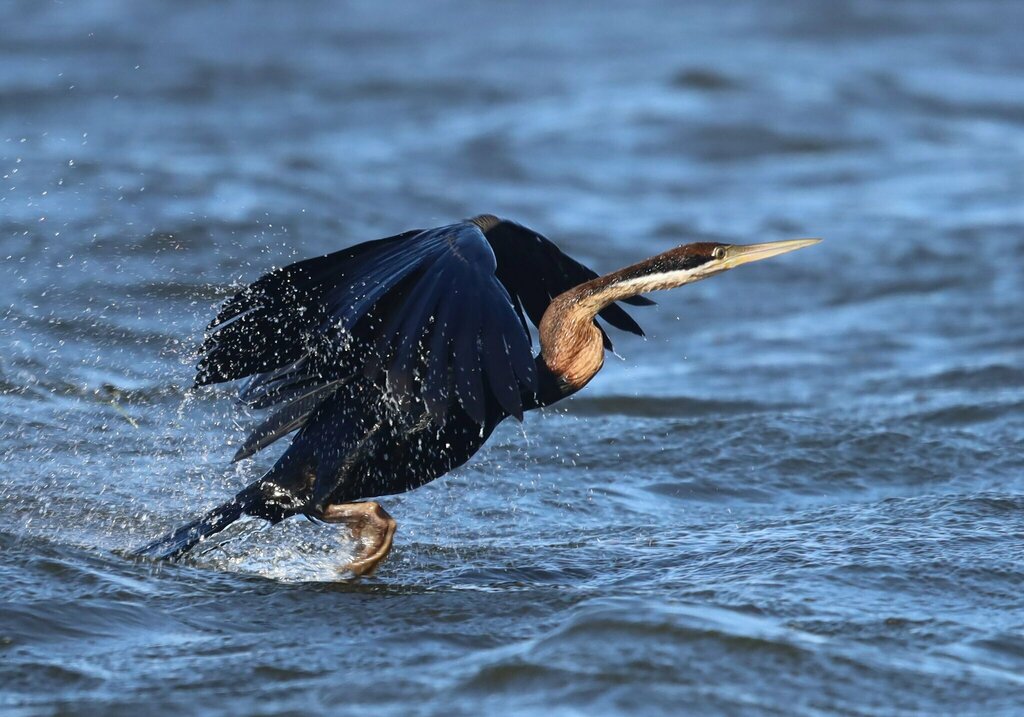
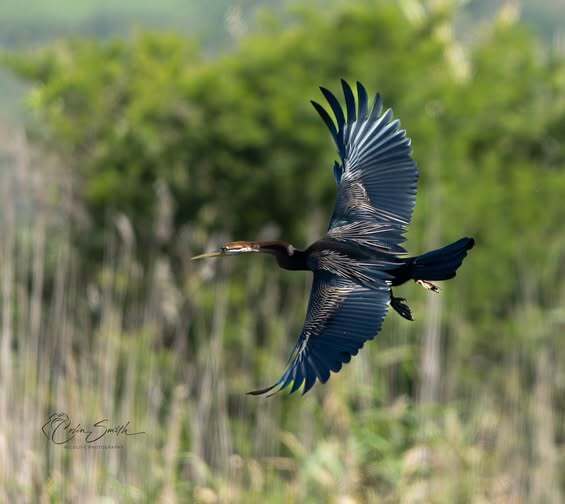
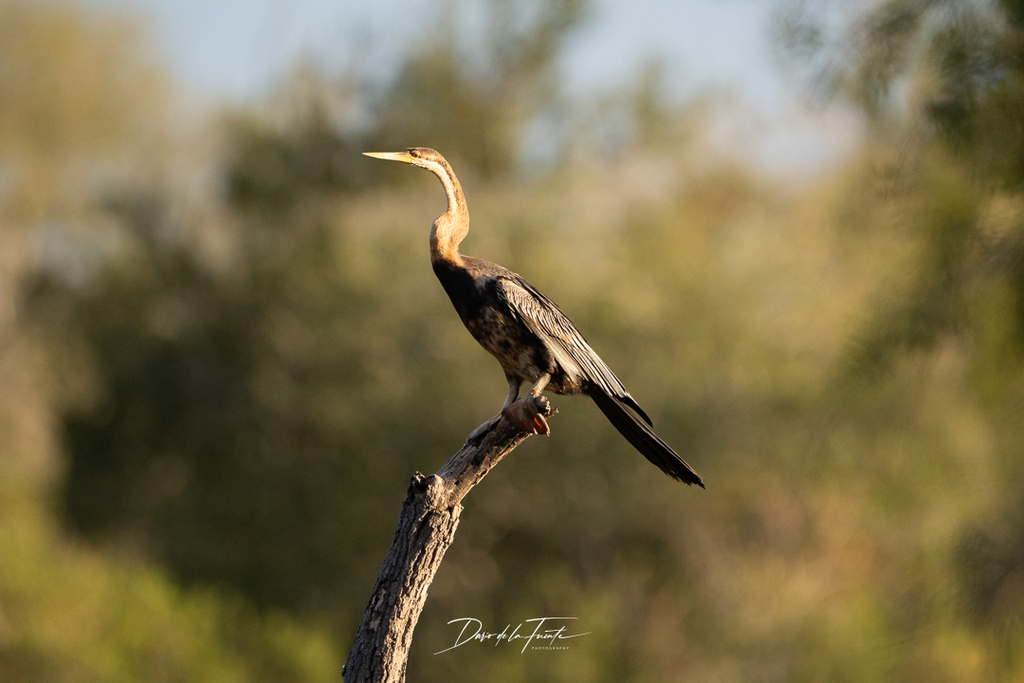
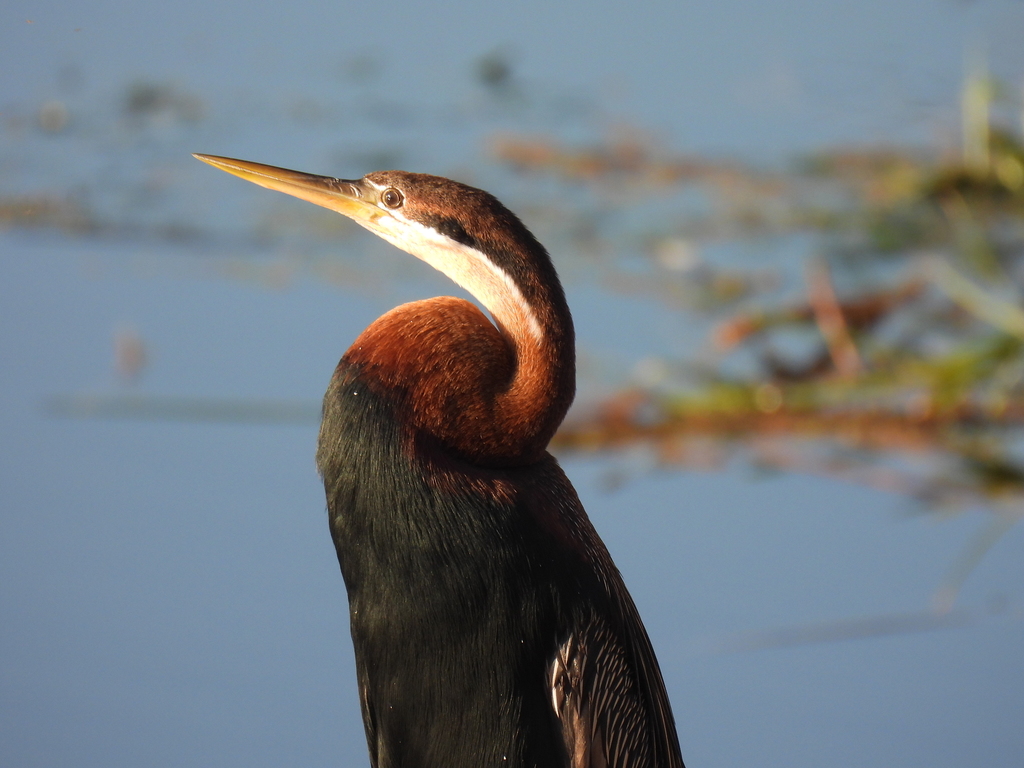
Photos show the species, not always the places on this page.
Length
About 80 to 97 cm (31 to 38 in) long; wingspan about 115 to 128 cm (45 to 50 in)
Weight
About 1 to 1.48 kg (2.2 to 3.3 lb). Sources differ: SA-Venues gives 1 to 1.35 kg and Oiseaux.net gives 1.35 to 1.48 kg
Next to a person
Body about as long as an adult leg, with wings that spread wider than a standard door, and about as heavy as one to one and a half bags of sugar
What it eats
Mostly fish. Biodiversity Explorer names tilapia, bream and tigerfish. It also takes amphibians, reptiles and invertebrates. It spears a fish underwater, tosses it into the air and swallows it head first.
Around people
Shy, watch quietly
How it lives
African darters nest in colonies, often with cormorants, herons and egrets, on stick platforms in trees or reeds over water. Clutches are about 3 to 6 eggs, and one source gives 2 to 7. Incubation is reported at about 22 to 30 days, and chicks fledge at about five to seven weeks. The feathers are not waterproof, so after feeding the bird spreads its wings in the sun to dry. It often swims with only its neck above the water.
Where it goes
The African darter is described as sedentary, so birds usually stay near the lakes, rivers and brackish water they know. I did not find tracking studies in the sources opened.
We only draw a journey on the map when scientists have tracked it or clearly documented it. For this animal we have not found one yet.
Populations
Least Concern (IUCN, 2024). Wikipedia calls it widespread and common across sub-Saharan Africa, and Biodiversity Explorer calls it fairly common in Zimbabwe, northern and eastern Botswana, South Africa and parts of Namibia and Mozambique. No population number was given in the sources opened. A related form, the Levant darter, once lived in Turkey, Israel and Iraq and disappeared from there during the 20th century.
Meet it respectfully
Watch from a distance with binoculars, from the bank or a quiet boat. Never chase, touch, feed or bait a darter. Keep boats and kayaks well away from nesting trees and reedbeds, and do not flush birds from their perches. Follow your guide and any local rules. Sightings are never promised.
Fun fact
Tap the bulb to light it up.
Its feathers contain no oil, so they are not waterproof. Darters spread their wings in the sun to dry after diving.
It often swims with only its neck above the water, which earns it the name snakebird.
It spears a fish with its bill, tosses it into the air, then catches it and swallows it head first.
African darter in the Ocean Atlas
Places we have researched where this animal is recorded. It is never guaranteed, and some places are for watching from the boat only.
Travel with usComing soonTrusted referralExploringOn pause, story onlyEthics pass
Country colour: pink where we travel, blue where we are exploring or refer, grey for story only.
 Angola
 Benin
 Cameroon
 Côte d'Ivoire
 Democratic Republic of the Congo
 Equatorial Guinea
 Gabon
 Gambia
 Ghana
 Guinea-Bissau
 Iran
 Kenya
 Madagascar
 Mauritania
 Mozambique
 Namibia
 Nigeria
 Republic of the Congo
 Senegal
 South Africa
 Tanzania
Sources for this page
- Wikipedia, African darter
- Biodiversity Explorer, African Darter
- SA-Venues, African Darter
- Oiseaux.net, African Darter
- GBIF, IUCN Red List category
Facts checked 5 October 2026. Photos: Unsplash licence, or Creative Commons as shown on each photo.
Work in ocean travel?
We are always happy to hear from exceptional local operators, accommodation, conservation organisations and destination experts. If your work fits responsible, small-group ocean travel, we would love to learn more.
Partner with Ocean CallingSwim with humpback whales in Moʻorea, September 2027
from CHF 4,500