
Atlantic tarpon
Megalops atlanticus
A silver back rolling at the surface of a warm, shallow channel. Tarpon range widely, and no sighting is ever a promise.
Vulnerable (IUCN, 2019) means it is at high risk of extinction in the wild. The listing is based on population decline (criterion A2bd), and FishBase rates the tarpon as very vulnerable to fishing.
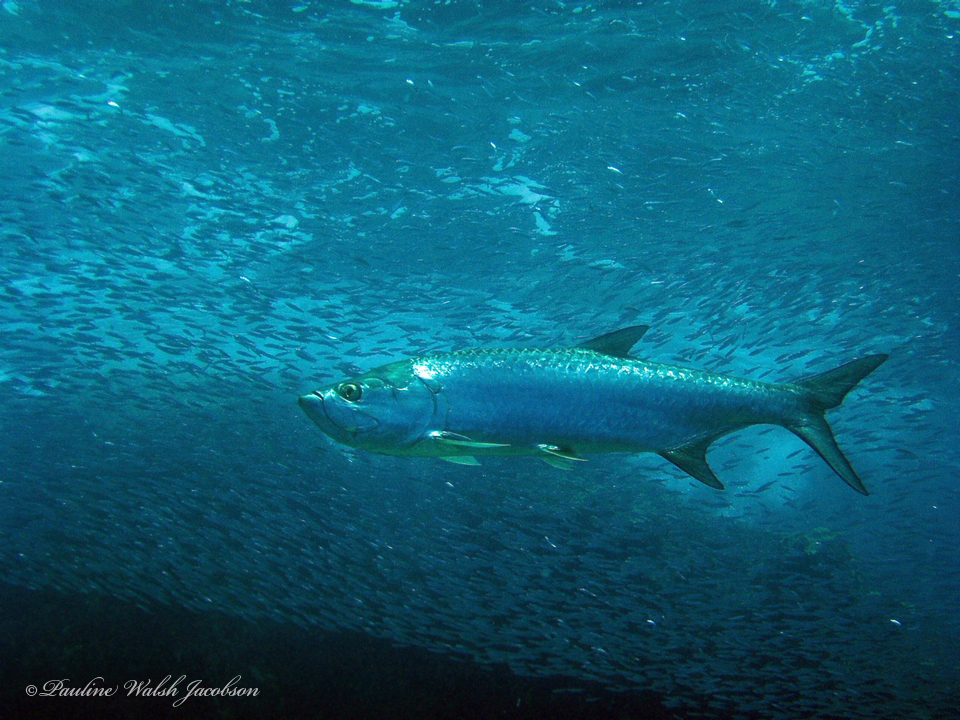
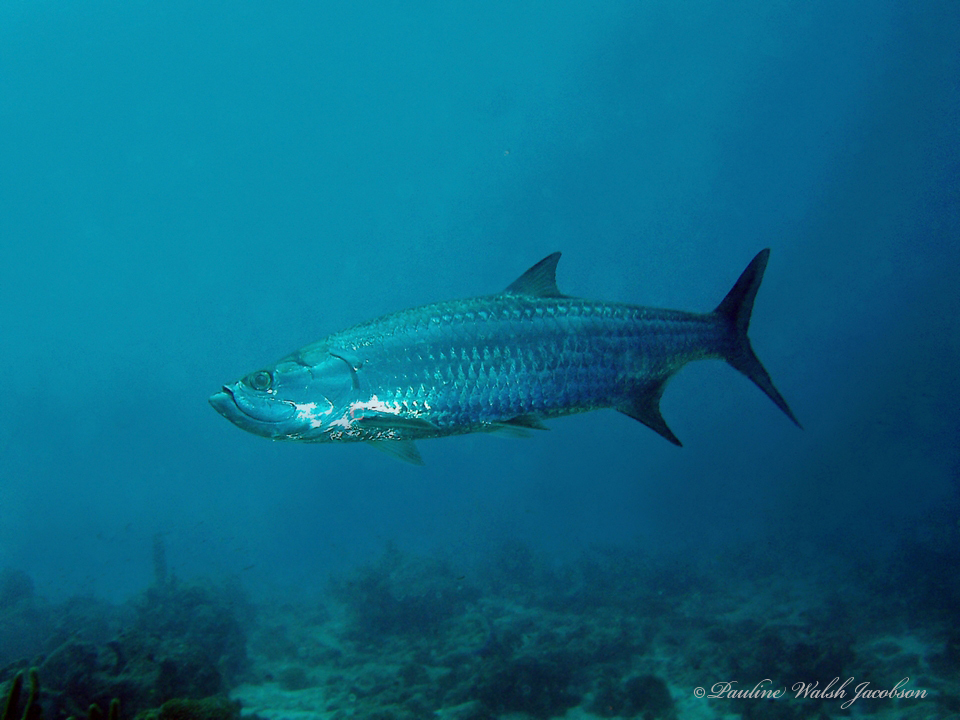
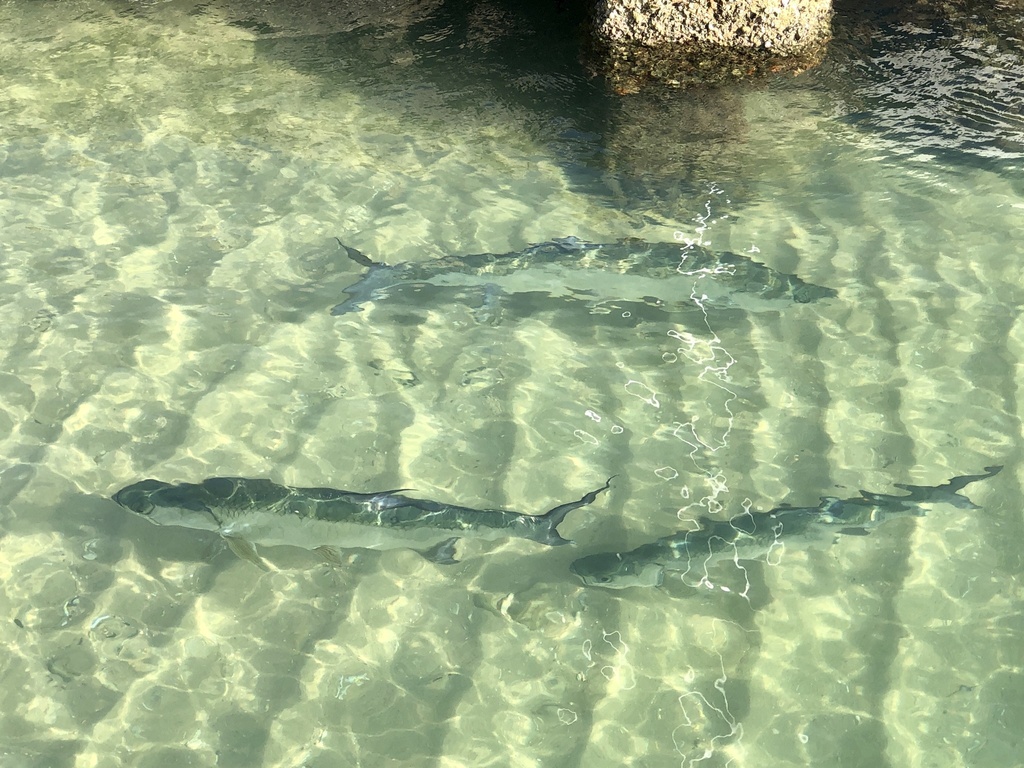
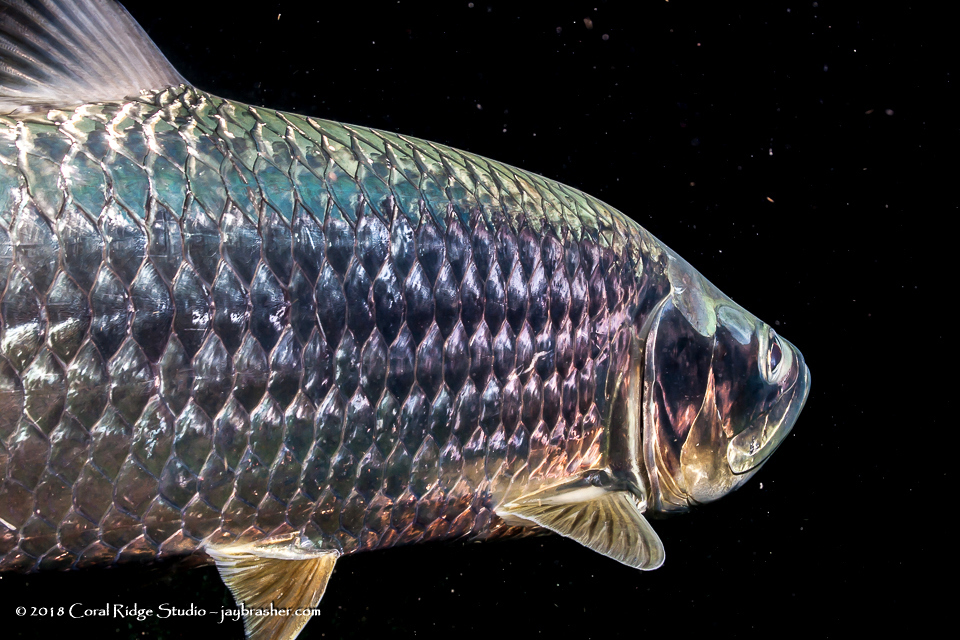
Photos show the species, not always the places on this page.
Length
Recorded up to 2.5 m (8.2 ft), with a common length of about 1.3 m (4.3 ft)
Weight
Published maximum about 161 kg (355 lb). Males rarely exceed about 45 kg (100 lb), and females grow larger
Next to a person
A common adult is a little shorter than an adult person is tall. The largest on record is about 1.5 times as long as a person is tall, and as heavy as two to three adults
What it eats
Diet changes with age. Larvae absorb nutrients directly from the water, juveniles eat zooplankton and other small prey, and adults mostly eat fish, crabs and shrimp. FishBase places the tarpon high in the food chain, as a predator. Around people it is mostly active at night.
Around people
Calm, give space
How it lives
Tarpon spawn at sea in aggregations. The young begin as slender, ribbon-shaped larvae called leptocephali. In a study off Mississippi, larvae were 22 to 43 days old. Juveniles move into shallow backwaters, sometimes with very little oxygen, which many predators avoid. At about three years they move to nearshore habitats, and at about eight years they mature. They prefer water of about 22 to 28 C (72 to 82 F), become inactive below about 16 C (61 F), and can breathe air at the surface. The oldest reported age is 55 years.
Where it goes
Tarpon can make long migrations of hundreds of kilometres, but some stay resident in estuaries and coastal habitats. Tagging in the northern Gulf of Mexico found fish tagged west of the Mississippi River Delta moving south in autumn and winter, and fish tagged east of it moving towards Florida, which suggests two separate groups (18 of 44 tagged fish were detected). Adults gather to spawn offshore. I did not find movement studies for Cuba, so how far tarpon move around Jardines de la Reina is not known to me.
We only draw a journey on the map when scientists have tracked it or clearly documented it. For this animal we have not found one yet.
Populations
The Atlantic tarpon ranges on both sides of the Atlantic: in the west through the Gulf of Mexico, Florida and the West Indies, and in the east from Senegal to the Congo. The IUCN lists it as Vulnerable (listed 2019, assessed 2018, criterion A2bd). FishBase rates its resilience as low (population doubling time 4.5 to 14 years) and its vulnerability to fishing as very high (76 out of 100). Tarpon cross national borders, which makes management harder. In Florida and Alabama a special permit is needed to keep one, so most angling there is catch and release, and Wikipedia notes that only catch and release fly-fishing is allowed in Jardines de la Reina national park. I did not find a global population count in the sources I opened.
Meet it respectfully
Watch quietly from a boat or the shore and let tarpon move as they like. Never chase, net, bait, hook or touch them. Because tarpon are listed as Vulnerable, researchers are studying how well they recover after being caught, so the kindest approach is to leave them undisturbed. Follow your guide and local rules.
Fun fact
Tap the bulb to light it up.
A tarpon can fill its swim bladder with air and use it like a simple lung. Experiments confirm it is a facultative air-breather, which helps in water with little oxygen.
Young tarpon start as slender, ribbon-shaped larvae. In one Mississippi study the larvae were only 16 to 28 mm long.
The oldest age reported on FishBase for a tarpon is 55 years.
Atlantic tarpon in the Ocean Atlas
Places we have researched where this animal is recorded. It is never guaranteed, and some places are for watching from the boat only.
Travel with usComing soonTrusted referralExploringOn pause, story onlyEthics pass
Country colour: pink where we travel, blue where we are exploring or refer, grey for story only.
 The Bahamas
 Barbados
 Belize
 Benin
Benin Brazil
 British Virgin Islands
 Cameroon
 Caribbean Netherlands
 Cayman Islands
 Colombia
 Costa Rica
 Cuba
Cuba Curaçao
 Democratic Republic of the Congo
 French Guiana
 Guadeloupe
 Honduras
 Mexico
 Panama
 Puerto Rico
 Sint Maarten
 Trinidad and Tobago
 United States
 US Virgin Islands
Sources for this page
- FishBase, 2026
- IUCN Red List, 2019
- GBIF, IUCN Red List category record, 2026
- Wikipedia, Atlantic tarpon, 2026
- Stephens et al., 2024, PLoS ONE
- Graham et al., 2021, Journal of Fish Biology
- Martin et al., 2025, Conservation Physiology
- Wikipedia, Jardines de la Reina, 2026
Facts checked 5 October 2026. Photos: Unsplash licence, or Creative Commons as shown on each photo.
Work in ocean travel?
We are always happy to hear from exceptional local operators, accommodation, conservation organisations and destination experts. If your work fits responsible, small-group ocean travel, we would love to learn more.
Partner with Ocean CallingGili Trawangan in 5 days
from CHF 790