
Clown triggerfish
Balistoides conspicillum
A solitary clown triggerfish on a clear outer reef is a rare treat. Watch from outside its space, and never chase it into a cave.
Least Concern (IUCN, 2022) means it is not at high risk of extinction worldwide today.
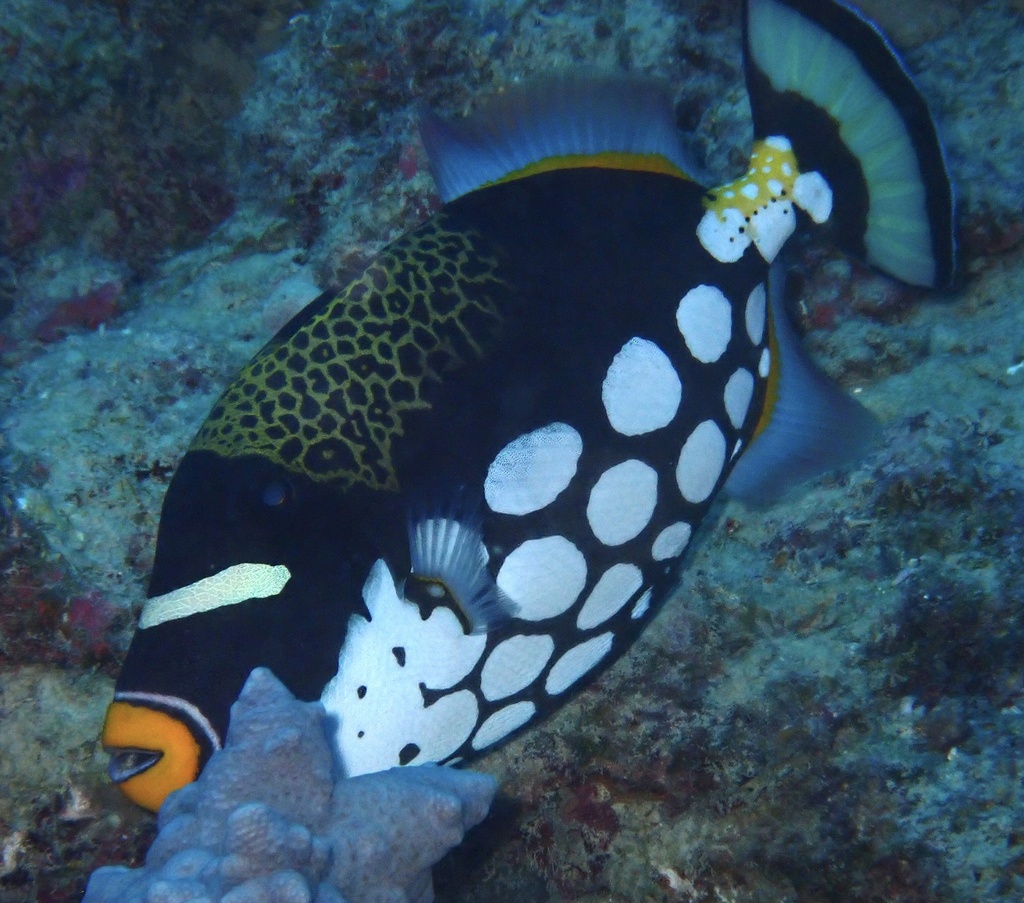
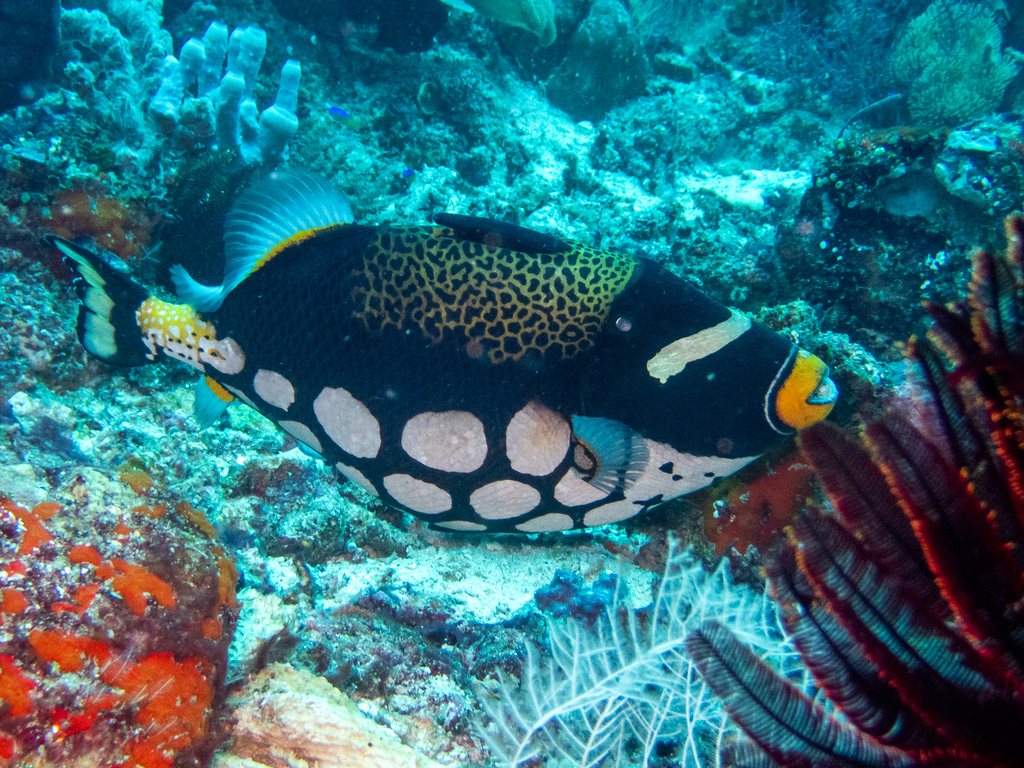
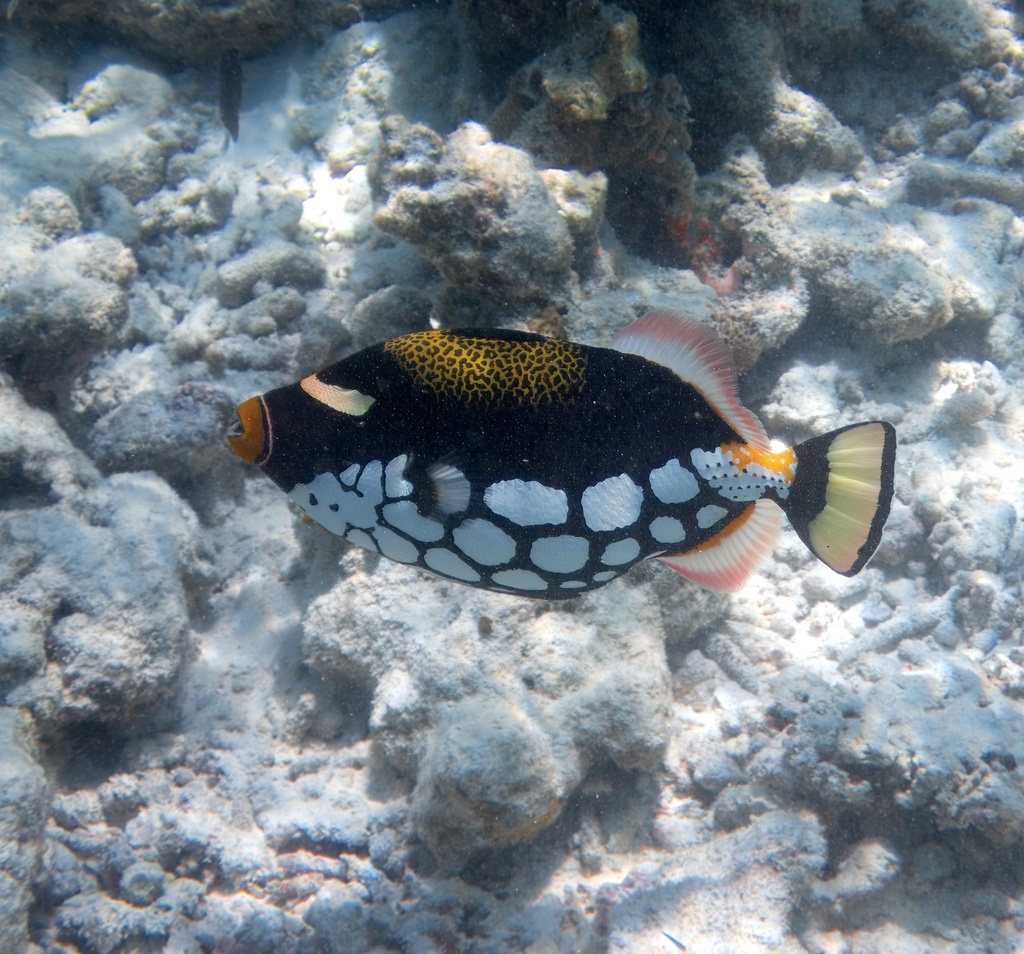
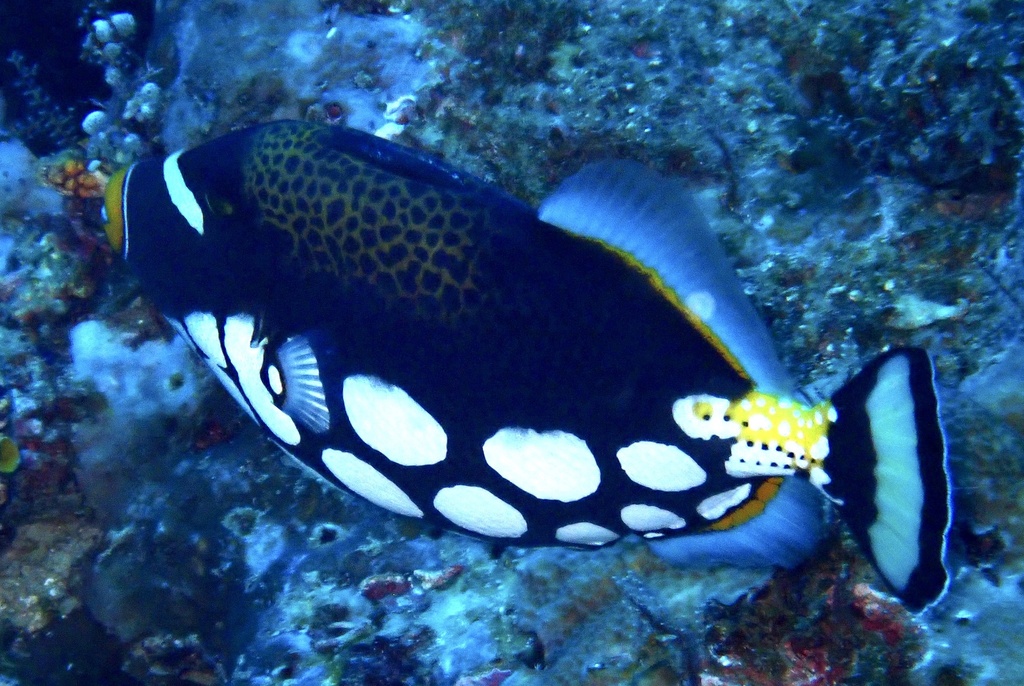
Photos show the species, not always the places on this page.
Length
Typical adult size not well measured, and most are smaller; largest recorded about 50 cm (1.6 ft)
Weight
Not reliably measured
Next to a person
The largest are about as long as a forearm; most are smaller
What it eats
Sea urchins, crabs and other crustaceans, molluscs and tunicates.
Around people
Defensive if pressured
How it lives
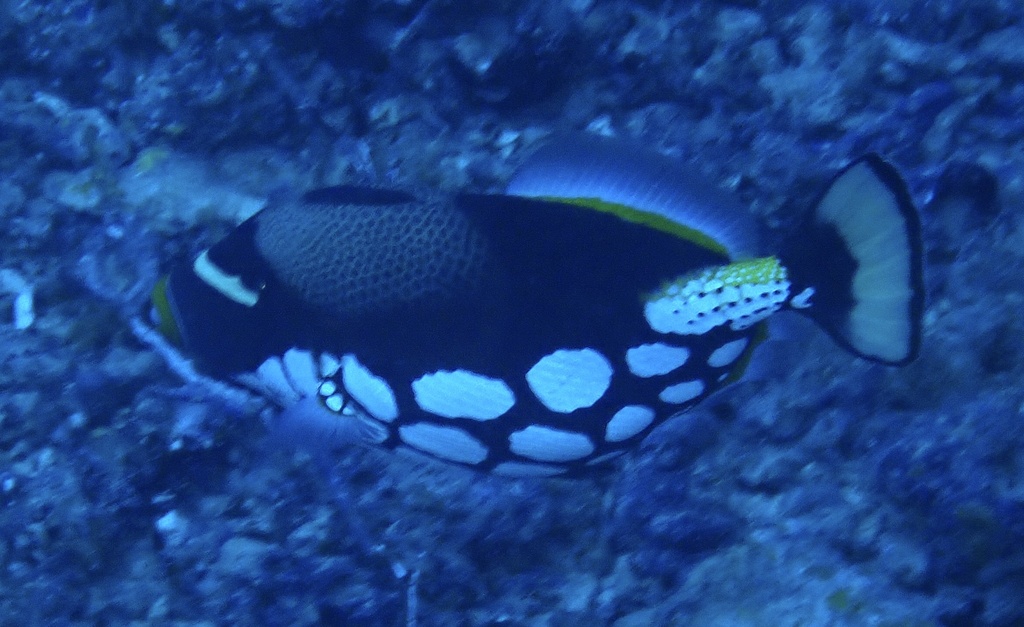
The clown triggerfish lives alone on clear, outer reef slopes and drop-offs, and it hides in caves when scared. Young fish stay hidden in small caves. Pairs spawn on patches of sand and coral rubble, and one or both parents guard the eggs. It is territorial, and it is uncommon to rare in most of its range.
Where it goes
Resident. It keeps a territory on its home reef and does not migrate.
We only draw a journey on the map when scientists have tracked it or clearly documented it. For this animal we have not found one yet.
Populations
Found from East Africa across northern Australia to Samoa and north to southern Japan, from 1 to 75 m. The aquarium trade values it highly, which adds pressure where it is rare.
Meet it respectfully
Watch it from a calm distance and let it go into its cave. Never chase it into a cave for a photo, and never touch or feed it. Like other triggerfish, it can defend its nest and territory, so if it faces you, swim away sideways and low, not straight up.
Fun fact
Tap the bulb to light it up.
Its name conspicillum means spectacles, after the pale bar in front of its eyes.
When pressured, it can hide in a crevice and lock its trigger spine upright so it cannot be pulled out.
It is in the same genus as the titan triggerfish, but the titan is larger and has no white spots.
Its eggs are light green and stuck together in a round mass on coral rubble.
Clown triggerfish in the Ocean Atlas
Places we have researched where this animal is recorded. It is never guaranteed, and some places are for watching from the boat only.
Travel with usComing soonTrusted referralExploringOn pause, story onlyEthics pass
Country colour: pink where we travel, blue where we are exploring or refer, grey for story only.
 American Samoa
 Australia
 Fiji
Fiji Guam
Guam India
India Indonesia
 Japan
Japan Kiribati
 Malaysia
 Maldives
 Marshall Islands
 Mauritius
 Mayotte
 Mozambique
 Myanmar
 New Caledonia
 Northern Mariana Islands
 Palau
Palau Papua New Guinea
 Philippines
 Réunion
 Seychelles
 Solomon Islands
 South Africa
 Taiwan
 Thailand
 Tonga
Tonga United States
 Vanuatu
Sources for this page
- FishBase, Balistoides conspicillum
- GBIF occurrence records
- Bray, 2022, Fishes of Australia, Clown Triggerfish
- Australian Museum, Clown Triggerfish
- Matsuura, 2022, IUCN Red List
Facts checked 26 September 2026. Photos: Unsplash licence, or Creative Commons as shown on each photo.
Work in ocean travel?
We are always happy to hear from exceptional local operators, accommodation, conservation organisations and destination experts. If your work fits responsible, small-group ocean travel, we would love to learn more.
Partner with Ocean CallingNew: mobula rays in La Ventana, May 2027
CHF 2,720