
Pygmy sperm whale
Kogia breviceps
A small, shy whale that often lies still at the surface and slips away quietly. If you see one, it is a quiet gift, and no sighting is a promise.
Least Concern (IUCN, 2019) means it is not at high risk of extinction at present. It is widespread, and it is probably more common than the few sightings suggest.
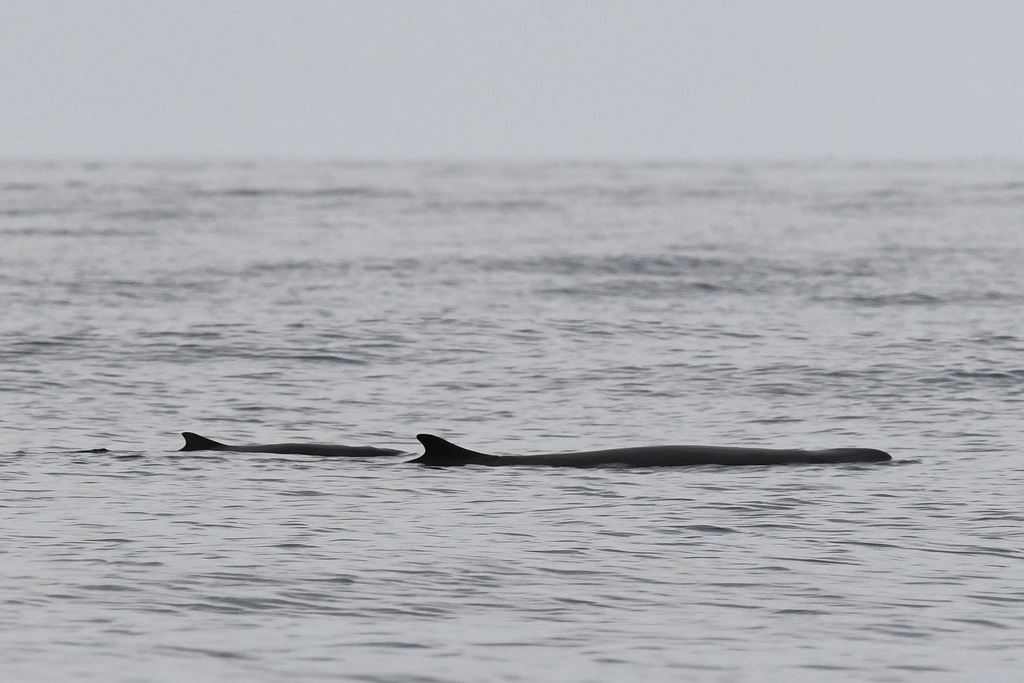
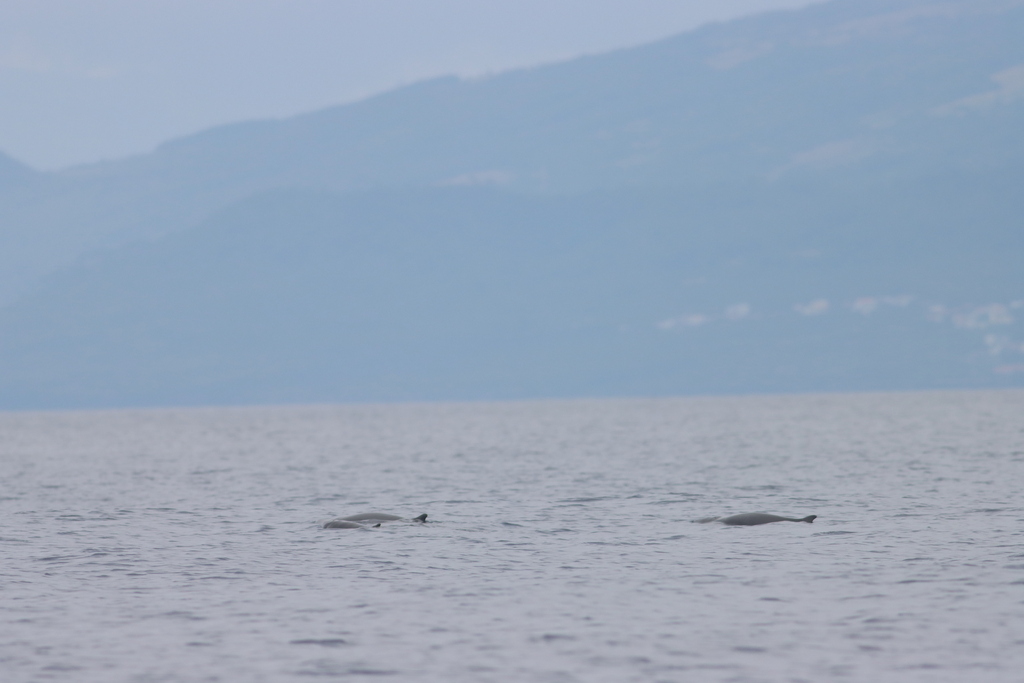
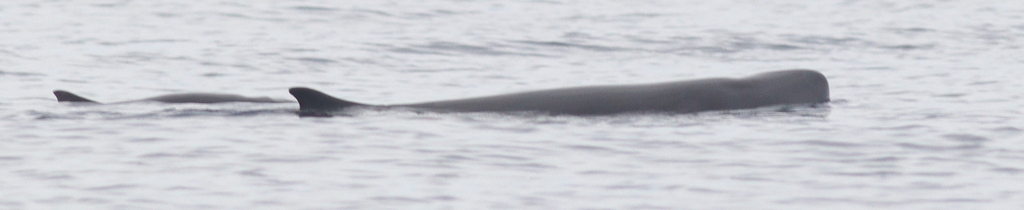
Photos show the species, not always the places on this page.
Length
Adults reach about 3.5 m (11.5 ft) according to NOAA. The largest one measured in Australian records was 3.66 m (12 ft)
Weight
About 315 to 450 kg (700 to 1,000 lb) according to NOAA. Australian records give maximum weights of 480 kg (1,060 lb) for females and 374 kg (825 lb) for males
Next to a person
About twice as long as an adult is tall, and as heavy as five or six adults
What it eats
Mostly squid and cuttlefish, with some deep-sea fish, shrimps and crabs. They feed in mid-water and near the seabed and can dive at least 300 m (1,000 ft).
Around people
Shy, give space
How it lives
Pygmy sperm whales live alone or in small groups of up to about six. They are cryptic and spend long spells lying motionless at the surface, which is called logging. Females become mature at about 4 to 5 years. Pregnancy lasts about 9 to 11 months, and a calf is weaned after about a year. NOAA gives a lifespan of up to about 23 years. Much of what is known comes from stranded animals, because they are rarely seen at sea.
Where it goes
They live in tropical and temperate seas around the world, often over the continental shelf and in deeper water. The sources I read describe no migration route and no fixed seasons for sightings.
We only draw a journey on the map when scientists have tracked it or clearly documented it. For this animal we have not found one yet.
Populations
No one knows how many pygmy sperm whales there are, because they are so rarely seen at sea. IUCN lists the species as Least Concern (2019), as it is widespread and likely more common than sightings suggest. It was listed as Data Deficient in 2008. In Australia there are only two sightings and 82 strandings on record. Main threats named are entanglement in fishing gear and swallowed plastic.
Meet it respectfully
Stay calm and keep your distance if you are lucky enough to see one. Never chase it, circle it, swim toward it, touch it or try to attract it. A whale that is logging is resting, so let it stay still. NOAA advises staying at least 50 yards (about 45 m) away and limiting a watch to 30 minutes. I did not read local rules for the countries listed, so follow your guide and local rules.
Fun fact
Tap the bulb to light it up.
When frightened, a pygmy sperm whale can release a cloud of dark reddish-brown fluid, a little like squid ink.
Scientists only recognised it as a different species from the dwarf sperm whale in 1966.
It has an underslung jaw and a pale crescent mark near the eye, often called a false gill.
Pygmy sperm whale in the Ocean Atlas
Places we have researched where this animal is recorded. It is never guaranteed, and some places are for watching from the boat only.
Travel with usComing soonTrusted referralExploringOn pause, story onlyEthics pass
Country colour: pink where we travel, blue where we are exploring or refer, grey for story only.
 Australia
 The Bahamas
 Brazil
 Canada
 Chile
 France
 French Polynesia
 Grenada
 Jamaica
 Japan
 Mexico
 New Caledonia
 New Zealand
 Portugal
 Réunion
 South Africa
 Spain
 Sri Lanka
 Taiwan
 Togo
 United Kingdom
 United States
 Vietnam
Sources for this page
- NOAA Fisheries
- Australian Government (SPRAT), Kogia breviceps
- Australian Museum, Pygmy sperm whale
- Voices in the Sea, UC San Diego
Facts checked 5 October 2026. Photos: Unsplash licence, or Creative Commons as shown on each photo.
Work in ocean travel?
We are always happy to hear from exceptional local operators, accommodation, conservation organisations and destination experts. If your work fits responsible, small-group ocean travel, we would love to learn more.
Partner with Ocean Calling