
Sargasso shearwater (Audubon's shearwater)
Puffinus lherminieri
A small shearwater skimming the swell is a fleeting sight at sea, and no sighting is ever a promise.
Least Concern (IUCN, 2018) means it is not at high risk of extinction at present, although the population of 30,000 to 59,000 birds is listed as decreasing.
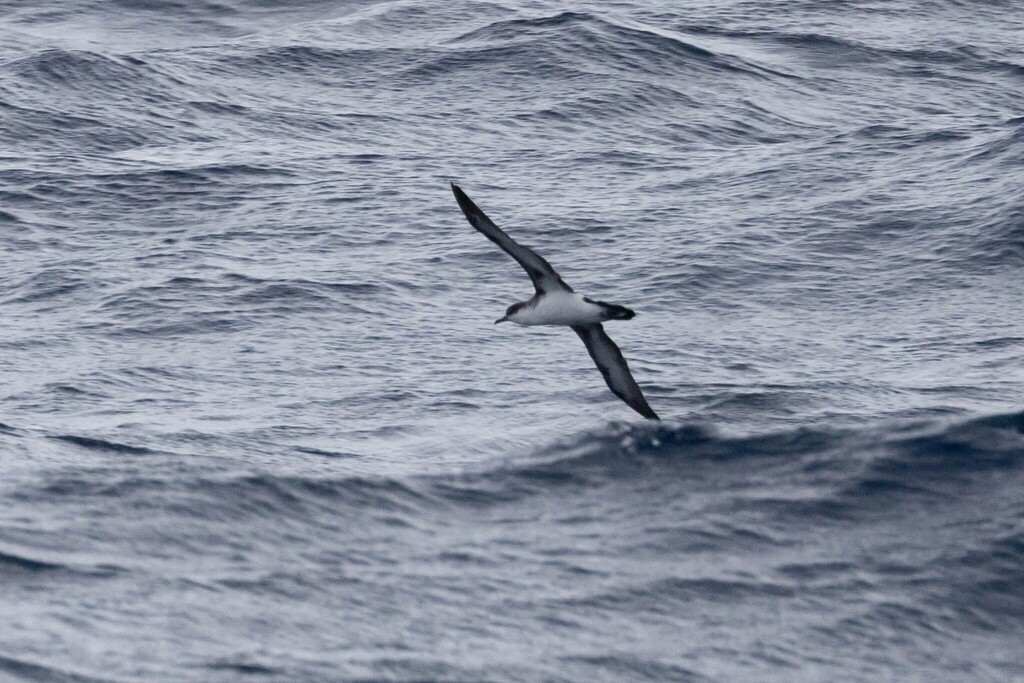
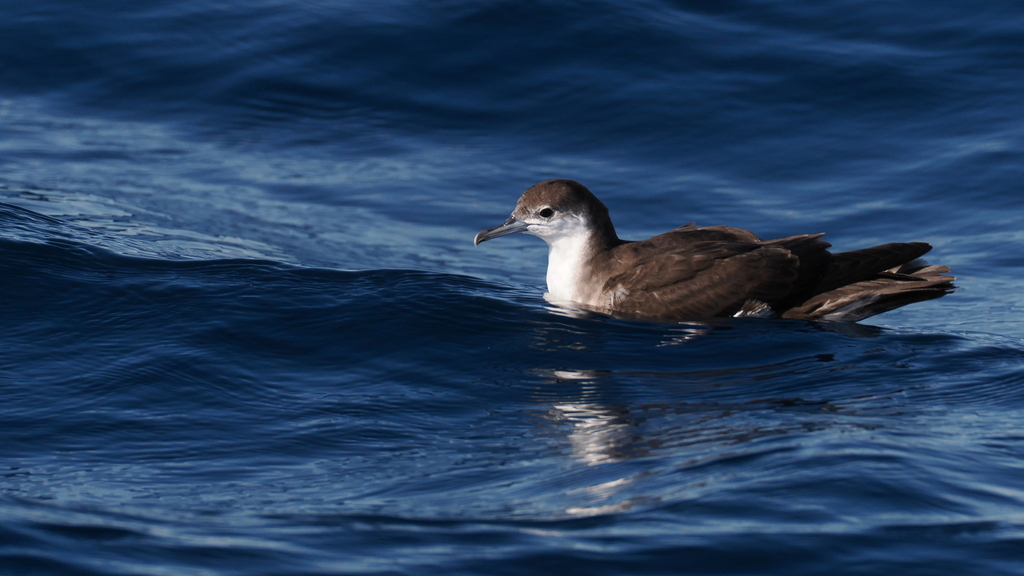
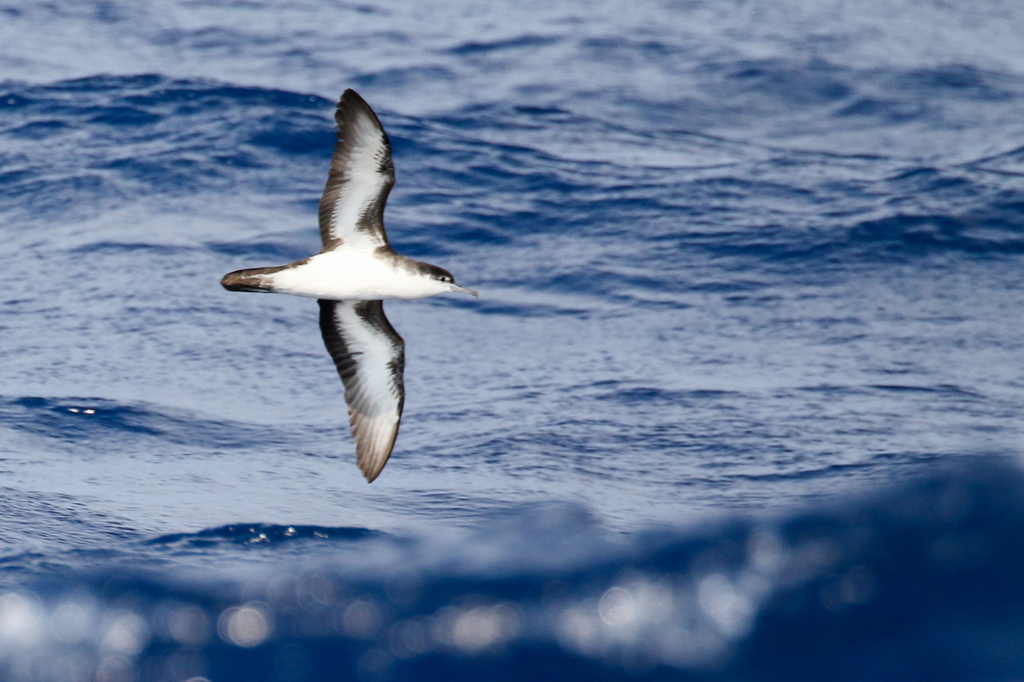
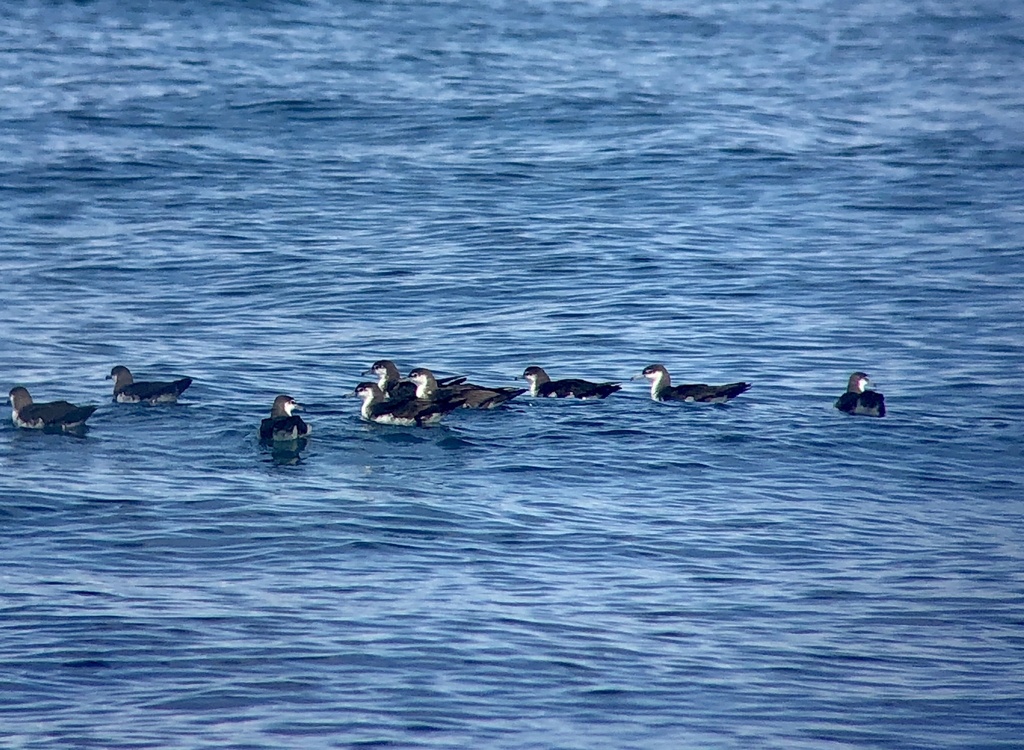
Photos show the species, not always the places on this page.
Length
About 30 to 33 cm (12 to 13 in), wingspan about 64 to 72 cm (25 to 28 in)
Weight
About 150 to 230 g (5.3 to 8.1 oz); one source lists about 170 g (6 oz)
Next to a person
Body about as long as an adult's hand and forearm, and about as heavy as a smartphone
What it eats
Small fish, squid and planktonic crustaceans. It dives from flight and plunges underwater from the surface, using its wings to swim. It often feeds around weed lines where Sargassum collects.
Around people
Quiet, keep distance
How it lives
It nests in colonies on islands, in rock crevices, burrows or under dense plants. A pair lays one egg a season. Incubation takes about 49 to 51 days and chicks fledge after about 62 to 75 days. Birds first breed at about 8 years. It usually stays alone or in small groups at sea and is not commonly a ship-follower.
Where it goes
After breeding, birds disperse across the north-west Atlantic, especially along the Gulf Stream and the Sargasso Sea. Off North Carolina they are seen mainly from mid-May to mid-October, with a peak in July and August. They feed around weed lines where Sargassum collects.
We only draw a journey on the map when scientists have tracked it or clearly documented it. For this animal we have not found one yet.
Populations
Wikipedia lists 30,000 to 59,000 birds with a decreasing trend, and Least Concern status (2018). It breeds mainly on islands in the Caribbean and the Lucayan Archipelago, with some birds nesting off eastern Brazil. Taxonomy has changed: the old, wider Audubon's shearwater is now split into several species by most authorities, including Boyd's, tropical, Persian and others. The IOC list splits Boyd's shearwater off, while IUCN keeps it within this species. Records from the Indian and Pacific oceans filed under the old name may refer to those other species. I did not find population figures by country.
Meet it respectfully
Seabirds on the water are easily flushed, so ask your skipper to keep a steady course and slow down near rafts of birds. Never chase, feed or bait them, and keep well away from island nesting colonies. Follow local rules and your guide. Sightings at sea are never promised.
Fun fact
Tap the bulb to light it up.
It is the smallest shearwater seen off North Carolina.
A pair raises one chick a year, from a single egg incubated for about 49 to 51 days.
Unlike many shearwaters, it is not commonly a ship-follower.
Sargasso shearwater (Audubon's shearwater) in the Ocean Atlas
Places we have researched where this animal is recorded. It is never guaranteed, and some places are for watching from the boat only.
Travel with usComing soonTrusted referralExploringOn pause, story onlyEthics pass
Country colour: pink where we travel, blue where we are exploring or refer, grey for story only.
 Australia
 The Bahamas
 Bermuda
 Cabo Verde
 Canada
 Caribbean Netherlands
 Costa Rica
 Cuba
 Ecuador
 France
 French Guiana
 Guadeloupe
 Japan
 Kiribati
 Martinique
 Mexico
 Panama
 Portugal
 Puerto Rico
 Réunion
 Saint Vincent and the Grenadines
 Seychelles
 Suriname
 Trinidad and Tobago
 Turks and Caicos Islands
 United States
 US Virgin Islands
Sources for this page
- Wikipedia, Sargasso shearwater, 2026
- National Audubon Society, Field Guide, 2026
- Carolina Bird Club, Sargasso Shearwater, 2026
- SACC, Proposal 160 (Galapagos shearwater split), 2026
- Wikipedia, List of Procellariiformes by population, 2026
- GBIF, IUCN Red List category, 2026
Facts checked 5 October 2026. Photos: Unsplash licence, or Creative Commons as shown on each photo.
Work in ocean travel?
We are always happy to hear from exceptional local operators, accommodation, conservation organisations and destination experts. If your work fits responsible, small-group ocean travel, we would love to learn more.
Partner with Ocean Calling5-day freediving course in Bali
CHF 1,180