
Scarlet ibis
Eudocimus ruber
A streak of red above the mangroves, then gone. Scarlet ibises follow their own routes, and no sighting is ever a promise.
Least Concern (IUCN, 2016) means the species is not close to being threatened globally, although several local populations are declining.
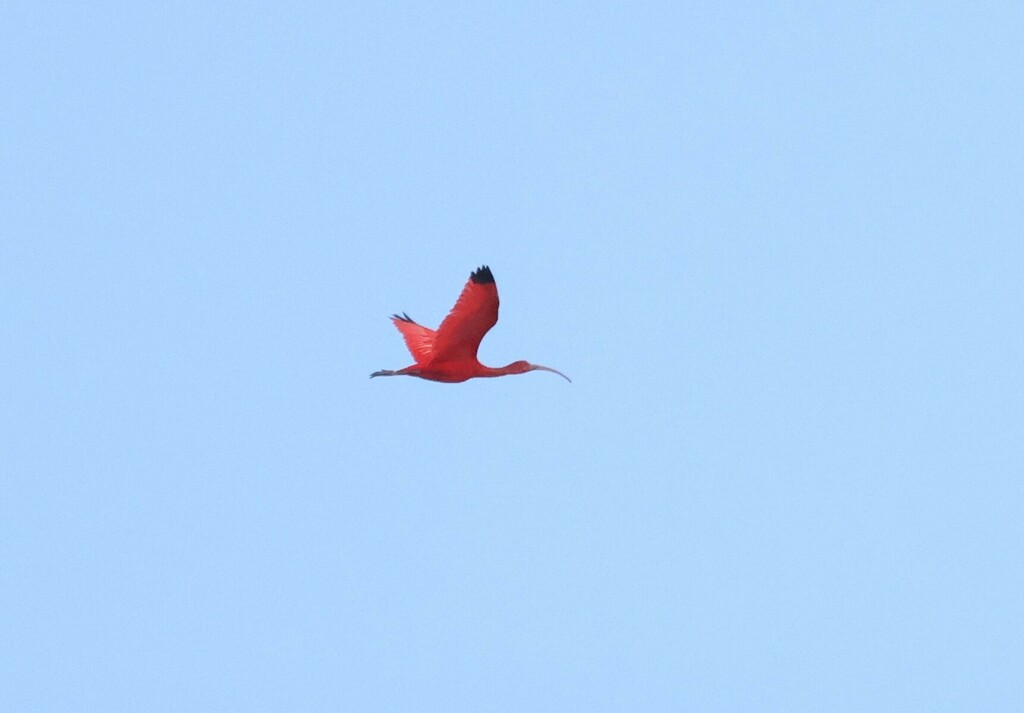
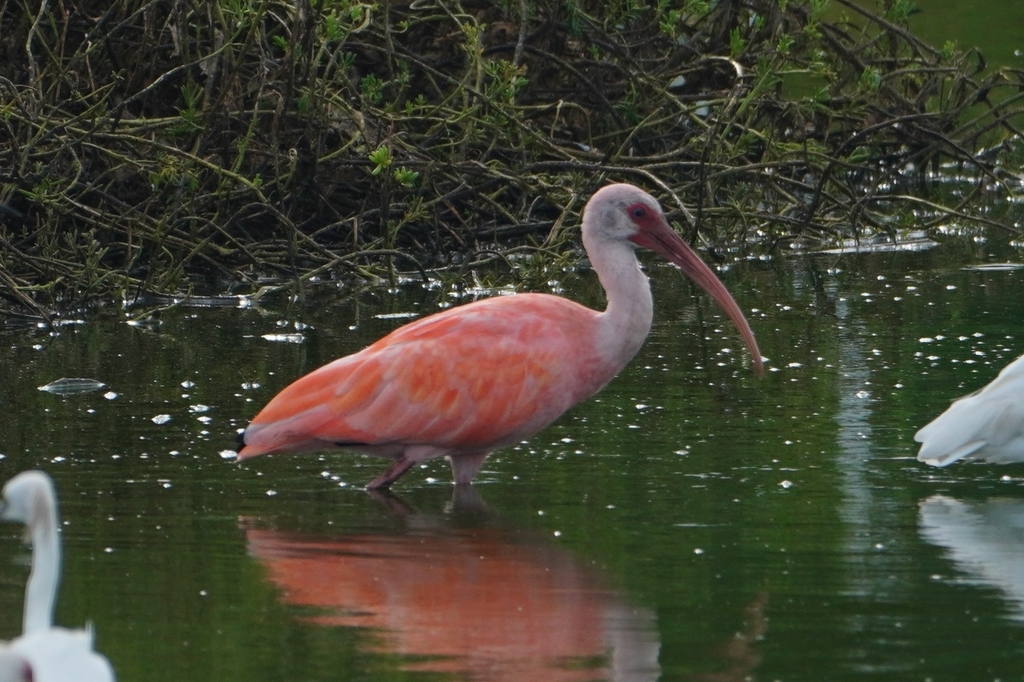
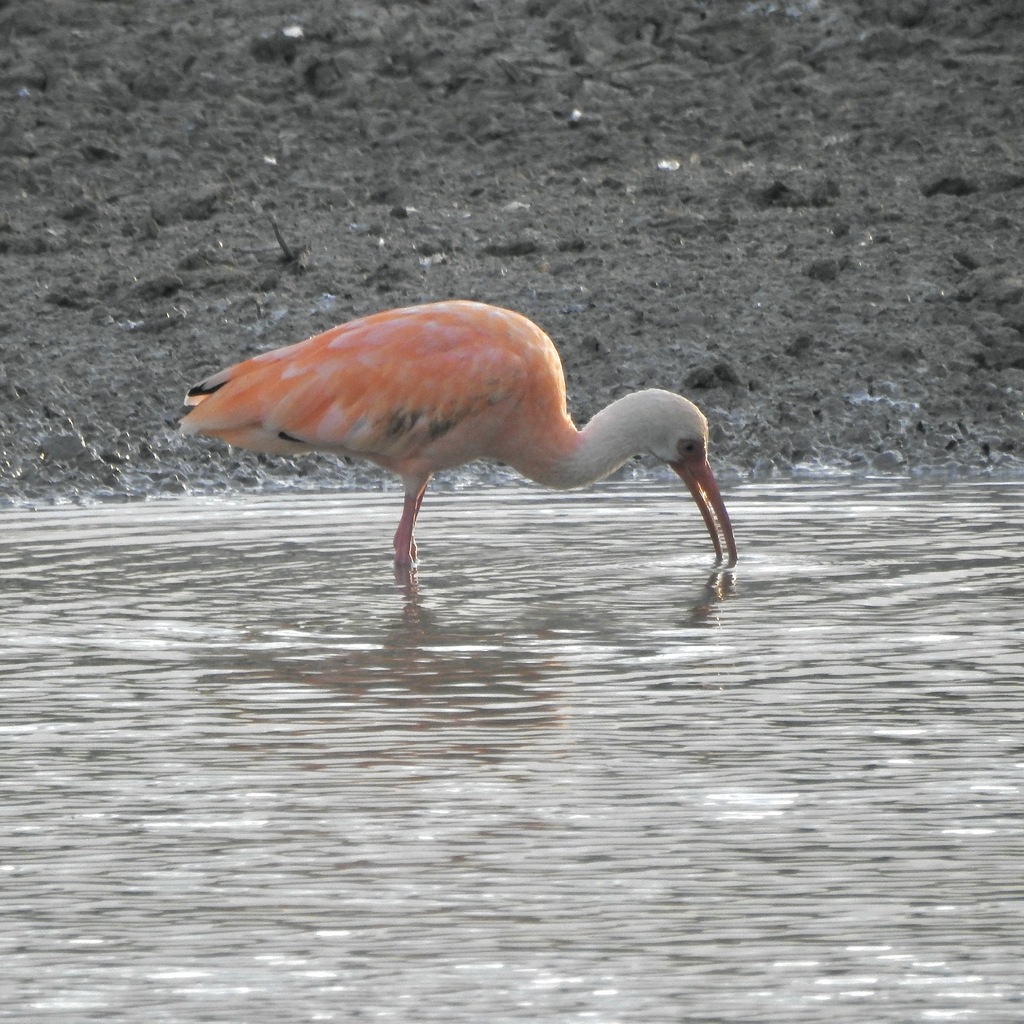
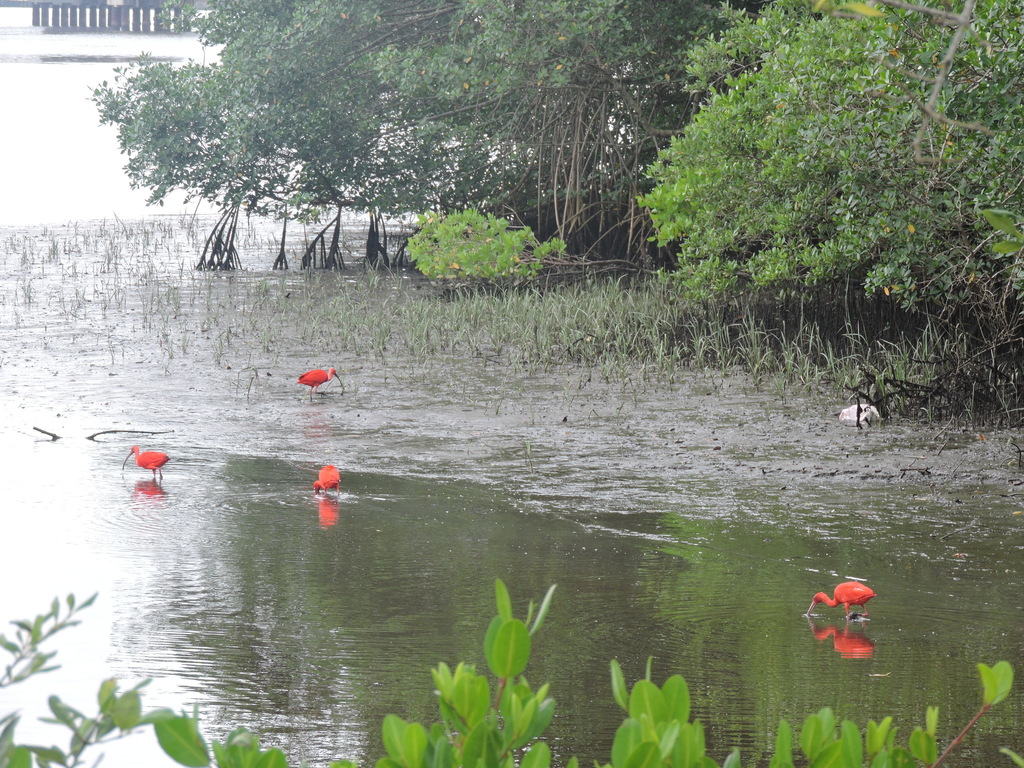
Photos show the species, not always the places on this page.
Length
About 55 to 63 cm (22 to 25 in) long; one source gives up to about 76 cm (30 in)
Weight
Roughly 0.8 to 1.4 kg (1.8 to 3.1 lb). Sources differ, and males are larger than females, with longer bills.
Next to a person
About as tall as a toddler, and about as heavy as one to three bags of sugar
What it eats
Crustaceans such as crabs and shrimp, insects (especially scarab beetles), molluscs, small fish and amphibians, with a few seeds. Birds find prey by probing mud and shallow water with the curved bill. The red colour comes from carotenoid pigment, astaxanthin, in the red crustaceans they eat; captive birds fade to pink without it.
Around people
Quiet, keep distance
How it lives
Scarlet ibises use tidal mudflats, mangrove swamps, shallow lakes, freshwater wetlands and flooded fields, and are often seen in flocks with other wading birds. They nest in colonies, often with other waterbirds, building stick nests in mangrove trees over water. Breeding time varies and mostly follows the rains. Females lay 3 to 5 eggs, which hatch after about 19 to 23 days, and chicks fledge after about 35 days. Young birds are grey, brown and white and take about two years to turn red. One source gives about 16 years in the wild, but wild data are limited.
Where it goes
Scarlet ibises move locally and disperse, rather than making one fixed migration, and flocks commute between feeding grounds and roosts. At Caroni Swamp in Trinidad, many birds return at dusk to roost in the mangroves after flying about 18 km (11 miles) to feed in Venezuela. Guyana's Shell Beach Protected Area, which has the largest intact mangrove forests in the country, lists the species among its wildlife.
We only draw a journey on the map when scientists have tracked it or clearly documented it. For this animal we have not found one yet.
Populations
The IUCN lists the scarlet ibis as Least Concern (2016). Populations fluctuate and several local groups appear to be declining. Brazil lists it as endangered nationally, and French Guiana has seen declines. Threats include loss of coastal mangroves, wetland degradation and disturbance. At Caroni Swamp in Trinidad, 2,500 nests were counted in 1963, the birds largely stopped breeding there after 1970, and regular breeding of about 500 pairs has since returned, with up to 15,000 birds present outside the breeding season. Hunting continues there despite protection. No global count was found in the sources opened.
Meet it respectfully
Watch from a distance, ideally with binoculars, and stay quiet and low. Never chase, flush, touch or feed the birds, and keep well back from nesting and roosting areas so adults are not driven off eggs or chicks. Rules for protected areas differ by place, so follow your guide and any local signs, as no local rules were checked for this card. Whether you see ibises depends on the tide, the season and the day.
Fun fact
Tap the bulb to light it up.
The scarlet colour comes from a pigment in the red crustaceans the birds eat, which is why captive birds can fade to pink.
Young scarlet ibises are grey, brown and white, and take about two years to turn red.
The scarlet ibis was chosen as the national bird of Trinidad and Tobago in 1962.
Scarlet ibis in the Ocean Atlas
Places we have researched where this animal is recorded. It is never guaranteed, and some places are for watching from the boat only.
Travel with usComing soonTrusted referralExploringOn pause, story onlyEthics pass
Country colour: pink where we travel, blue where we are exploring or refer, grey for story only.
 Aruba
Aruba Belgium
 Brazil
 British Virgin Islands
 Colombia
 Curaçao
 Ecuador
 France
 French Guiana
 Germany
 Guyana
 Italy
Italy Netherlands
 Portugal
 Puerto Rico
 Spain
Spain Suriname
 Trinidad and Tobago
 United Kingdom
 United States
 US Virgin Islands
 Venezuela
Sources for this page
- GBIF, IUCN Red List category for Eudocimus ruber
- Wikipedia, Scarlet ibis
- Animal Diversity Web, University of Michigan, Eudocimus ruber
- Birds of the World, Scarlet Ibis
- Protected Areas Trust of Guyana, Shell Beach Protected Area
- Key Biodiversity Areas, Caroni Swamp factsheet
- Wikipedia, Caroni Swamp
Facts checked 5 October 2026. Photos: Unsplash licence, or Creative Commons as shown on each photo.
Work in ocean travel?
We are always happy to hear from exceptional local operators, accommodation, conservation organisations and destination experts. If your work fits responsible, small-group ocean travel, we would love to learn more.
Partner with Ocean CallingNew: tiger sharks in Fuvahmulah, January or March 2027
from CHF 2,900