
Scopoli's shearwater
Calonectris diomedea
A pale shape gliding low over the swell. Seabirds follow the wind and the fish, and every sighting is a privilege, never a promise.
Least Concern (IUCN, 2018) means it is not close to being threatened at present, although its population is thought to be declining slowly and fishing bycatch is a concern.
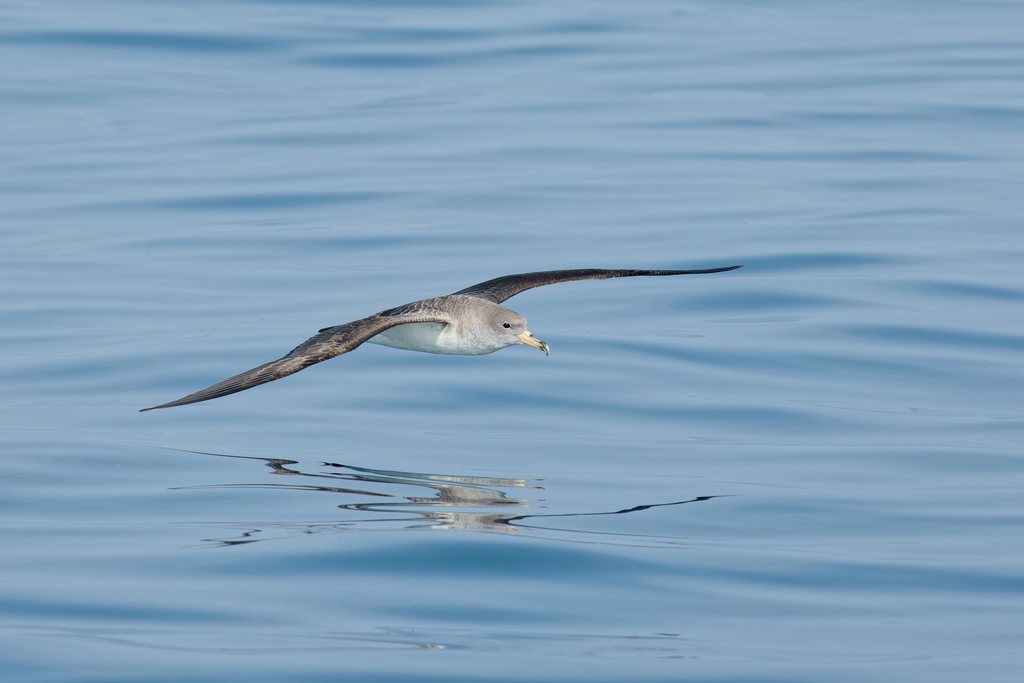
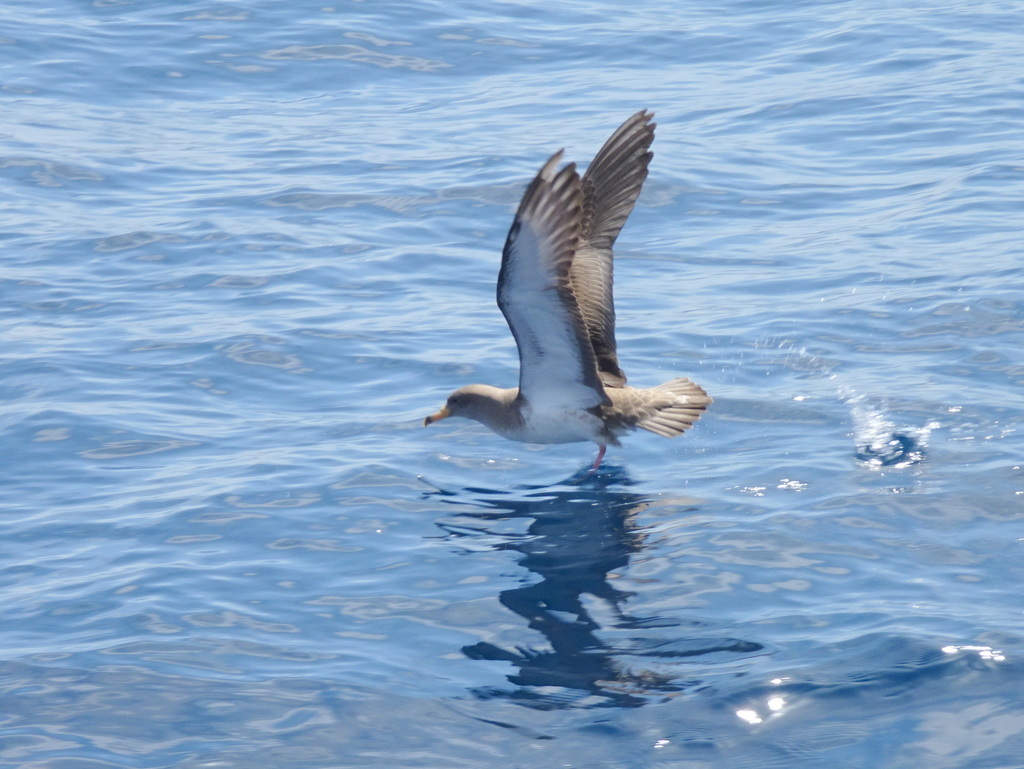
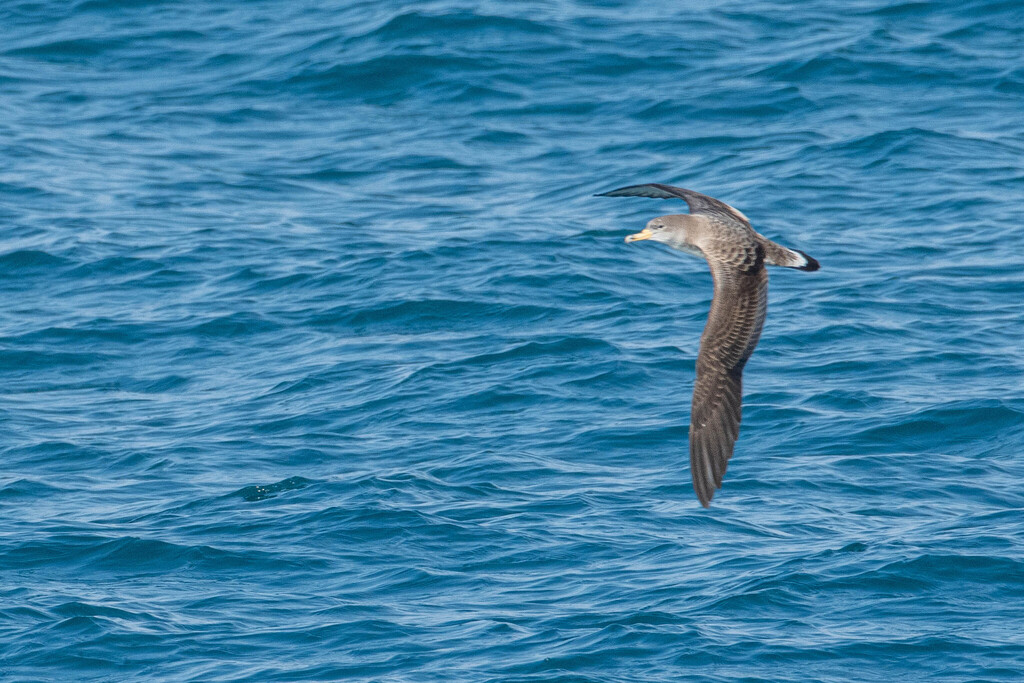
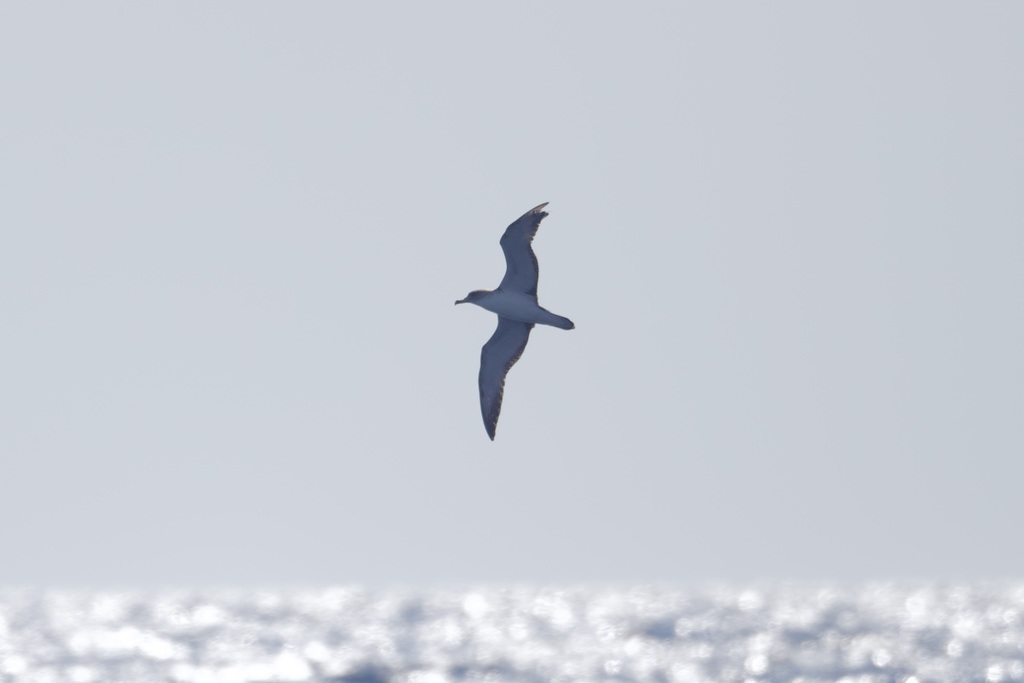
Photos show the species, not always the places on this page.
Length
About 45 to 52 cm (18 to 20 in) long, with a wingspan of about 112 to 122 cm (44 to 48 in)
Weight
About 535 to 800 g (1.2 to 1.8 lb), varying with age, sex and place; one reference gives an average of 650 g (1.4 lb)
Next to a person
Wingspan roughly two-thirds of an adult's arm span, and about as heavy as a loaf of bread
What it eats
Squid and small fish, with some crustaceans. It seizes prey at the surface and often follows trawlers for discarded fish. Sources differ on whether fish or squid make up most of the diet.
Around people
Calm, give space
How it lives
Scopoli's shearwaters nest in colonies on offshore Mediterranean islands, on cliffs, in caves and among boulders. Breeding starts in April. Pairs stay together and return to the same nest site each year. A single egg is laid by late May, both parents incubate it for about 52 days, and the chick leaves the nest about 89 days after hatching. They can live for more than 20 years in the wild.
Where it goes
They breed on Mediterranean islands, from the Chafarinas Islands off Morocco to the Dodecanese in Greece. After breeding, most leave the Mediterranean through the Strait of Gibraltar, on average around 31 October, and return around 3 March. Tracking of 60 birds from four colonies showed that they all spend the winter in the central and south Atlantic, off West Africa and southern Africa.
We only draw a journey on the map when scientists have tracked it or clearly documented it. For this animal we have not found one yet.
Populations
IUCN (2018): Least Concern, with a population estimated to be declining slowly. The world population is about 285,000 to 446,000 mature individuals (142,478 to 222,886 pairs). The decline is estimated at about 2% over three generations (1980 to 2038), based on data from only 6% of the population. Zembra Island, Tunisia, holds the largest colony, about 113,720 to 176,750 pairs. In Europe there were 30,500 to 48,100 pairs in the latest assessment cited by IUCN (2015). Bycatch on longlines and introduced rats are named as the main threats. The species is very rare in British and Irish waters, with only 21 BTO records. It was split from Cory's shearwater, so records filed under this scientific name in some databases can include Cory's shearwater, and the country list is a guide only.
Meet it respectfully
Scopoli's shearwaters are seabirds you meet at sea, usually flying low over the water. Keep boats slow and steady, never steer through a flock, and never chase them. Never throw fish or bait to draw them in, because they already follow fishing boats and can be caught on hooks. Leave nesting islands, cliffs and caves to the people who study them, and keep lights away from colonies at night. No sighting can be promised.
Fun fact
Tap the bulb to light it up.
Zembra Island, off Tunisia, holds more than 75% of the world's Scopoli's shearwaters.
Tracked birds left the Mediterranean through the Strait of Gibraltar on 31 October on average, and came back around 3 March.
It was once treated as the same species as Cory's shearwater. Scientists split them after finding differences in DNA, appearance and calls.
Scopoli's shearwater in the Ocean Atlas
Places we have researched where this animal is recorded. It is never guaranteed, and some places are for watching from the boat only.
Travel with usComing soonTrusted referralExploringOn pause, story onlyEthics pass
Country colour: pink where we travel, blue where we are exploring or refer, grey for story only.
 Albania
 Algeria
 Argentina
 The Bahamas
 Belgium
 Brazil
 Cabo Verde
 Canada
 Croatia
 Cyprus
 Denmark
 France
 French Guiana
 Ghana
Ghana Gibraltar
 Greece
 Ireland
 Israel
 Italy
Italy Malta
Malta Mauritania
 Montenegro
 Morocco
 Netherlands
 Norway
 Portugal
 Saint Helena
 Senegal
 South Africa
 Spain
Spain Suriname
 Sweden
 Tunisia
 Türkiye
 United Kingdom
 United States
 Western Sahara
Sources for this page
- IUCN Red List (BirdLife International), 2018
- Wikipedia, 2026
- BTO BirdFacts, 2026
- Ramos et al., 2019, Ecology and Evolution
- Animal Diversity Web, University of Michigan
Facts checked 5 October 2026. Photos: Unsplash licence, or Creative Commons as shown on each photo.
Work in ocean travel?
We are always happy to hear from exceptional local operators, accommodation, conservation organisations and destination experts. If your work fits responsible, small-group ocean travel, we would love to learn more.
Partner with Ocean CallingShop with Ocean Calling
Visit the Ocean Calling storefront on Amazon.
As an Amazon Associate I earn from qualifying purchases. You are not only choosing products that respect the ocean, you are also helping us keep going: paying our local partners fairly and keeping our retreats ethical, sustainable and honestly priced for you. 💗