
Scorpionfish
Scorpaenopsis species
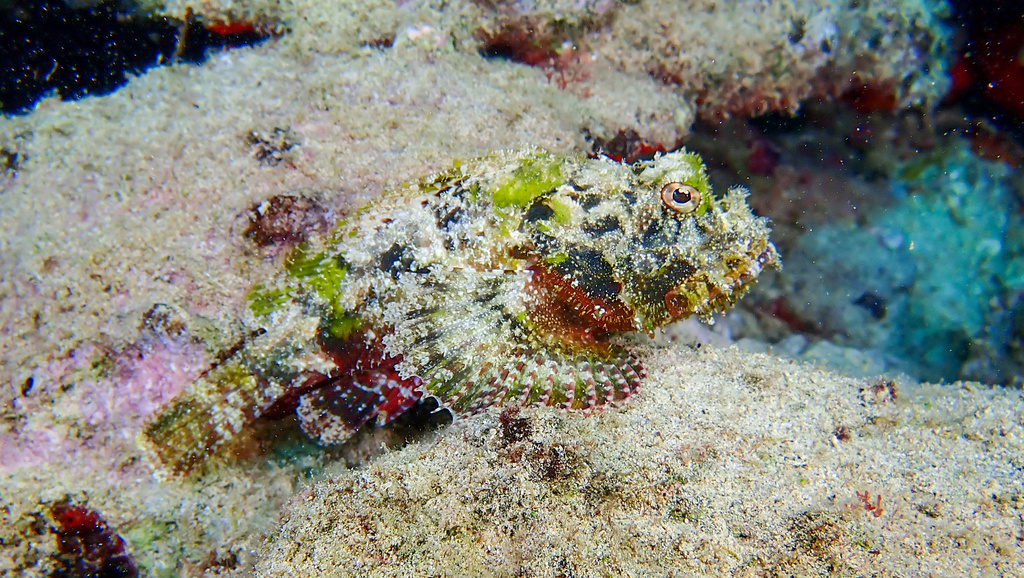
A patient, frilly ambush hunter that looks like part of the reef. A treasure if you spot one, never touch, and never confuse it with a true stonefish.
Varies by species: the common reef scorpionfish, like the tasselled scorpionfish, are Least Concern.
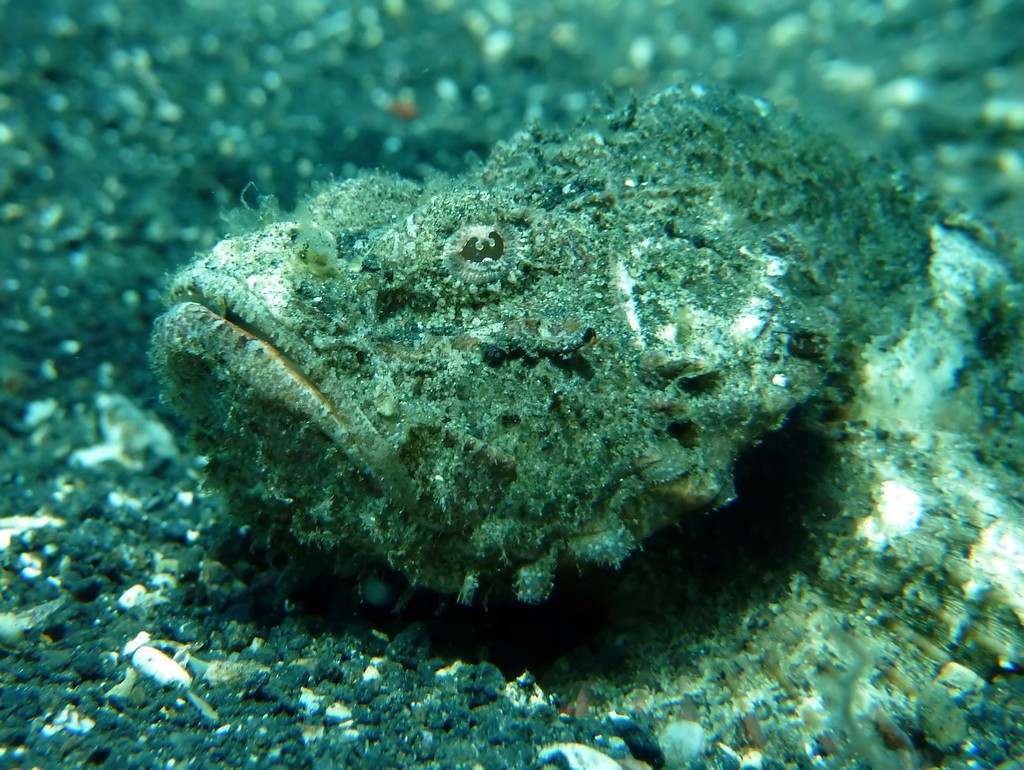
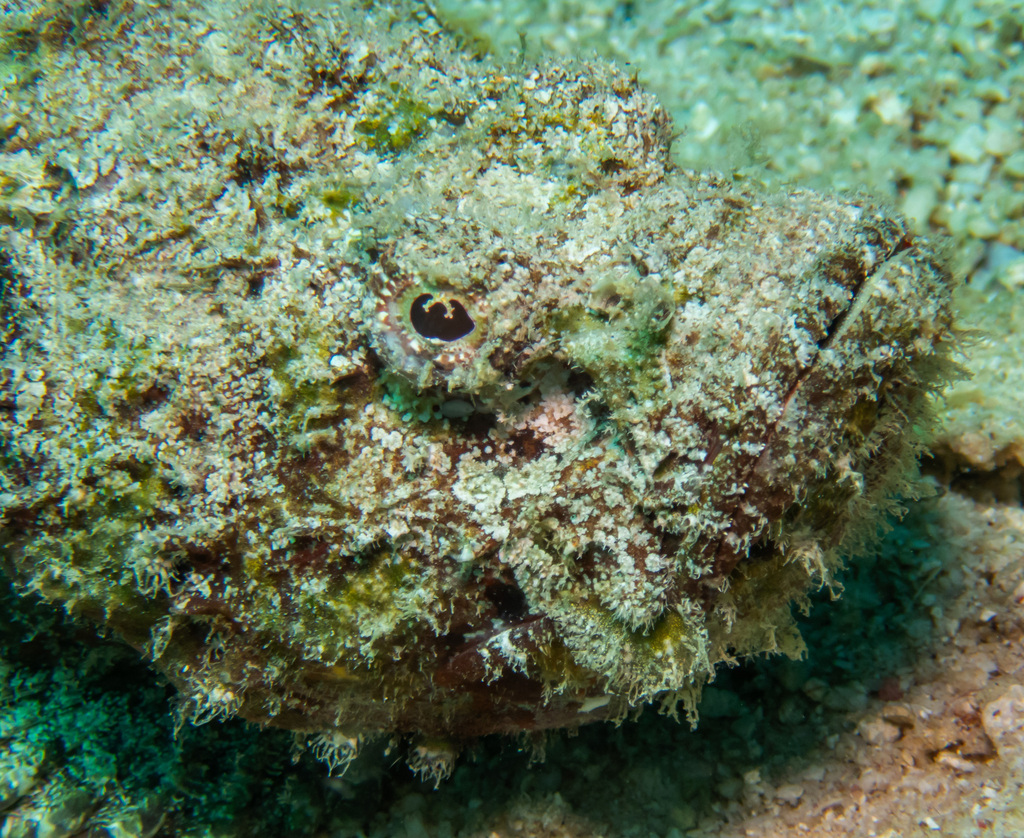
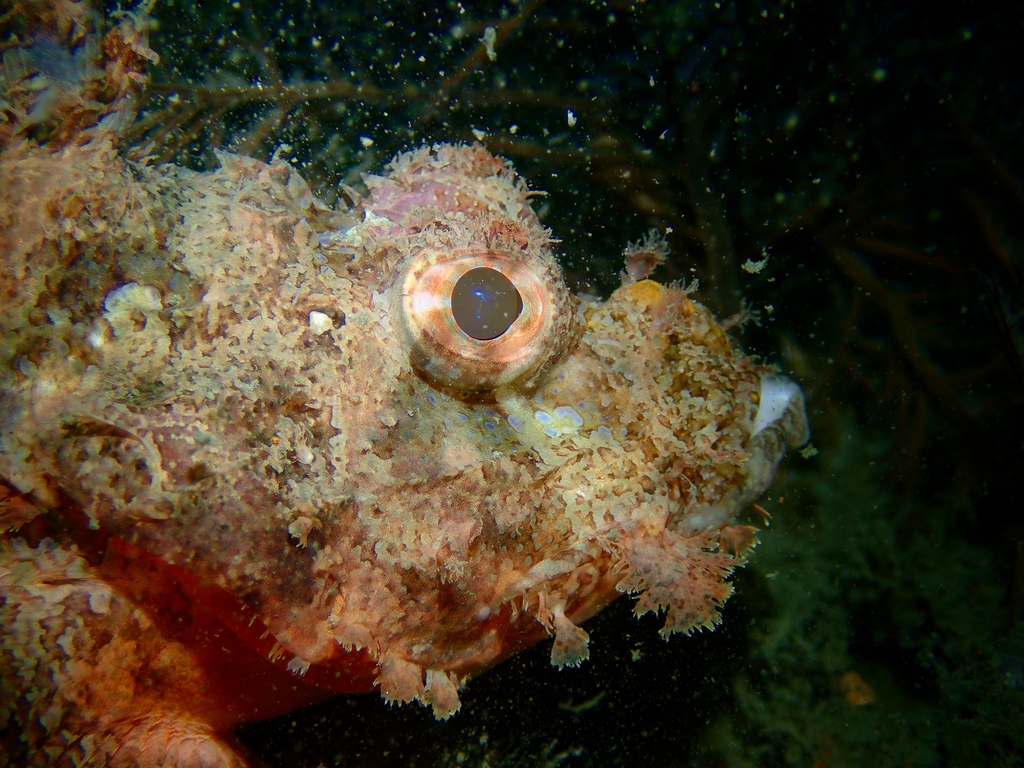
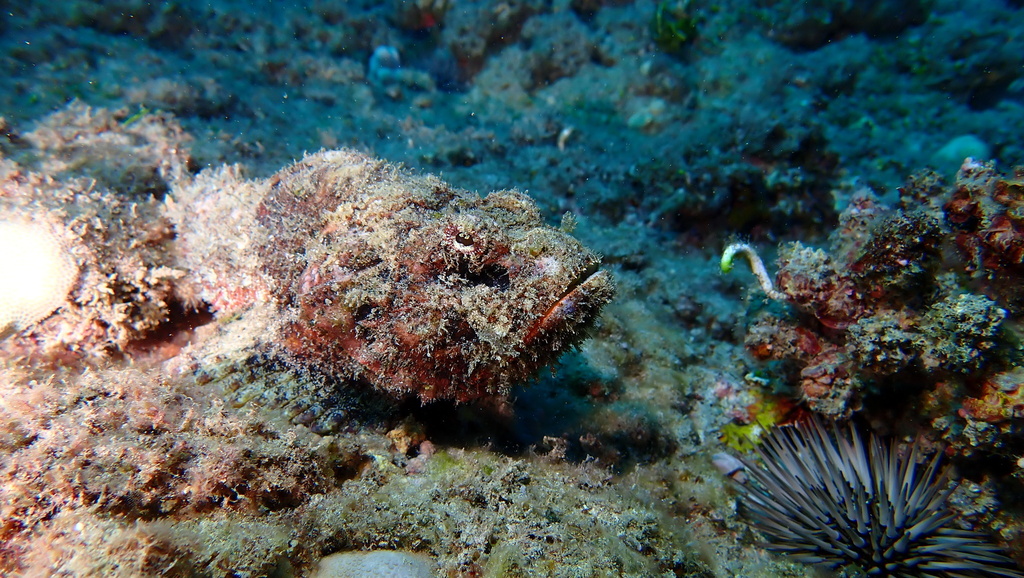
Photos show the species, not always the places on this page.
Length
Varies by species. Tasselled scorpionfish commonly about 30 cm (12 in); largest recorded about 36 cm (14 in). Leaf scorpionfish only up to about 10 cm (4 in)
Weight
Not reliably measured
Next to a person
About as long as a hand to a forearm
What it eats
Small fish and crustaceans that swim too close.
Around people
Potentially dangerous, respect
How it lives
Scorpionfish, like those of the genus Scorpaenopsis, sit still on reef, rubble and sand, covered in skin flaps and algae colours. They live alone and strike fast when prey comes close. Spines on the back, belly and rear fins carry venom. Stings are very painful, can take weeks or months to heal, and need a doctor, but they are usually less serious than true stonefish stings.
Where it goes
Resident. Scorpionfish stay in a small home area on the reef. No migration is known.
We only draw a journey on the map when scientists have tracked it or clearly documented it. For this animal we have not found one yet.
Populations
There are many scorpionfish species across the Indo-Pacific and Red Sea, and other kinds live in the warm Atlantic and the Mediterranean. The tasselled scorpionfish, for example, lives from the Red Sea and South Africa to the Mariana Islands and Taiwan.
Meet it respectfully
Keep neutral buoyancy, do not put hands, fins or knees on the reef, and never touch, poke or move a scorpionfish. Use a pointer only in the water, never on animals or the reef. If stung, soak in hot water you can tolerate (43 to 45°C), do not use a pressure bandage, and see a doctor. Get urgent help for weakness, vomiting or breathing problems. This is not medical advice.
Fun fact
Tap the bulb to light it up.
Adult tasselled scorpionfish wear a beard of many small skin tassels.
The false stonefish is a scorpionfish that flashes bright colours on the inside of its fins when disturbed.
The leaf scorpionfish sways like a falling leaf and sheds its skin about twice a month.
A pressure bandage is not used for fish spine stings.
Hot water helps a lot with lionfish stings, but for scorpionfish stings it works less well, and healing can take weeks or months.
Source: DAN Southern Africa
Scorpionfish in the Ocean Atlas
Places we have researched where this animal is recorded. It is never guaranteed, and some places are for watching from the boat only.
Travel with usComing soonTrusted referralExploringOn pause, story onlyEthics pass
Country colour: pink where we travel, blue where we are exploring or refer, grey for story only.
 Australia
 Egypt
Egypt Fiji
Fiji French Polynesia
 Indonesia
 Japan
Japan Jordan
 Malaysia
 Maldives
 Mozambique
 New Caledonia
 Philippines
 Réunion
 Saudi Arabia
 Seychelles
 South Africa
 Sri Lanka
 Taiwan
 Tanzania
 Thailand
 United States
 Vietnam
Sources for this page
- FishBase, Scorpaenopsis oxycephala
- DAN Southern Africa, Lionfish, scorpionfish and stonefish envenomations
- Divers Alert Network, Hazardous marine life injuries
- ANZCOR Guideline 9.4.5, First aid management of marine envenomation
- GBIF occurrence records
- FishBase, Scorpaenopsis diabolus
- FishBase, Taenianotus triacanthus
- Motomura & Matsuura, 2016, IUCN Red List
Facts checked 26 September 2026. Photos: Unsplash licence, or Creative Commons as shown on each photo.
Work in ocean travel?
We are always happy to hear from exceptional local operators, accommodation, conservation organisations and destination experts. If your work fits responsible, small-group ocean travel, we would love to learn more.
Partner with Ocean CallingNot sure where to go? Get your Ocean Match
from CHF 19