
Reed cormorant (long-tailed cormorant)
Microcarbo africanus
A small dark cormorant on a reedy perch is a quiet sight, and no sighting is ever a promise.
Least Concern (IUCN) means it is not at high risk of extinction at present, and BirdLife International's 2024 figures put the population at 134,000 to 802,000 birds.
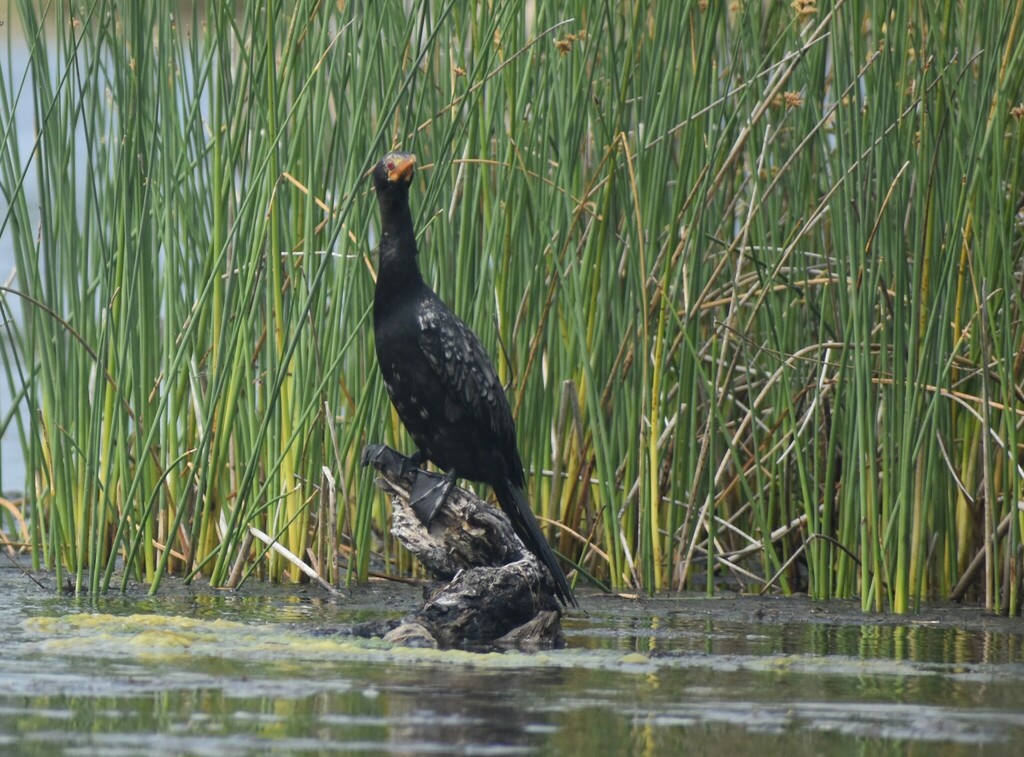
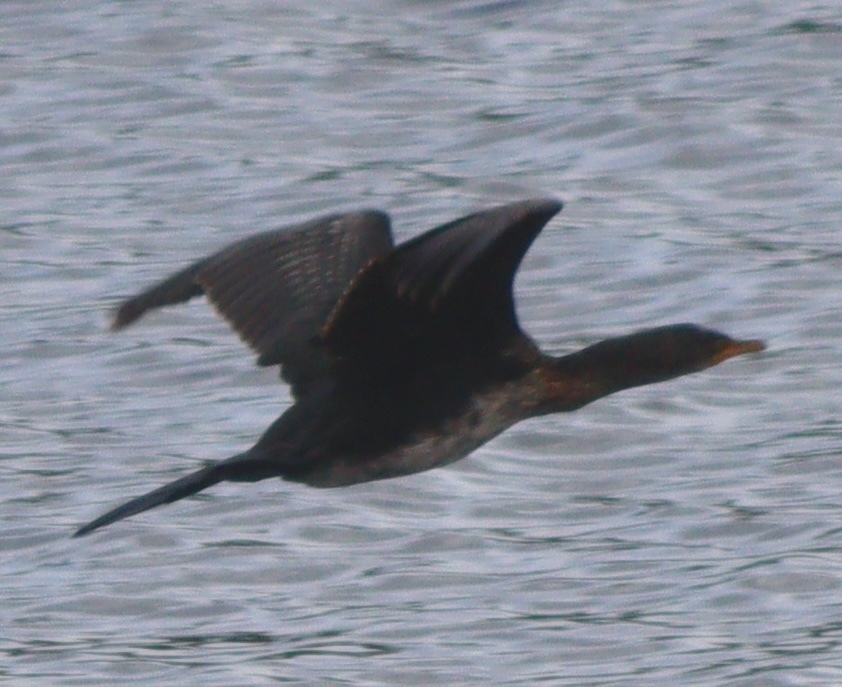
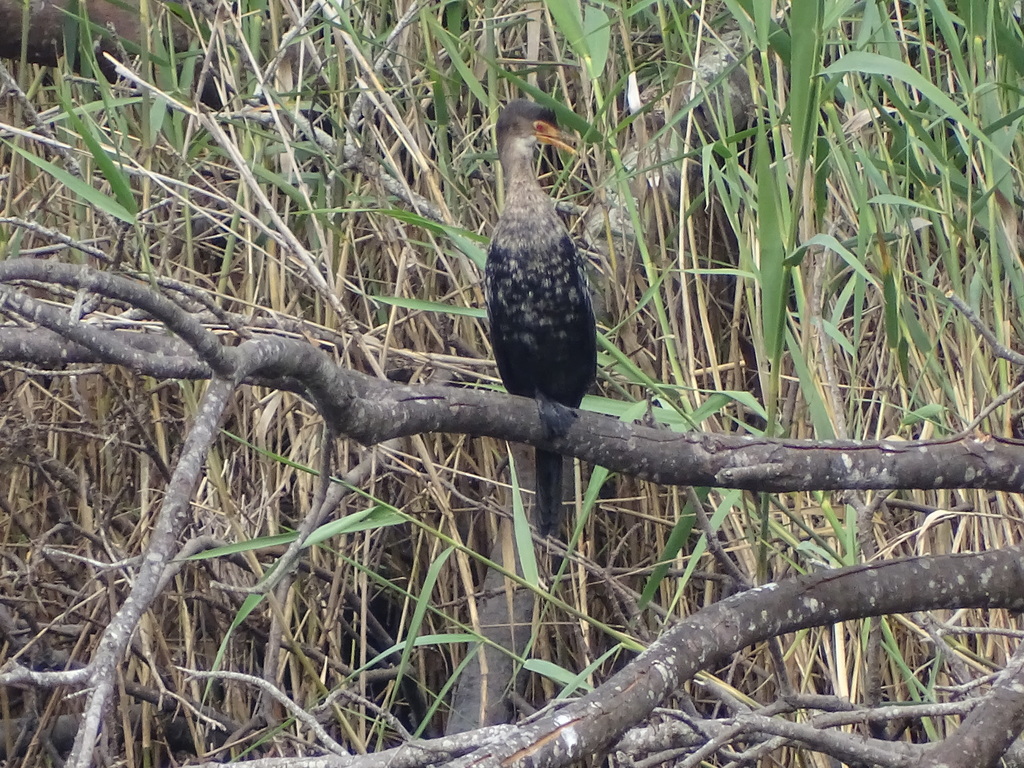
Photos show the species, not always the places on this page.
Length
About 50 to 55 cm (20 to 22 in), wingspan about 80 to 90 cm (31 to 35 in); one source gives up to 60 cm (24 in)
Weight
About 680 g (1.5 lb) in the sources I read; individuals vary and I found no range
Next to a person
About as long as an adult's forearm and hand together, and lighter than a litre bottle of water
What it eats
Mostly small fish up to about 20 cm (8 in) long, often slow-moving, slim kinds such as mormyrids, catfishes and cichlids. It also takes frogs, crabs, molluscs and aquatic insects. It chases prey underwater for about 40 to 45 seconds in shallow water less than 2 m (6.5 ft) deep.
Around people
Quiet, keep distance
How it lives
It lives on freshwater lakes, slow streams, flooded areas and quiet vegetated coasts. It nests in colonies, often alongside other waterbirds, in trees or hidden in long grass. A clutch is usually 2 to 4 eggs. One source gives incubation of 23 to 24 days and fledging 28 to 35 days after hatching. Birds first breed at about 2.5 years. The average lifespan is about 5.7 years and the oldest recorded bird was 13.2 years.
Where it goes
Mostly resident. Birds make irregular, local movements that follow changes in water level rather than a true migration. Some sources also describe seasonal movements. Sources I read do not describe set routes.
We only draw a journey on the map when scientists have tracked it or clearly documented it. For this animal we have not found one yet.
Populations
Found across Africa south of the Sahara and in Madagascar. BirdLife International's 2024 estimate, as listed on Wikipedia, is 134,000 to 802,000 birds with a steady trend. One other source calls the trend declining. It has benefited from dams and is sometimes persecuted in southern Africa. There are no population figures by country in the sources I read.
Meet it respectfully
Watch from a distance and let the birds go about their day. Never chase, feed or bait them, and keep away from nesting colonies, where an approach can make adults leave eggs and chicks. Keep boats slow and well back from roosting trees and reedbeds. Follow local rules and your guide. Sightings are never promised.
Fun fact
Tap the bulb to light it up.
It nests in colonies, often alongside other waterbirds.
It chases fish underwater for about 40 to 45 seconds at a time in shallow water.
In the wild, the oldest recorded reed cormorant lived 13.2 years.
Reed cormorant (long-tailed cormorant) in the Ocean Atlas
Places we have researched where this animal is recorded. It is never guaranteed, and some places are for watching from the boat only.
Travel with usComing soonTrusted referralExploringOn pause, story onlyEthics pass
Country colour: pink where we travel, blue where we are exploring or refer, grey for story only.
 Angola
 Benin
 Cameroon
 Côte d'Ivoire
 Democratic Republic of the Congo
 Egypt
 Equatorial Guinea
 Gabon
 Gambia
 Ghana
 Guinea
 Guinea-Bissau
 Kenya
 Liberia
 Madagascar
 Mauritania
 Mozambique
 Namibia
 Nigeria
 Republic of the Congo
 São Tomé and Príncipe
 Senegal
 Sierra Leone
 South Africa
 Sudan
 Tanzania
 Togo
Sources for this page
- Wikipedia, Reed cormorant, 2026
- Oiseaux-Birds, Reed cormorant, 2026
- Oiseaux.net, Reed cormorant, 2026
- Wikipedia, List of Suliformes by population (BirdLife International, 2024)
- GBIF, IUCN Red List category, 2026
Facts checked 5 October 2026. Photos: Unsplash licence, or Creative Commons as shown on each photo.
Work in ocean travel?
We are always happy to hear from exceptional local operators, accommodation, conservation organisations and destination experts. If your work fits responsible, small-group ocean travel, we would love to learn more.
Partner with Ocean CallingGili Trawangan in 5 days
from CHF 790