
Bull shark
Carcharhinus leucas
Bull sharks are strong, stocky coastal sharks that can even swim far up rivers. Met calmly on a guided dive, they are impressive and ask for real respect.
Vulnerable (IUCN, 2020) means it is at high risk of extinction in the wild.
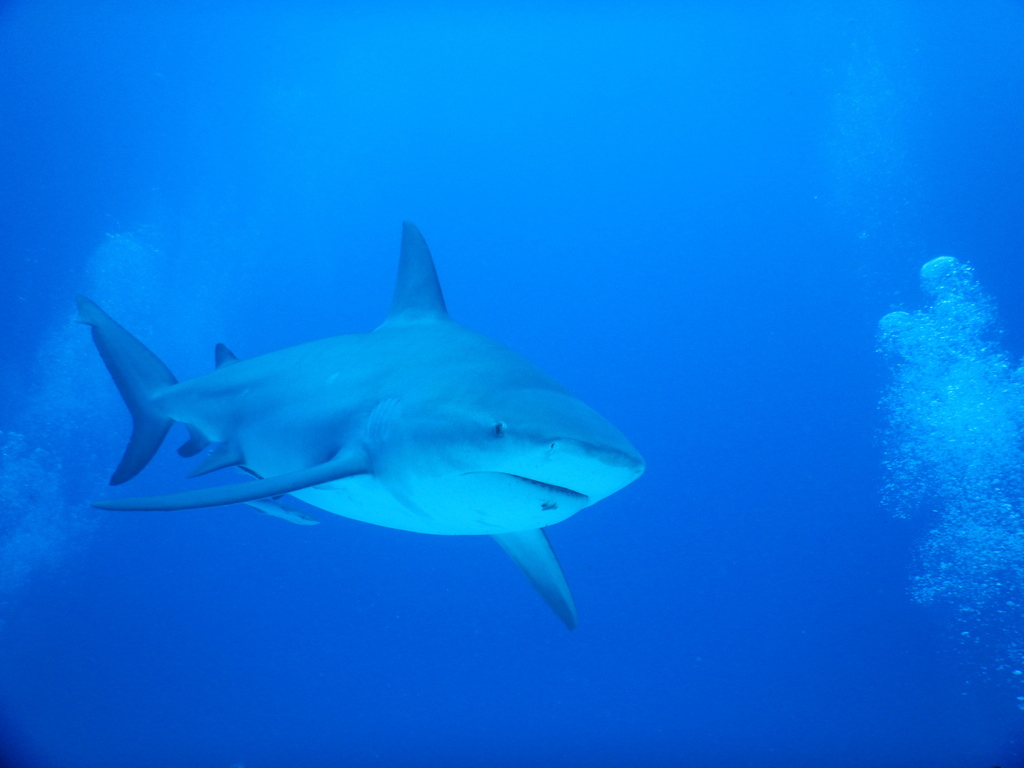

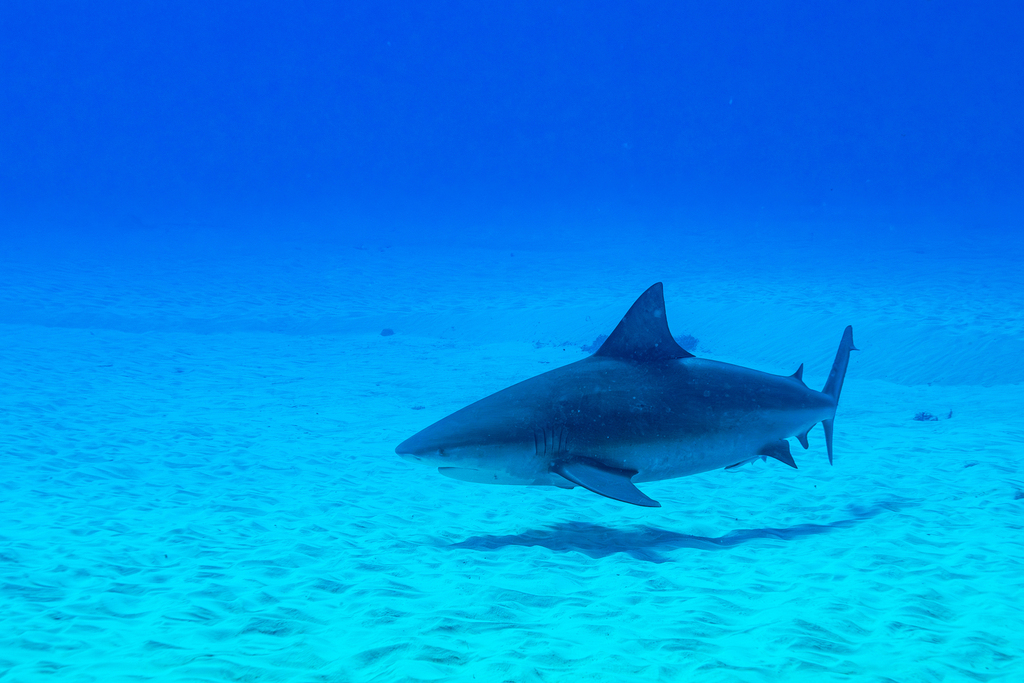
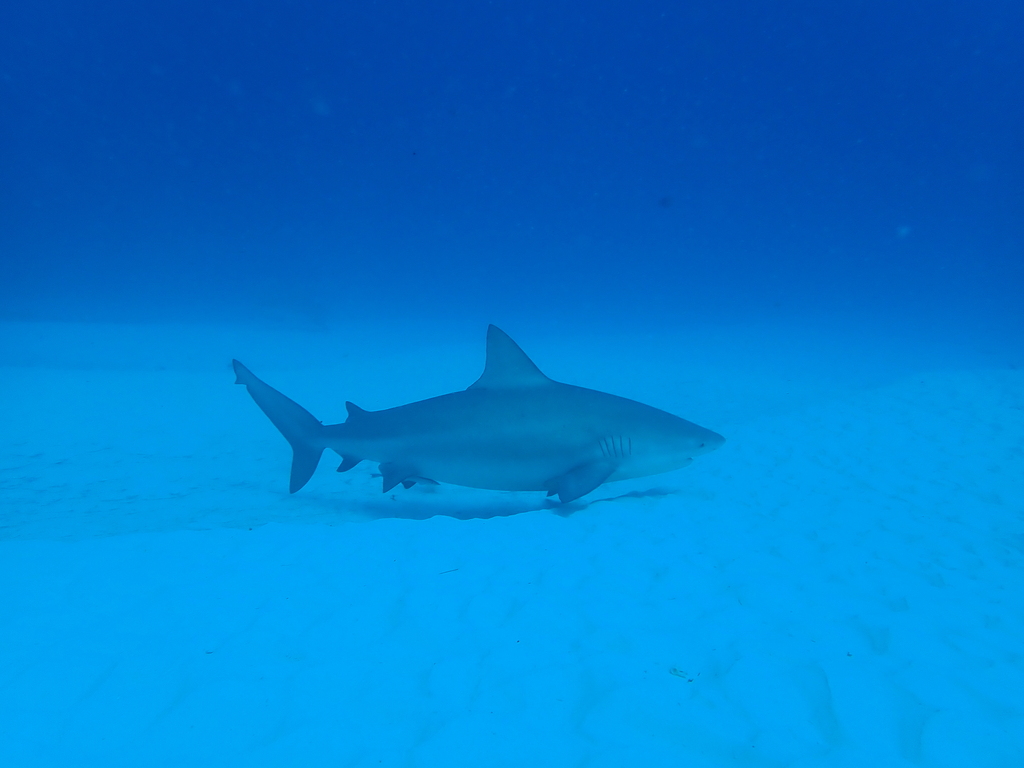
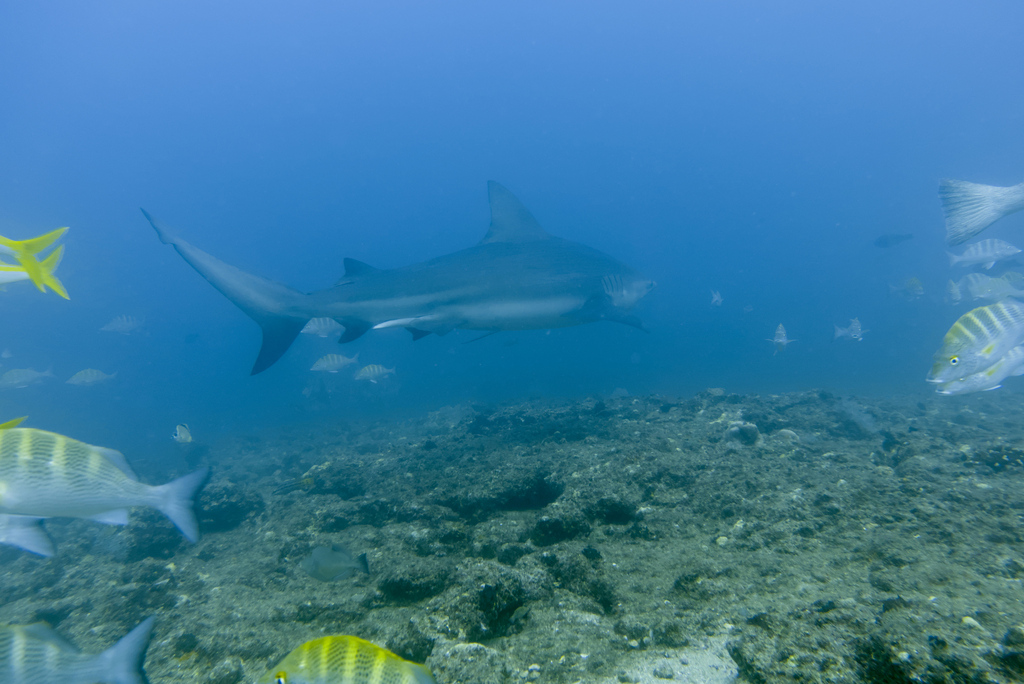
Photos show the species, not always the places on this page.
Length
Usually about 2.6 m (8.5 ft); largest recorded about 3.6 m (11.8 ft) for males and 4 m (13.1 ft) for females
Weight
Typical weight not reliably measured; largest recorded about 316.5 kg (698 lb)
Next to a person
A typical adult is about one-and-a-half times as long as a person, and much heavier
What it eats
Mainly bony fish and small sharks, plus stingrays, sea turtles, dolphins, crabs, shrimp, seabirds and squid.
Around people
Potentially dangerous, respect
How it lives
The bull shark lives in warm coastal waters around the world. It is one of very few sharks that can move into fresh water and travel far up rivers, although most of its life is spent in coastal seas. It hunts mostly fish and other sharks. Females give birth to 1 to 13 live pups after a 10 to 11 month pregnancy, in lagoons, river mouths and other low salt estuaries. Females mature at about 18 years.
Where it goes
Many bull sharks come back to the same coast each year and travel between seasons, but not every bull shark migrates and some stay in one area. In Mozambique, 10 of 18 tagged adults made trips of more than 400 km, mostly north, and one reached Aliwal Shoal in South Africa. In Fiji, pregnant females leave Shark Reef to give birth in rivers such as the Rewa. One female from the Seychelles swam to southeast Madagascar and back.
Populations
At Playa del Carmen, Mexico, bull sharks gather from November to March, when the water is warmer than 26°C, at a site where sharks are fed for dives. In 2023, three females there were confirmed pregnant by underwater ultrasound. In Fiji, 48 sharks were identified at Shark Reef between 2004 and 2011. Young sharks grow up in estuaries and rivers.
Meet it respectfully
Meet bull sharks only on guided scuba dives that follow the local rules. Stay low and still, keep your hands close to your body, never touch, feed or bait them, and follow the guide's distance and exit rules. In Réunion, local rules ban swimming and surfing in the 300 m coastal strip outside lagoons and managed zones because of shark risk.
Fun fact
Tap the bulb to light it up.
Bull sharks have been found 3,700 km up the Amazon River, in Peru, and over 3,000 km up the Mississippi River.
In 2023, pregnant bull sharks at Playa del Carmen were checked with an underwater ultrasound, without catching them.
A female bull shark tagged in South Africa in 2021 was caught near Lagos, Nigeria, in July 2024. She swam at least 7,240 km around the tip of Africa, the longest bull shark journey known.
Source: Daly et al., 2025, Ecology, transoceanic movement by a bull shark (via National Geographic)
A pregnant female bull shark tagged in the Seychelles swam about 2,000 km to southeast Madagascar, stayed in very shallow water, and came back no longer pregnant.
Source: Lea et al., 2015, Journal of Fish Biology, to Madagascar and back
At Shark Reef in Fiji, tagged bull sharks came to the dive site even on days without feeding, and some females were away for up to 210 days in a row before coming back.
Source: Brunnschweiler et al., 2013, PLOS ONE, opportunistic visitors
Of 31 female bull sharks tagged at Shark Reef in Fiji, 14 were later detected in the Rewa, Sigatoka, Navua or Ba rivers during the birthing season.
Bull sharks tagged at the Pinnacles reef in southern Mozambique travelled 450 to 3,760 km in a year, with an average of 1,163 km.
Source: Daly et al., 2014, PLOS ONE, bull shark residency and migration in southern Africa
Follow its journey
Choose a journey and watch it travel. Every line comes from satellite tracking or documented research, and the source is named.
StartEndJourney (the line joins documented areas; real paths vary)
Bull shark in the Ocean Atlas
Places we have researched where this animal is recorded. It is never guaranteed, and some places are for watching from the boat only.
Travel with usComing soonTrusted referralExploringOn pause, story onlyEthics pass
Country colour: pink where we travel, blue where we are exploring or refer, grey for story only.
 Australia
 The Bahamas
 Bangladesh
 Benin
Benin Brazil
 Cameroon
 Costa Rica
 Faroe Islands
 Fiji
Fiji French Guiana
 India
India Indonesia
 Japan
Japan Malaysia
 Mexico
 Mozambique
 New Caledonia
 Nicaragua
 Nigeria
 Panama
 Papua New Guinea
 Réunion
 Seychelles
 Solomon Islands
 South Africa
 Sri Lanka
 Thailand
 United Arab Emirates
 United Kingdom
 United States
Sources for this page
- Florida Museum of Natural History, 2026
- FishBase, 2026
- Daly et al., 2014, PLOS ONE
- Brunnschweiler et al., 2013, PLOS ONE
- Brunnschweiler et al., 2024, Pacific Conservation Biology
- Lea et al., 2015, Journal of Fish Biology
- Daly et al., 2025, Ecology
- Hoyos-Padilla et al., 2023, Frontiers in Marine Science
Facts checked 26 September 2026. Photos: Unsplash licence, or Creative Commons as shown on each photo.
Work in ocean travel?
We are always happy to hear from exceptional local operators, accommodation, conservation organisations and destination experts. If your work fits responsible, small-group ocean travel, we would love to learn more.
Partner with Ocean CallingNot sure where to go? Get your Ocean Match
from CHF 19