
Indo-Pacific bottlenose dolphin
Tursiops aduncus
Coastal Indo-Pacific dolphins with complex social lives. Watch quietly from a respectful distance and never feed them.
Near Threatened (IUCN, 2019) means it is close to becoming threatened.


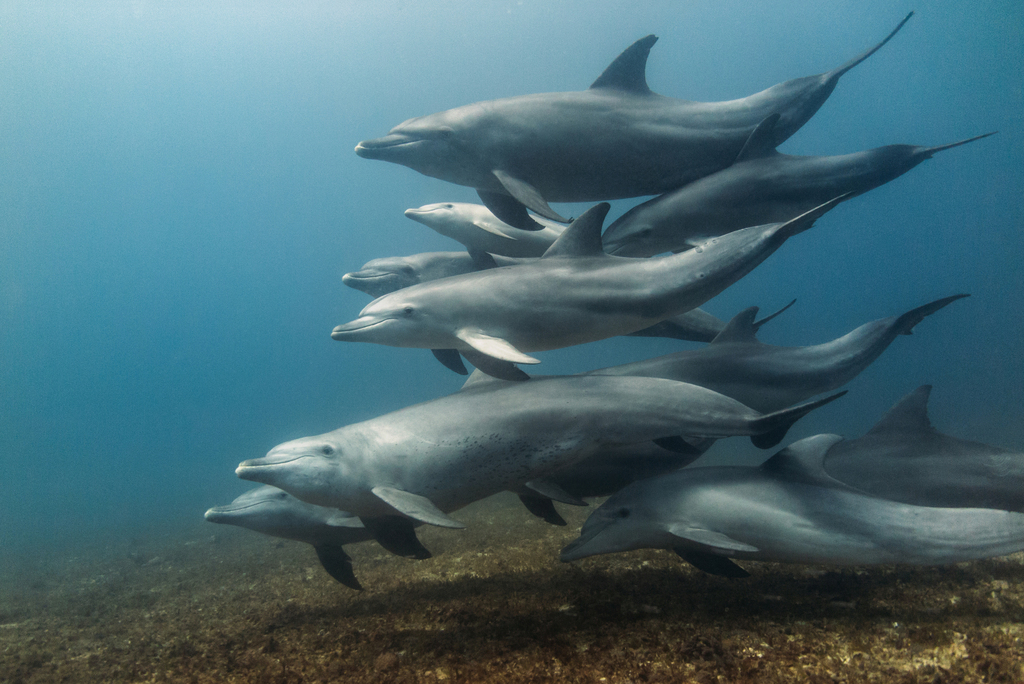
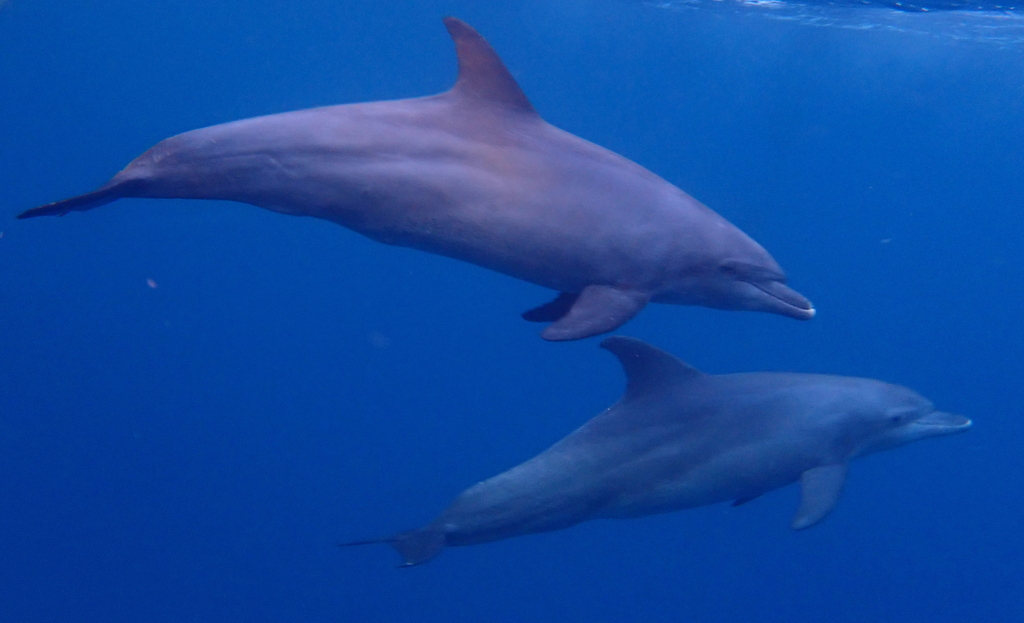
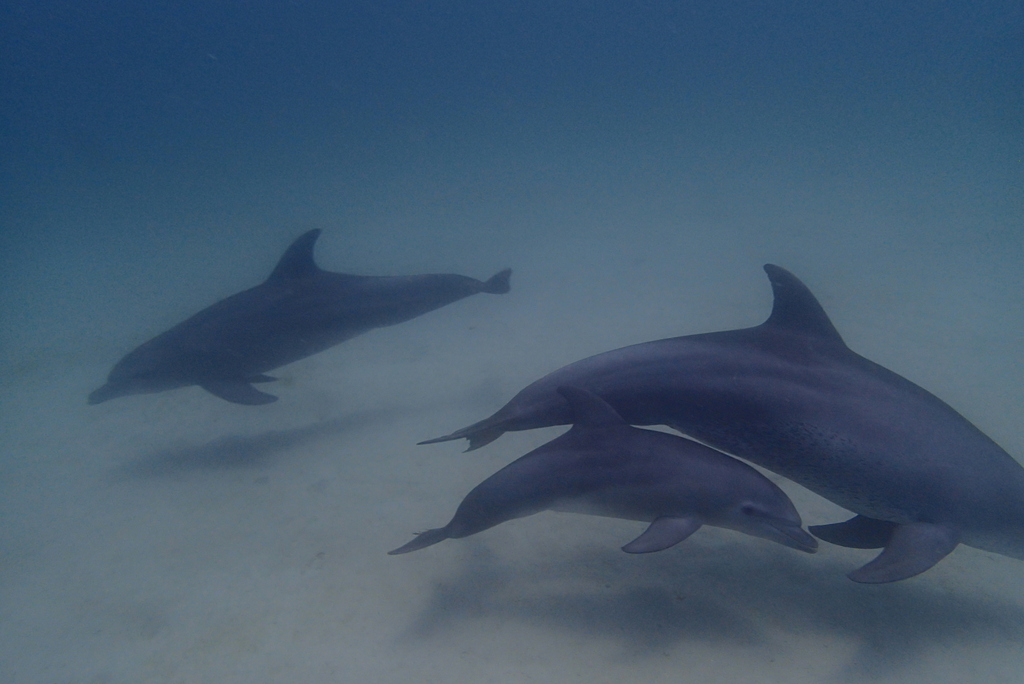
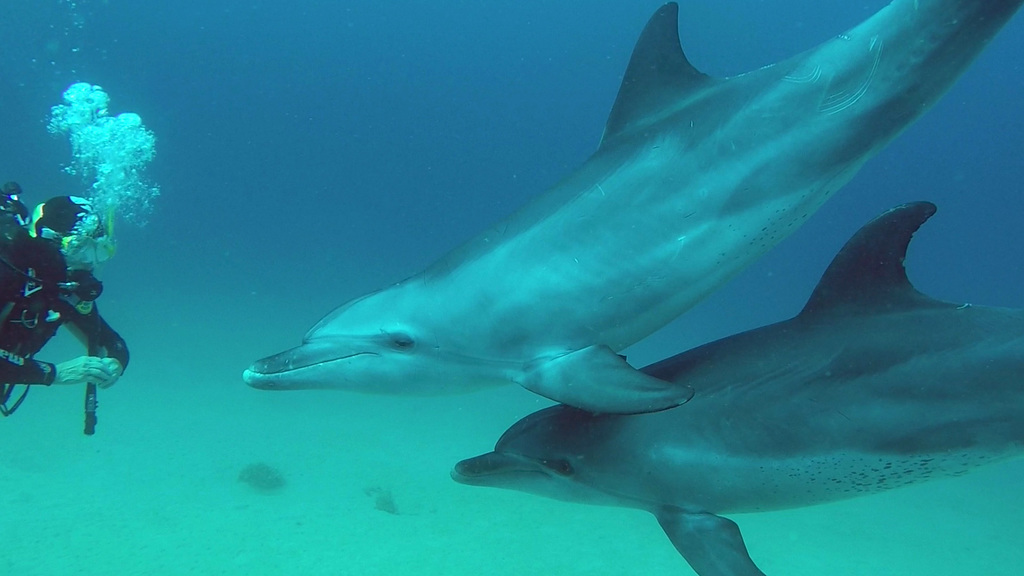
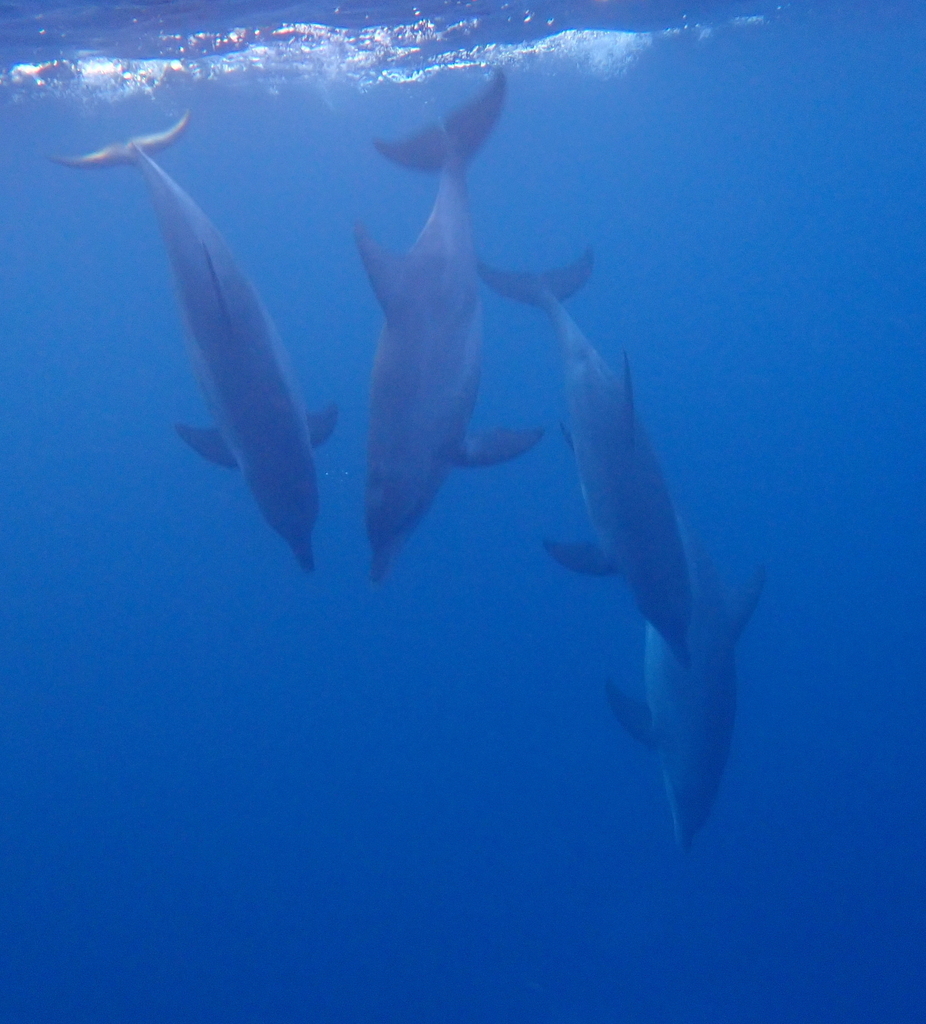
Photos show the species, not always the places on this page.
Length
Varies by region; eastern Australian adults are often about 2.3 m (7.5 ft). The largest males reach about 2.7 m (8.9 ft) and females about 2.6 m (8.5 ft)
Weight
Varies by region; mature males in some Australian samples are often about 90 to 150 kg (198 to 331 lb). The largest males reach about 230 kg (507 lb)
Next to a person
About as long as an adult person, up to roughly one and a half times; the heaviest males can weigh as much as two to three adults
What it eats
Reef and sea-floor fish, squid and cuttlefish from coastal waters.
Around people
Defensive if pressured
How it lives
Indo-Pacific bottlenose dolphins live in shallow coastal water, usually in groups of fewer than 20, sometimes more. They mostly feed alone on reef and sea-floor fish, squid and cuttlefish, and in some places follow fishing trawlers for scraps. Pregnancy lasts about 12 months, calves are weaned at about 18 to 24 months, and a female has a calf every 3 to 6 years.
Where it goes
Many inshore communities stay in the same bays for years. Other groups shift with the seasons or make longer trips, so there is no single migration route.
We only draw a journey on the map when scientists have tracked it or clearly documented it. For this animal we have not found one yet.
Populations
A coastal species of the Indian and western Pacific Oceans, from South Africa to southern Japan and Australia, and different from the common bottlenose dolphin. It is usually slimmer, with a longer, thinner beak, and many adults have dark spots on the belly. In southern Australia, some inshore bottlenose dolphins may belong to other forms. In Timor-Leste, which bottlenose species is present still needs careful confirmation.
Meet it respectfully
These dolphins are sensitive to tourism: in Shark Bay, their numbers at the tour site fell when the number of tour boats went from one to two. Rules differ by country. In Australia, national guidelines ask boats to keep at least 50 m to the side and 150 m ahead of or behind adult dolphins, and touching and feeding are prohibited. In Kenya's Kisite area, local codes ask boats to keep 50 to 100 m and do not allow swimming. We never feed, touch, chase or swim after them, and stressed dolphins can bite.
Fun fact
Tap the bulb to light it up.
Many adults have small dark spots on the belly, which common bottlenose dolphins rarely show.
In Shark Bay, males form teams within teams, pairs and trios that join bigger alliances, one of the most complex alliance systems known outside humans.
Only some Shark Bay dolphins use sponges as tools; it is a local tradition, not something the whole species does.
In Shark Bay, Australia, some of these dolphins use marine sponges as foraging tools. The skill passes mostly from mother to daughter, within one family line.
Source: Kruetzen et al., 2005, PNAS, cultural transmission of tool use in bottlenose dolphins
Genetic tests suggest that all the sponge-using dolphins in Shark Bay descend from one recent ancestor, nicknamed Sponging Eve.
Source: Kruetzen et al., 2005, PNAS, cultural transmission of tool use in bottlenose dolphins
Indo-Pacific bottlenose dolphin in the Ocean Atlas
Places we have researched where this animal is recorded. It is never guaranteed, and some places are for watching from the boat only.
Travel with usComing soonTrusted referralExploringOn pause, story onlyEthics pass
Country colour: pink where we travel, blue where we are exploring or refer, grey for story only.
 Australia
 Bangladesh
 Egypt
Egypt India
India Indonesia
 Iran
Iran Israel
 Japan
Japan Jordan
 Kenya
Kenya Madagascar
 Malaysia
 Maldives
 Mauritius
 Mozambique
 Myanmar
 New Caledonia
 Oman
Oman Pakistan
 Philippines
 Réunion
 Saudi Arabia
 Solomon Islands
 South Africa
 Sri Lanka
 Sudan
Sudan Tanzania
 United Arab Emirates
 Vietnam
Read more about the indo-pacific bottlenose dolphin
Sources for this page
- Whale & Dolphin Conservation
- SeaLifeBase
- Australian Government
- IUCN Red List
- Australian National Guidelines for Whale and Dolphin Watching, 2017
- OBIS-SEAMAP, Tursiops aduncus
- Bejder et al., 2006
- Connor et al., 2012
Facts checked 26 September 2026. Photos: Unsplash licence, or Creative Commons as shown on each photo.
Work in ocean travel?
We are always happy to hear from exceptional local operators, accommodation, conservation organisations and destination experts. If your work fits responsible, small-group ocean travel, we would love to learn more.
Partner with Ocean Calling