
Sailfish
Istiophorus platypterus
A dark sail rising at the surface, then gone. Sailfish live in open water on their own schedule, and no sighting is ever a promise.
Vulnerable (IUCN, 2022) means the sailfish is at high risk of extinction in the wild. FishBase notes the listing is under criterion A2bd, which relates to population decline.
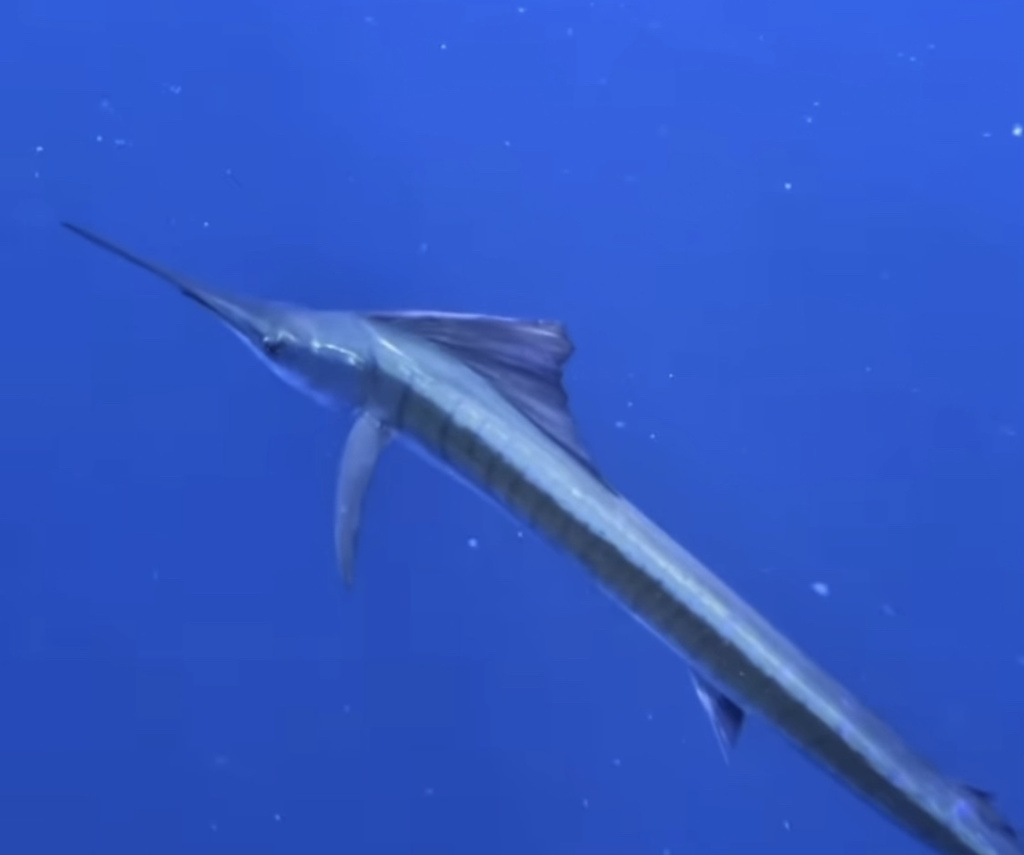
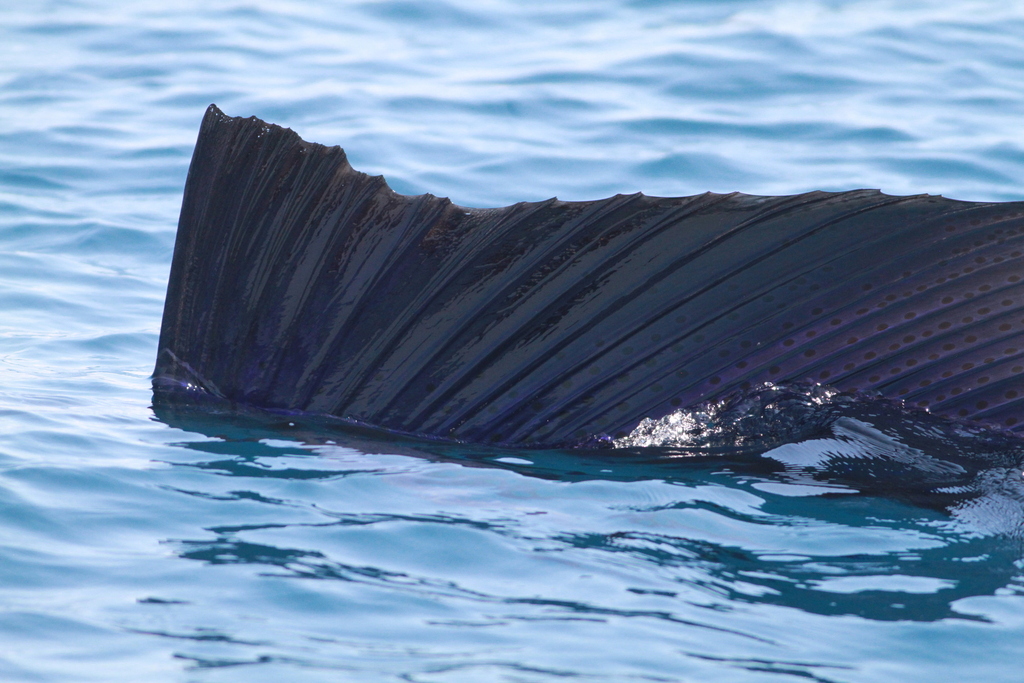
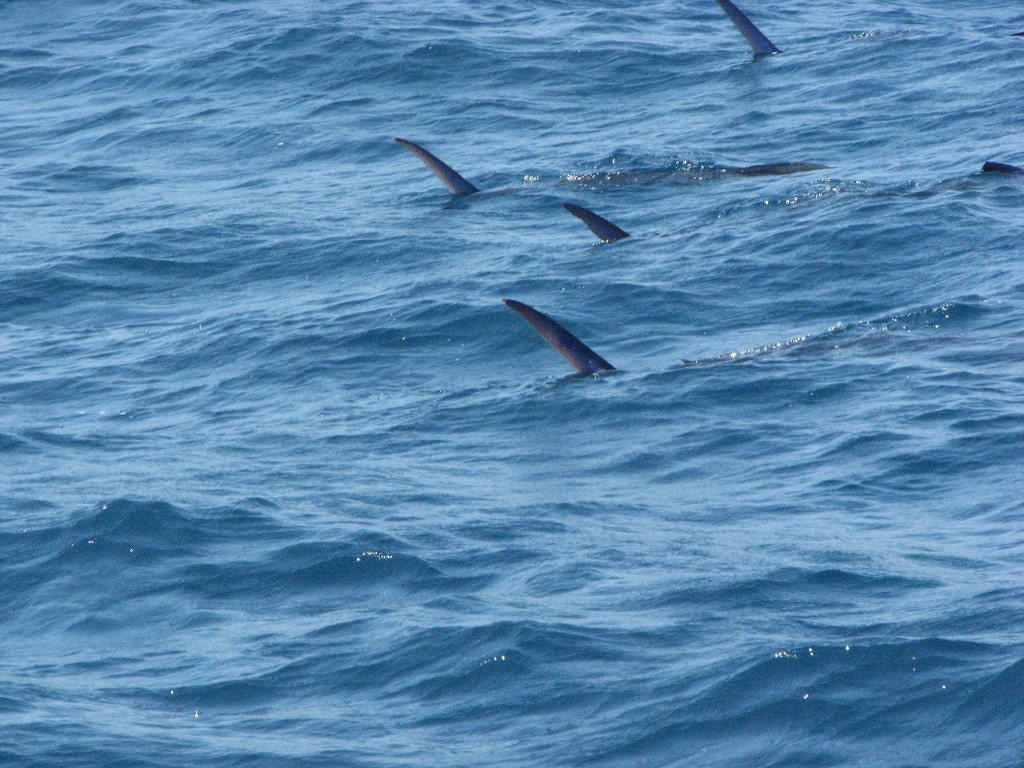
Photos show the species, not always the places on this page.
Length
Common length about 2.7 m (8.9 ft); the maximum reported by FishBase is about 3.5 m (11.4 ft) fork length. Other sources give up to about 3.6 m, so figures differ slightly.
Weight
The all-tackle record is about 100 kg (220 lb), and most fish are far lighter. Pacific fish grow larger than Atlantic ones; fish measured in southern Florida are mostly 1.7 to 2.3 m long.
Next to a person
A typical fish is about one and a half times as long as an adult is tall, and a record fish is about as heavy as one large adult
What it eats
Fishes, squid and crustaceans. In the Pacific they take sardines, anchovies, jacks, dolphinfish, ribbonfish and triggerfish. Where scientists have watched them in Australian waters, groups work together to herd baitfish into a tight ball and then slash through it with the bill to wound prey.
Around people
Watch, never chase
How it lives
Sailfish live in open water, usually above the thermocline and most often close to coasts and islands, from the surface to about 200 m deep. In the tropical Pacific they spawn all year round, with a peak in the local summer. Males and females swim in pairs, or several males pursue one female. In the Atlantic, a large female can release about 4.5 million eggs, and young fish reach about 1.4 m (4.5 ft) and 2.7 kg (6 lb) in six months. FishBase gives a maximum age of about 13 years.
Where it goes
Sailfish are highly migratory, and FishBase notes spawning migrations in the Pacific. A 2025 study off Guatemala combined fishery records from 1994 to 2024 with seven satellite tags. It found that seasonal, wind-driven upwelling squeezes suitable habitat towards the surface in winter, which concentrates sailfish and their prey. Where a sailfish is on a given day still depends on season, weather and the ocean.
We only draw a journey on the map when scientists have tracked it or clearly documented it. For this animal we have not found one yet.
Populations
The IUCN Red List lists the sailfish as Vulnerable globally (assessment published 2022), under criterion A2bd according to FishBase. FishBase rates its resilience as low, with a minimum population doubling time of 4.5 to 14 years. Most are caught as bycatch by tuna longliners. A 2025 genetic study of 590 fish from 20 places found three separate populations: the Atlantic, the eastern Pacific and the Indo-West Pacific. The authors advise that the eastern Pacific stock continues to be managed separately. Authorities differ on whether the Atlantic sailfish is a separate species; the IUCN treats one global species.
Meet it respectfully
Watch from a slow, steady boat and let the fish choose the distance. Never chase, touch, feed or bait it, and never drive through a group that is feeding on baitfish. Sailfish are a sport and commercial fish in many places, so ask your skipper about local rules, as none were checked for this card. Whether you see one depends on season, weather and luck.
Fun fact
Tap the bulb to light it up.
In Australian waters, sailfish have been seen hunting in groups, herding baitfish into a ball before slashing through it with the bill.
A 2025 genetic study found eastern Pacific sailfish are the most distinct group, with little gene flow with Atlantic sailfish for about 6 million years, since the Isthmus of Panama formed a barrier.
A large female can release about 4.5 million eggs, according to Atlantic data from the Florida Museum.
Sailfish in the Ocean Atlas
Places we have researched where this animal is recorded. It is never guaranteed, and some places are for watching from the boat only.
Travel with usComing soonTrusted referralExploringOn pause, story onlyEthics pass
Country colour: pink where we travel, blue where we are exploring or refer, grey for story only.
 Australia
 Belize
 Brazil
 Colombia
 Costa Rica
 Cuba
Cuba Ecuador
 Faroe Islands
 France
 Germany
 Guatemala
 Honduras
 Iceland
 India
India Indonesia
 Italy
Italy Japan
Japan Mexico
 Mozambique
 Netherlands
 Norway
 Panama
 Philippines
 Portugal
 Seychelles
 Spain
Spain Taiwan
 Thailand
 Tonga
Tonga United Kingdom
 United States
Sources for this page
- GBIF, IUCN Red List category for Istiophorus platypterus
- FishBase, Istiophorus platypterus
- Florida Museum, Sailfish species profile
- Fishes of Australia, Sailfish
- ICES Journal of Marine Science, 2025, global sailfish genetics
- ICES Journal of Marine Science, 2025, sailfish off Guatemala
- Smithsonian Tropical Research Institute, Shorefishes of the Eastern Pacific
- Wikipedia, Indo-Pacific sailfish
Facts checked 5 October 2026. Photos: Unsplash licence, or Creative Commons as shown on each photo.
Work in ocean travel?
We are always happy to hear from exceptional local operators, accommodation, conservation organisations and destination experts. If your work fits responsible, small-group ocean travel, we would love to learn more.
Partner with Ocean CallingNew: tiger sharks in Fuvahmulah, January or March 2027
from CHF 2,900