
Fin whale
Balaenoptera physalus
Sleek and fast, the fin whale is the second-largest animal on Earth. Its tall blow is worth watching for on open-ocean crossings.
Vulnerable (IUCN, 2018) means it is at high risk of extinction in the wild.

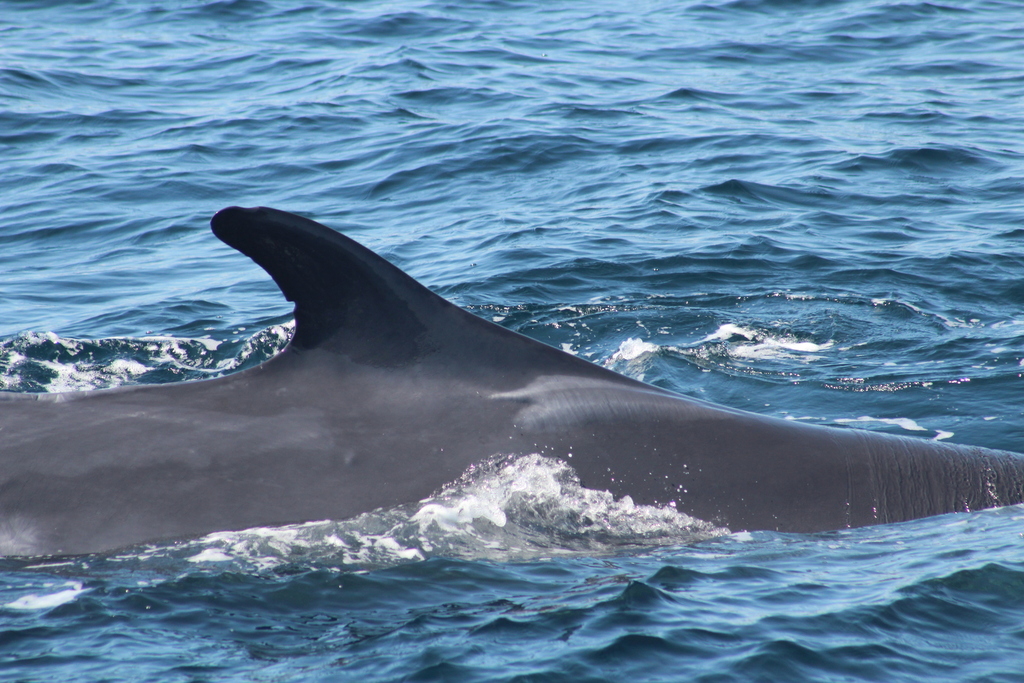
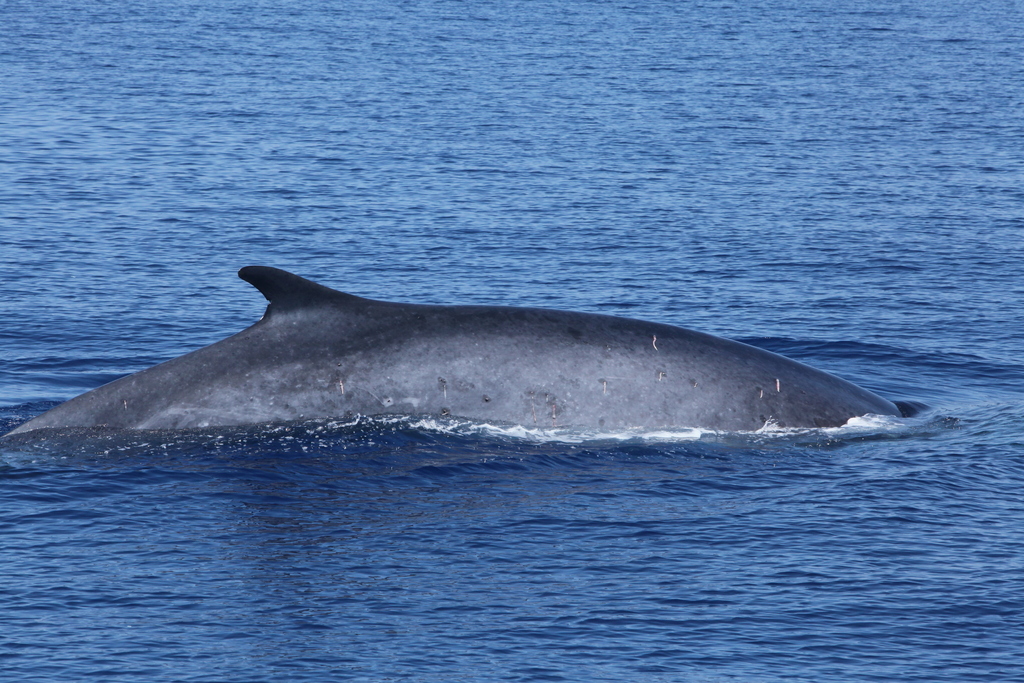
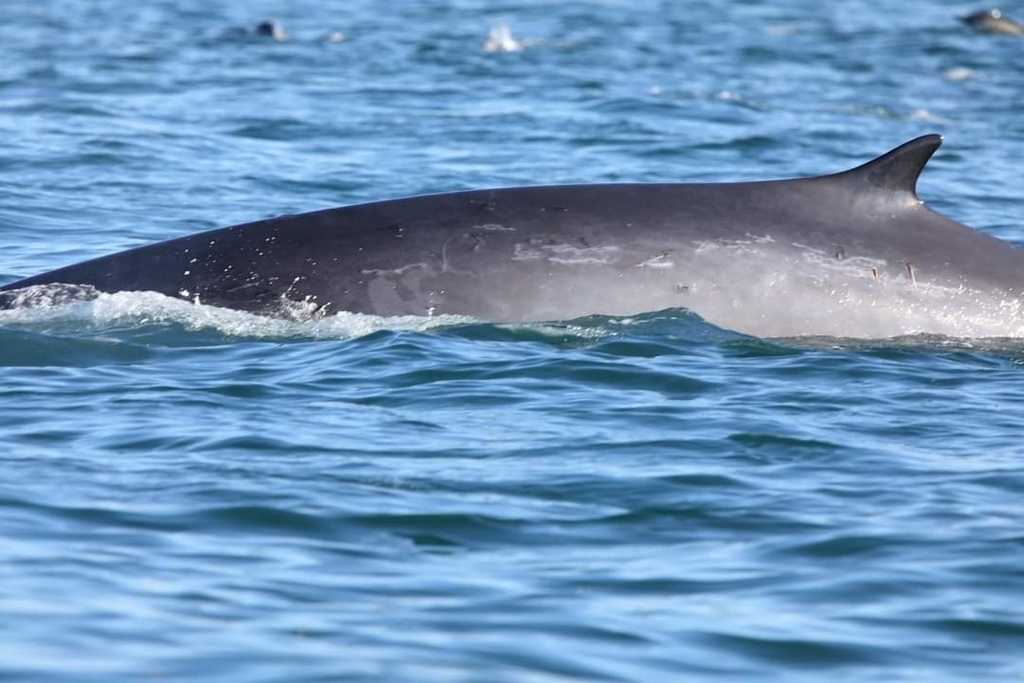
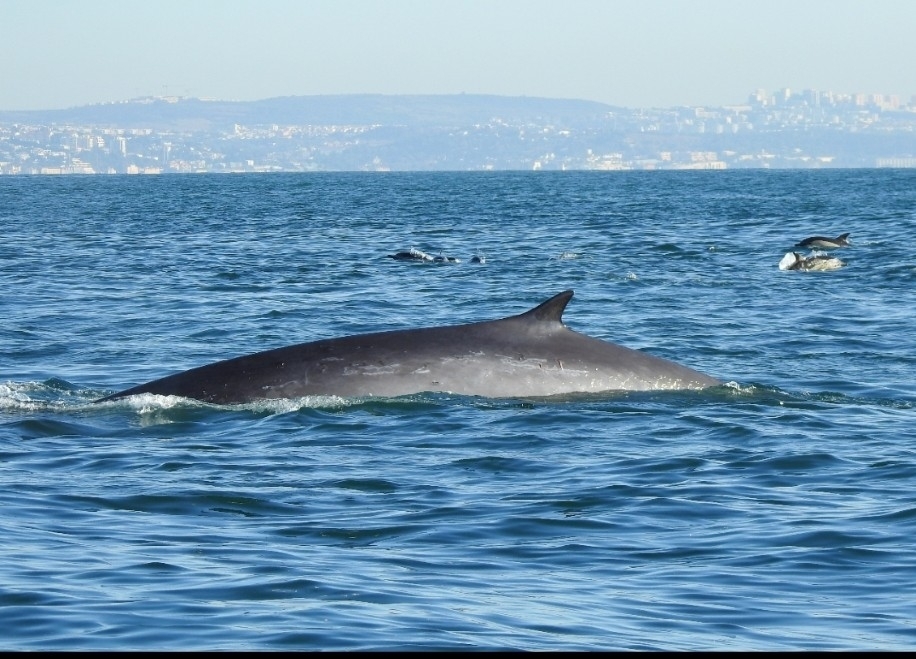
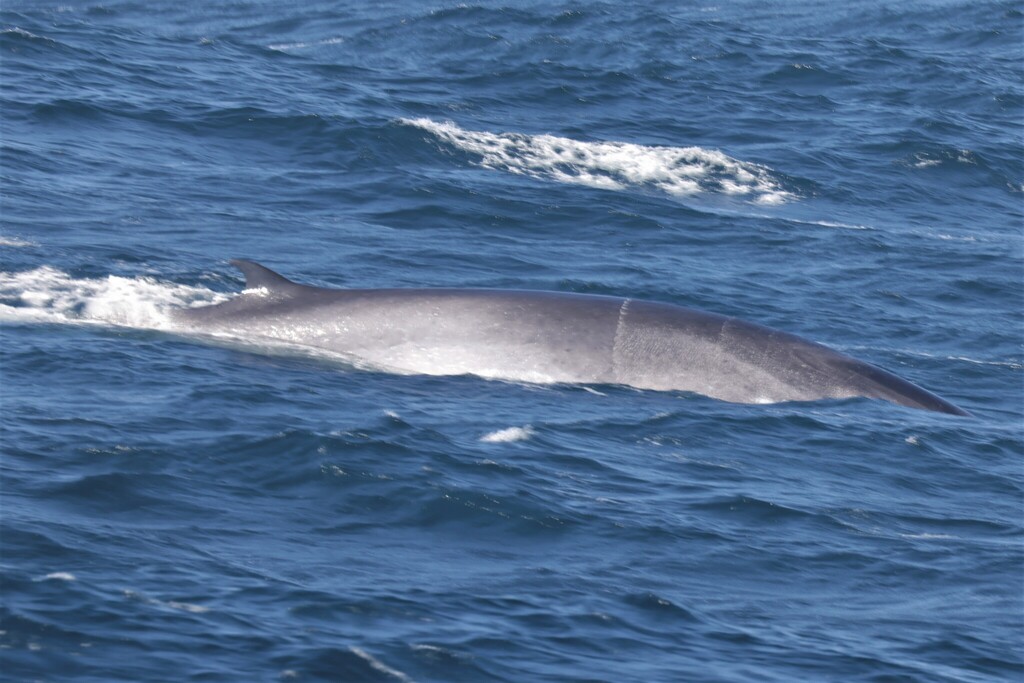
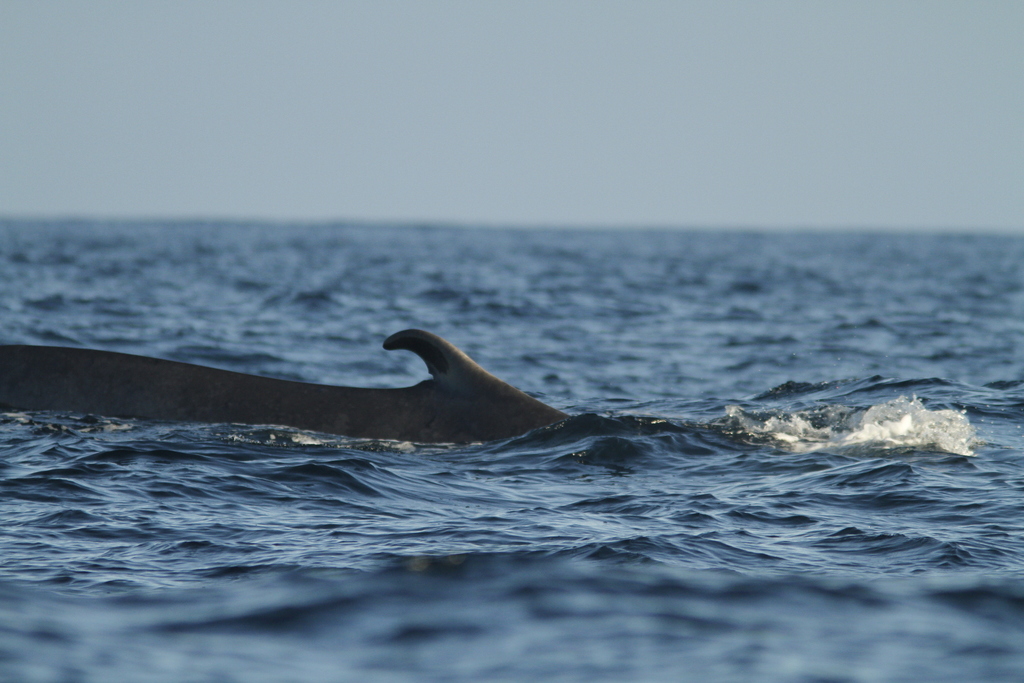
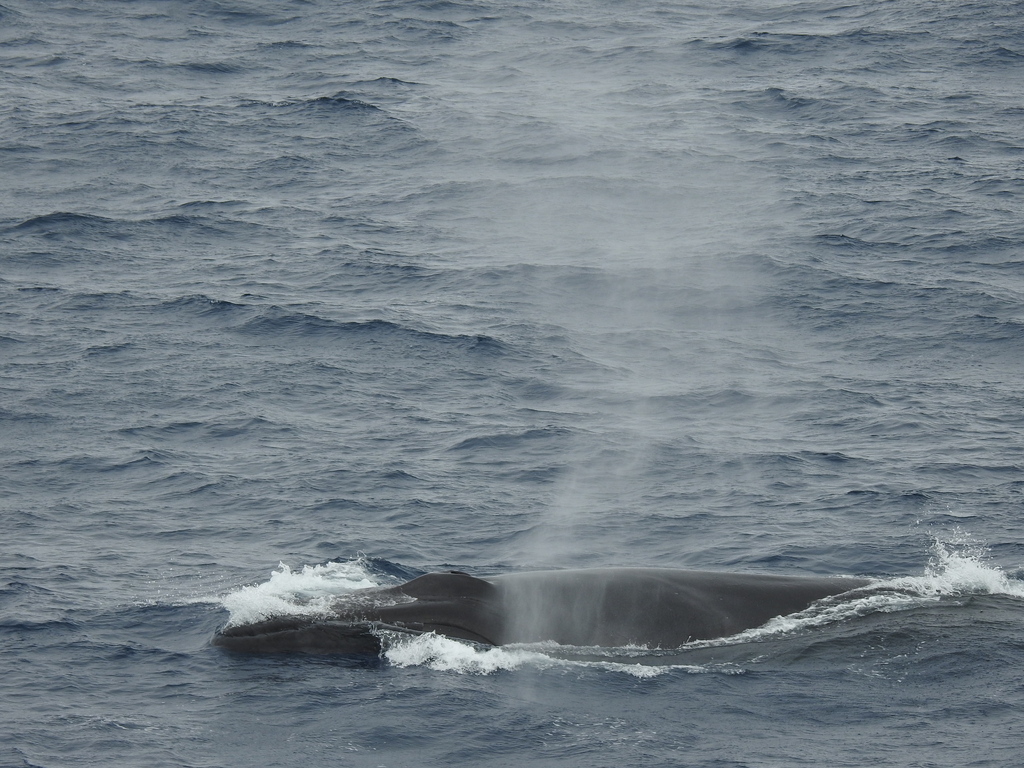
Photos show the species, not always the places on this page.
Length
Adults about 22.9 to 25.9 m (75 to 85 ft)
Weight
Adults about 36 to 73 tonnes (79,000 to 161,000 lb)
Next to a person
About 13 to 15 adults lying head to toe
What it eats
Krill, small schooling fish such as herring, capelin and sand lance, and squid.
Around people
Calm, give space
How it lives
The fin whale lunges into schools of prey at high speed with its mouth wide open, then strains the water out. In the feeding season it can eat up to about 1.8 tonnes a day. It is often alone or in small groups, and larger groups can gather where food is rich. Where it breeds is still unknown.
Where it goes
Movements differ between populations. Some fin whales travel long distances between feeding and wintering waters, but their breeding areas are unknown. Fin whales tagged off the Azores in spring stayed to feed for a while, and one then swam an almost direct path to East Greenland. Other populations, such as in the Gulf of California and the Mediterranean, can stay in one sea for much of the year.
Populations
The species is Vulnerable worldwide, but populations are doing very differently. Parts of the North Atlantic are in fairly good condition, while fin whales in the northern Gulf of St Lawrence show a decline. The Mediterranean population is separate enough to be managed on its own, and is believed to be declining. Timor-Leste's whale and dolphin programme lists the fin whale, but how often it is seen there is unknown.
Meet it respectfully
We watch fin whales only from the boat. They are very fast and at risk from ship strikes, so slow down, keep a steady lookout, never approach head on or cut across their path, and do not block them while they feed. Rules differ by place. In US waters, NOAA guidance asks boats to stay at least 100 yards (about 90 m) away. In the Azores and Madeira, the law keeps boats at least 50 m away and does not allow swimming with whales. In French Mediterranean waters, coming within 100 m of marine mammals is not allowed, and no one should enter the water near whales. In Canada, rules ask boats to keep 100 m from most whales and do not allow swimming with them. In Mexico, rules do not allow swimming, snorkelling or diving where whales are.
Fun fact
Tap the bulb to light it up.
It is the second largest animal alive, after the blue whale.
It is one of the fastest large whales, with a long, slim body built for speed.
Fin whales in the Mediterranean are a separate population that needs its own protection.
A fin whale's face is not the same on both sides. Its lower jaw is dark on the left and white on the right, and its tongue is the reverse.
Source: NOAA Fisheries, 2026, Fin whale
Fin whales take their time. They are fully grown at about 25 years old, and can live to about 90 years.
Source: NOAA Fisheries, 2026, Fin whale
Follow its journey
Watch it travel. Every line comes from satellite tracking or documented research, and the source is named.
StartEndJourney (the line joins documented areas; real paths vary)
Fin whale in the Ocean Atlas
Places we have researched where this animal is recorded. It is never guaranteed, and some places are for watching from the boat only.
Travel with usComing soonTrusted referralExploringOn pause, story onlyEthics pass
Country colour: pink where we travel, blue where we are exploring or refer, grey for story only.
 Algeria
 Antarctica
 Argentina
 Australia
 Belgium
 Brazil
 Canada
 Chile
Chile Denmark
 Falkland Islands
 Faroe Islands
 France
 French Guiana
 Germany
 Greece
 Greenland
 Iceland
 Ireland
 Israel
 Japan
Japan Malta
Malta Mexico
 Montenegro
 Netherlands
 New Caledonia
 New Zealand
 Norway
 Peru
Peru Portugal
 Russia
 South Africa
 Spain
Spain Sri Lanka
 Sweden
 Türkiye
 United Kingdom
 United States
Sources for this page
- NOAA Fisheries, 2026
- Whales & Dolphins of Timor-Leste, 2026
- Silva et al., 2013, PLOS ONE, blue and fin whales suspend their spring migration
- Royal Society Open Science, 2024, fin whale movements in the North-Western Mediterranean
- Baleines en direct, Fin whale in the St Lawrence
- Azores Regional Legislative Decree 9/99/A (FAOLEX)
- International Whaling Commission, Fin whale
- Préfecture maritime de la Méditerranée, protecting marine mammals
- Fisheries and Oceans Canada, Watching marine wildlife
- Mexico, NOM-131-SEMARNAT-2010 on whale watching (PROFEPA)
Facts checked 26 September 2026. Photos: Unsplash licence, or Creative Commons as shown on each photo.
Work in ocean travel?
We are always happy to hear from exceptional local operators, accommodation, conservation organisations and destination experts. If your work fits responsible, small-group ocean travel, we would love to learn more.
Partner with Ocean CallingGili Trawangan in 5 days
from CHF 790