
Humphead wrasse (Napoleon wrasse)
Cheilinus undulatus
A Napoleon wrasse may cruise past alone, thick-lipped and unhurried. Stay calm and give it space.
Endangered (IUCN, 2004) means it is at very high risk of extinction in the wild. This assessment from 2004 is old and has not been updated.
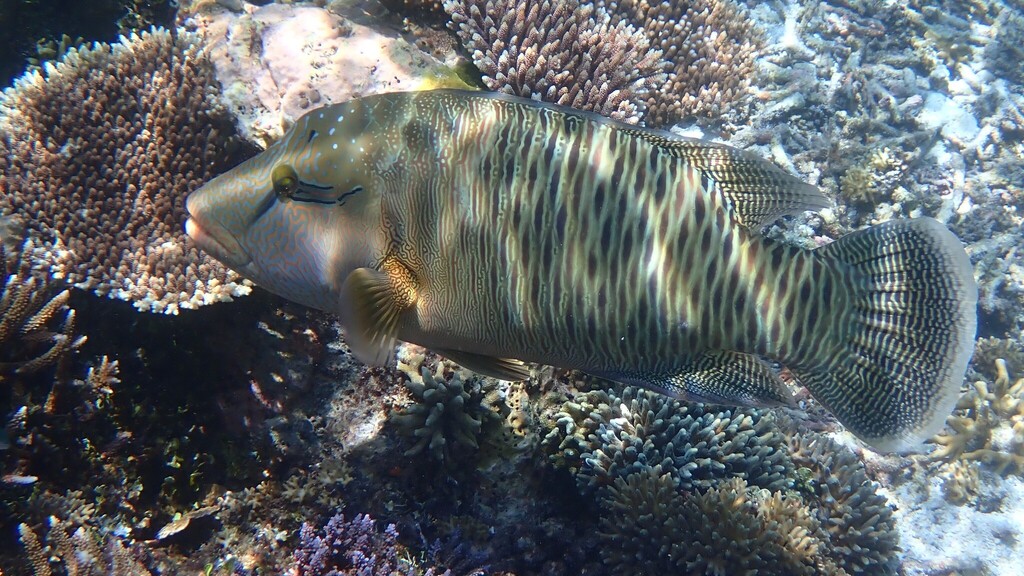
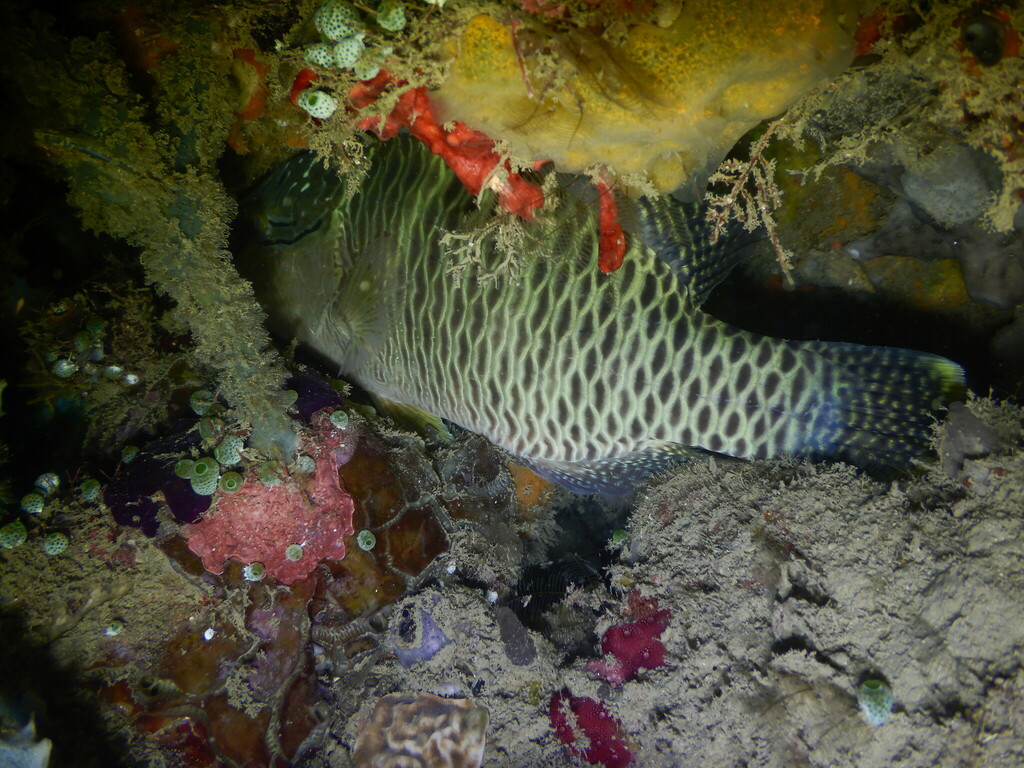
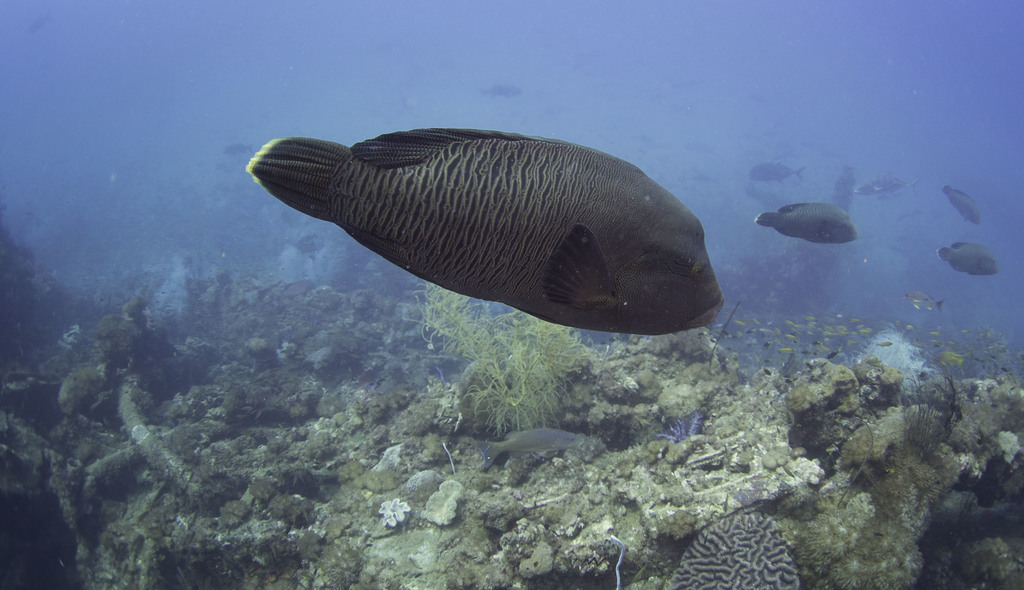
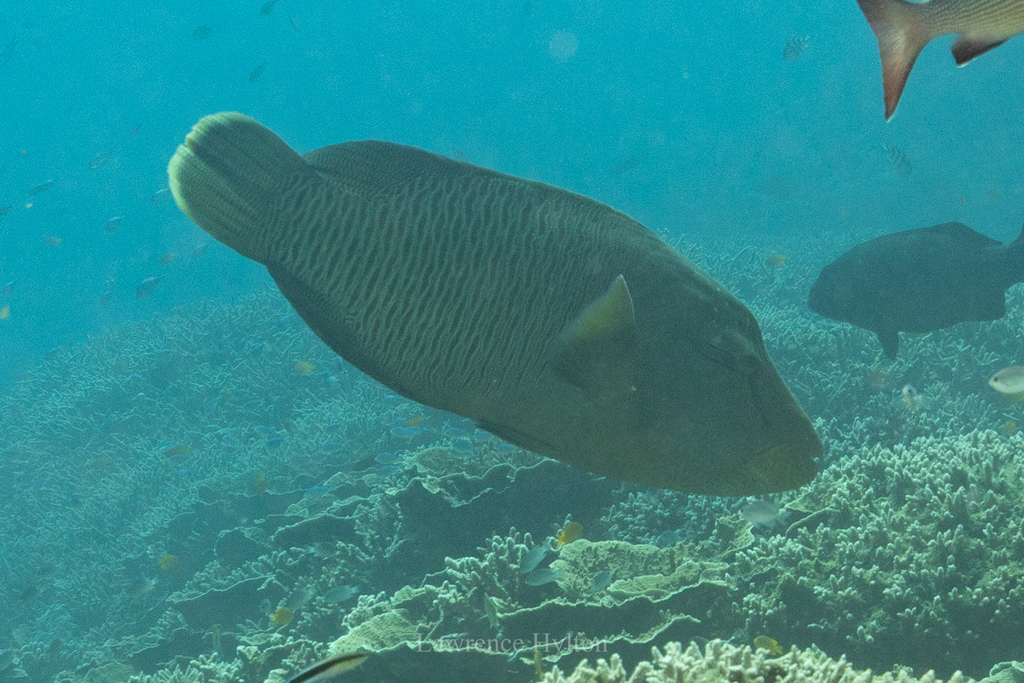
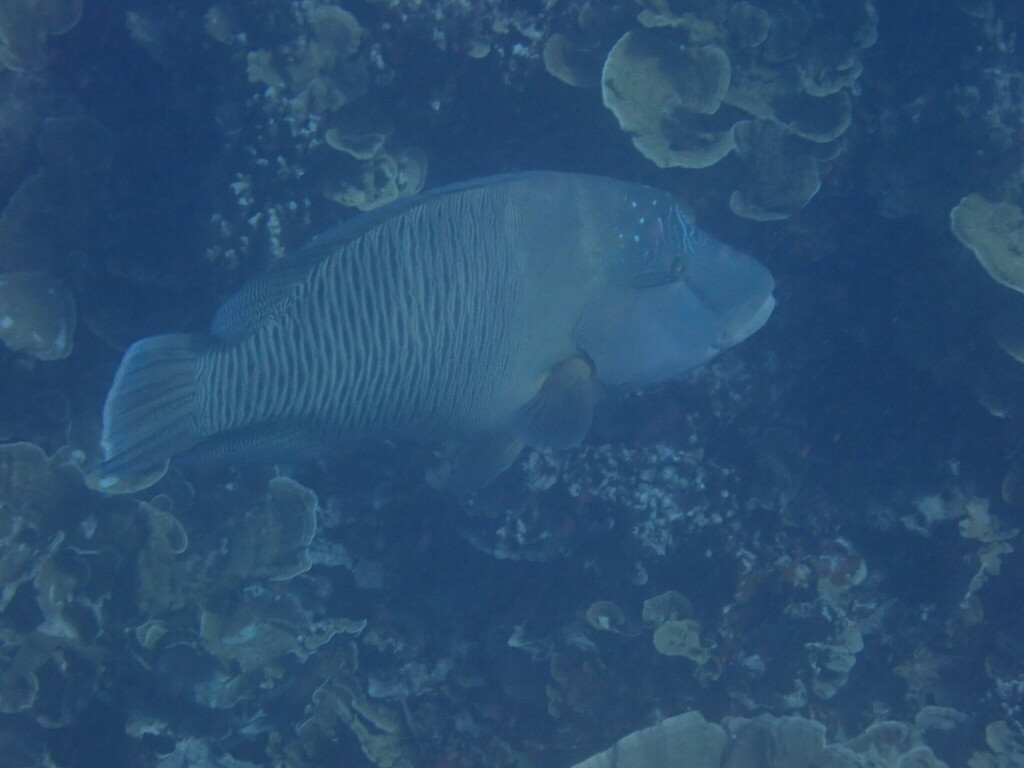
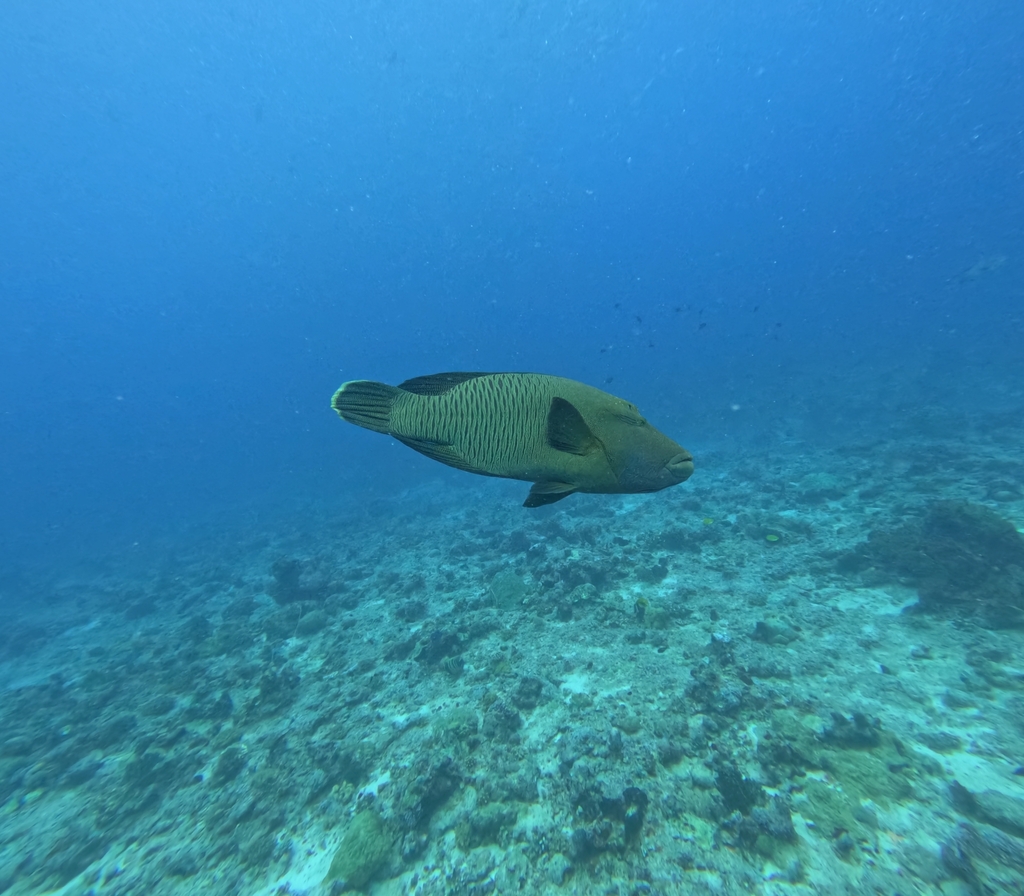
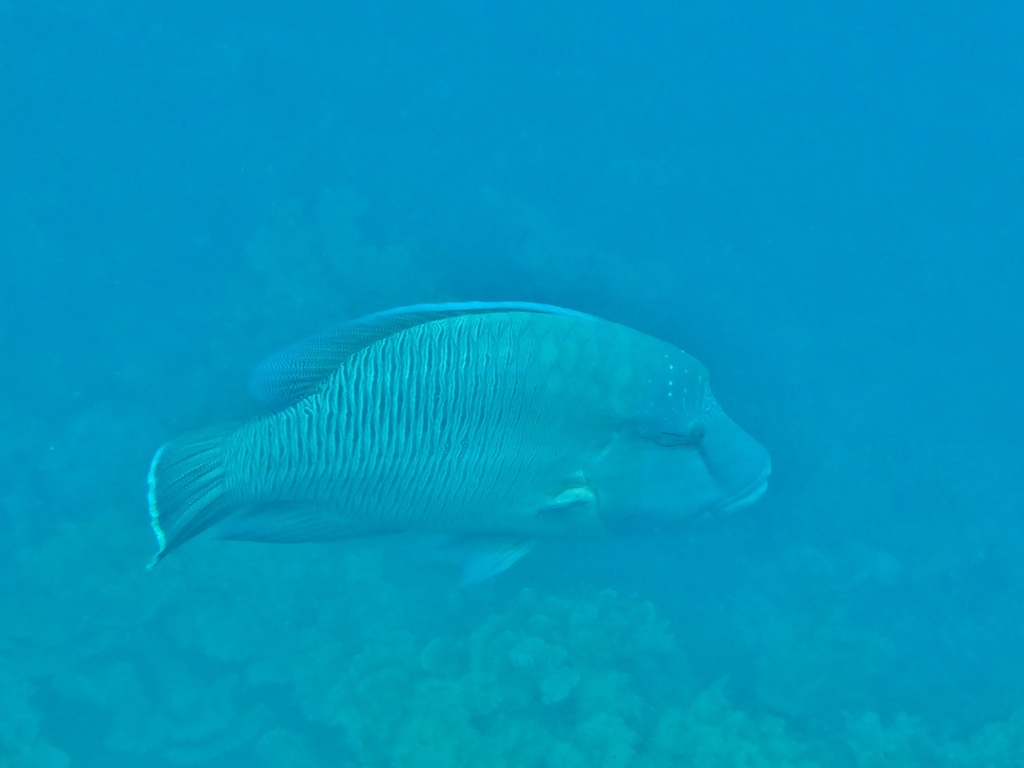
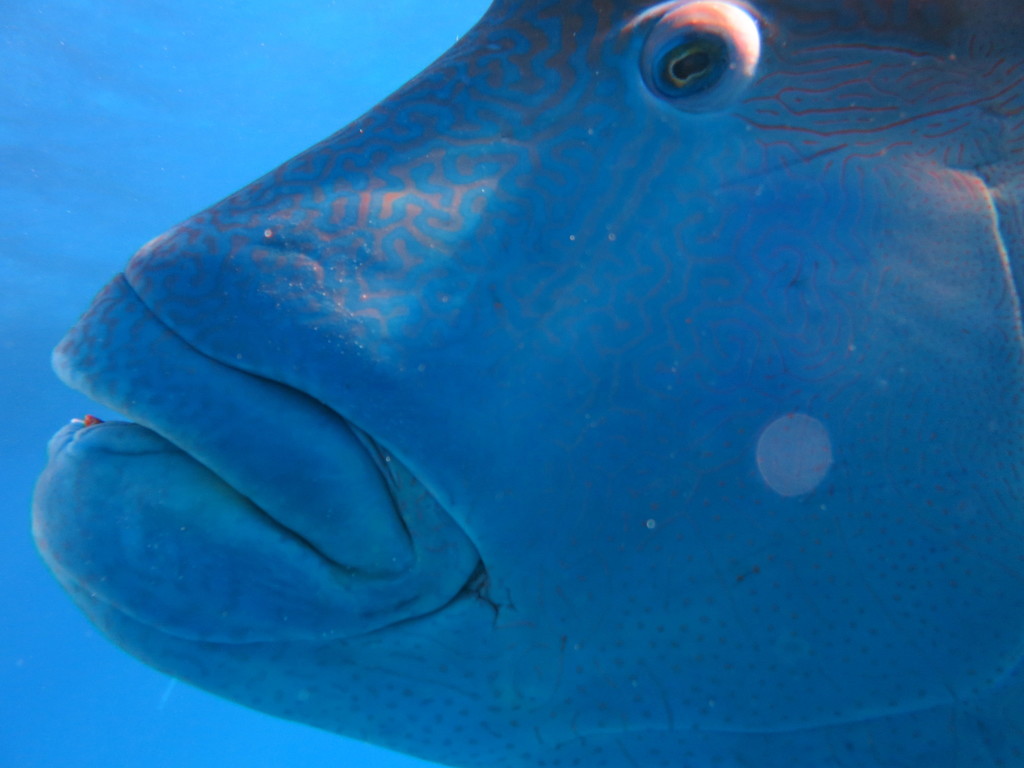
Photos show the species, not always the places on this page.
Length
Commonly about 60 cm (2 ft), though large adults on healthy reefs are often about 0.8 to 1.5 m (2.6 to 4.9 ft); largest published about 2.29 m (7.5 ft)
Weight
Typical adult weight not reliably measured; heaviest published about 191 kg (421 lb)
Next to a person
Commonly about the length of an adult's arm; the largest recorded was longer than a person is tall
What it eats
Molluscs, fish, sea urchins, crustaceans and other invertebrates, including toxic prey such as boxfish, sea hares and crown-of-thorns starfish.
Around people
Calm, give space
How it lives
Adult humphead wrasse usually live alone or in pairs, roaming the reef by day and resting in the same caves and ledges at night. They start life as females, and some change into males later. To breed, they gather in groups at reef edges and drop-offs. They can live for more than 30 years.
Where it goes
Adults usually roam the reef alone or in pairs by day, then shelter in caves and under ledges at night. They do not make long migrations that we know of. Some tagged females roam home ranges more than 10 km across, and many adults stay faithful to the same area for years.
We only draw a journey on the map when scientists have tracked it or clearly documented it. For this animal we have not found one yet.
Populations
Found from the Red Sea to French Polynesia. Populations are well connected, with only small differences at the edges of the range, such as the Seychelles and Pohnpei. Numbers and sizes differ sharply between heavily fished and protected reefs.
Meet it respectfully
Never touch, chase, surround or feed a humphead wrasse, as feeding changes its natural behaviour. Hover quietly and let the fish choose the distance. Never light up or disturb fish resting in caves. Do not eat or buy humphead wrasse.
Fun fact
Tap the bulb to light it up.
It is the largest wrasse in the world.
Adults grow a forehead hump and have thick lips and two dark lines behind each eye.
It is not a bumphead parrotfish: wrasses have lips, not a parrot beak.
It is one of the few fish known to eat crown-of-thorns starfish, but only now and then.
Humphead wrasse begin life as females. Some change into males at around 9 years old, and these giants can live for up to 30 years.
Source: Fishes of Australia (Museums Victoria), Humphead Maori Wrasse
It is the largest wrasse in the world, growing to 2.3 m long and 190 kg, with a big hump on its forehead.
Humphead wrasse (Napoleon wrasse) in the Ocean Atlas
Places we have researched where this animal is recorded. It is never guaranteed, and some places are for watching from the boat only.
Travel with usComing soonTrusted referralExploringOn pause, story onlyEthics pass
Country colour: pink where we travel, blue where we are exploring or refer, grey for story only.
 American Samoa
 Australia
 Cocos (Keeling) Islands
 Cook Islands
 Egypt
Egypt Fiji
Fiji French Polynesia
 Guam
Guam India
India Indonesia
 Japan
Japan Kenya
Kenya Kiribati
 Malaysia
 Maldives
 Marshall Islands
 Mayotte
 Micronesia (FSM)
 Mozambique
 New Caledonia
 Northern Mariana Islands
 Palau
Palau Papua New Guinea
 Philippines
 Samoa
Samoa Saudi Arabia
 Seychelles
 Solomon Islands
 Sudan
Sudan Tanzania
 Tokelau
 Tonga
Tonga Tuvalu
 Vanuatu
Sources for this page
- FishBase, 2024
- Ma et al., 2019, Frontiers of Biogeography
- Sadovy et al., 2025, IUCN Red List
- Australian Museum, Humphead Maori wrasse
Facts checked 26 September 2026. Photos: Unsplash licence, or Creative Commons as shown on each photo.
Work in ocean travel?
We are always happy to hear from exceptional local operators, accommodation, conservation organisations and destination experts. If your work fits responsible, small-group ocean travel, we would love to learn more.
Partner with Ocean CallingSwim with humpback whales in Moʻorea, September 2027
from CHF 4,500