
Atlantic bluefin tuna
Thunnus thynnus
A giant, fast fish that returns to Danish waters in late summer. It comes and goes with its prey, and no sighting is ever a promise.
Least Concern (IUCN, 2021) means the species as a whole is not close to being threatened, after a recovery from Endangered. The western Atlantic population is still well below its past level.
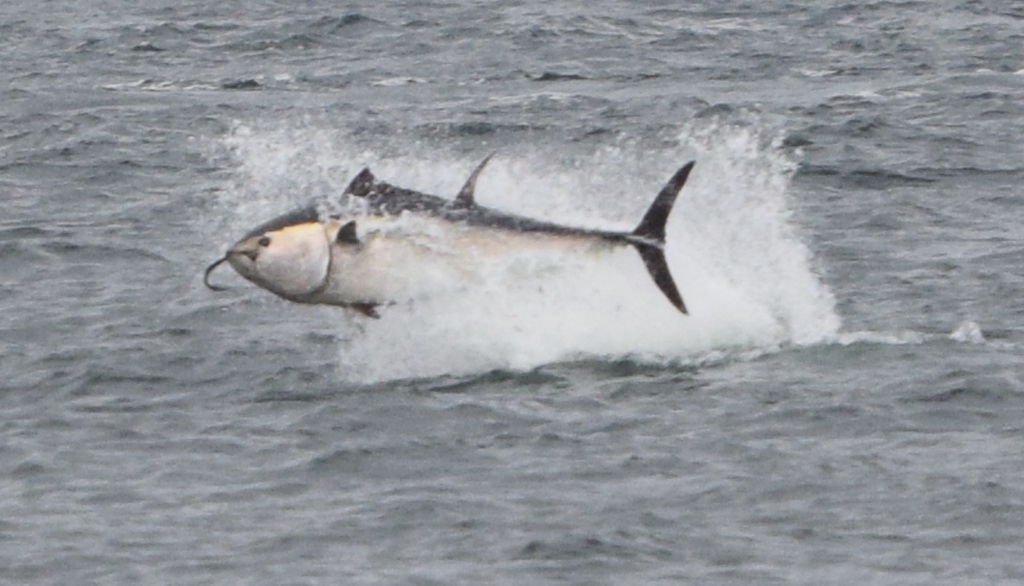
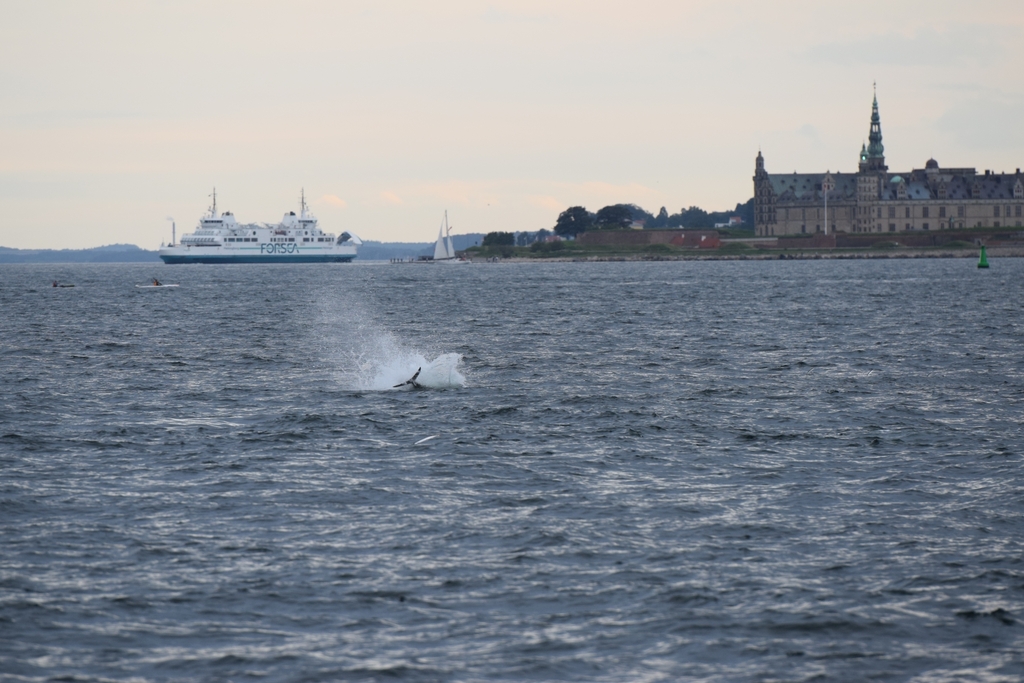
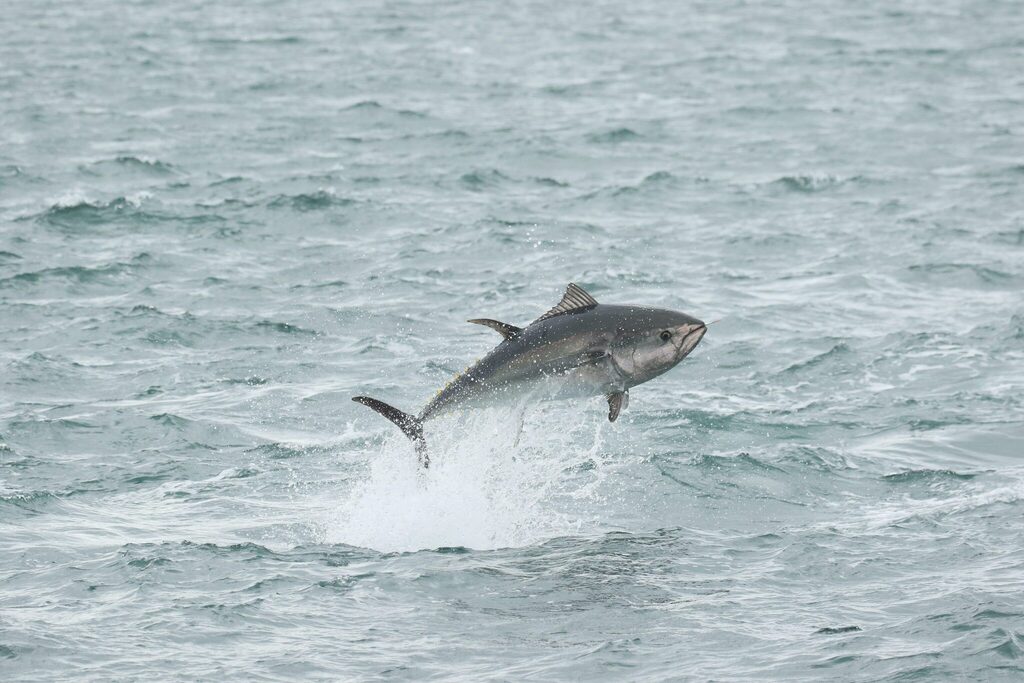
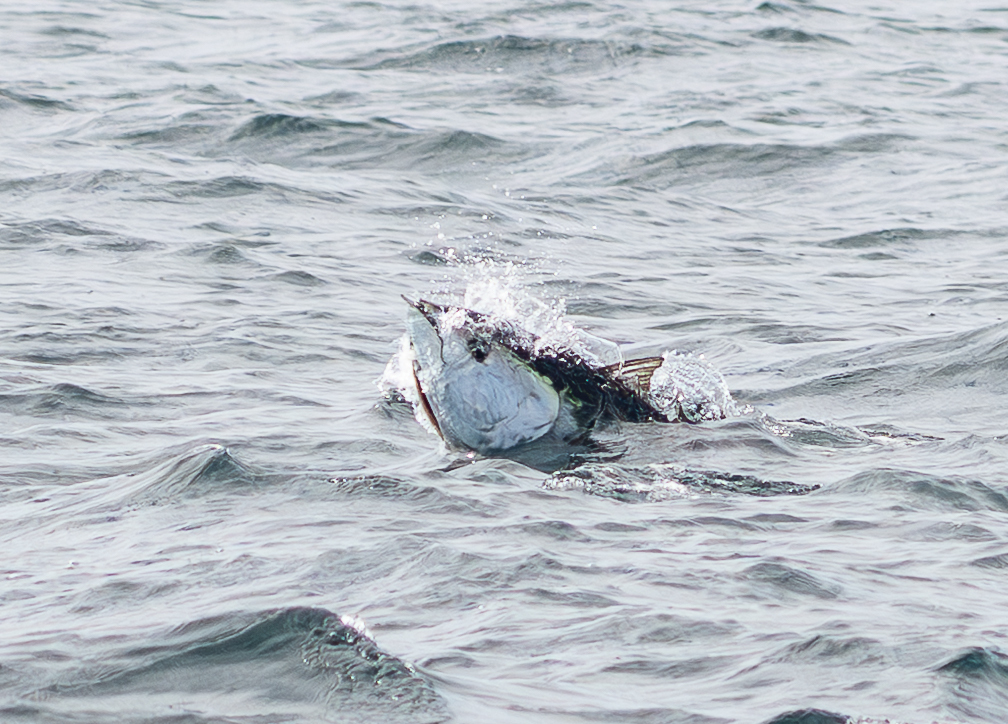
Photos show the species, not always the places on this page.
Length
Adults average about 2 to 2.5 m (6.6 to 8.2 ft); FishBase lists a maximum of about 4.6 m (15 ft) total length
Weight
Adults average about 225 to 250 kg (500 to 550 lb); the maximum recorded is about 680 kg (1,500 lb)
Next to a person
Often about 1.4 times as long as an adult is tall, and as heavy as about three adults
What it eats
Small schooling fish such as herring, mackerel, sardines and anchovies, plus squid and crabs. In a study of 44 tuna of 232 to 295 cm caught in Scandinavian waters in 2020 to 2022, the fish had eaten 19 fish species, four squid and one crab. Garfish were over 37% of the prey by number and herring were found in 83% of stomachs. A single 278 kg tuna can eat 750 to 1,500 kg of prey in a typical 90-day stay.
Around people
Calm, give space
How it lives
Atlantic bluefin are fast, warm-bodied hunters that school by size. The eastern stock spawns in the western Mediterranean and the western stock in the Gulf of Mexico. Spawning is mostly June to August, and eggs hatch after about 2 days. The oldest age reported by FishBase is 32 years. Large fish tagged in Skagerrak all belonged genetically to the Mediterranean population.
Where it goes
Very long. In a 2022 study, fish tagged in Skagerrak covered 16,000 to 25,900 km while tracked, one over 22,000 km, and two returned to the tagging region after 359 and 365 days. They stayed 2 to 38 days in Skagerrak before leaving, mostly mid-September to late October. A later study of 25 fish tagged off Norway found that every fish with a full-year track returned to Norwegian waters. Fifteen of them entered the Mediterranean between 4 and 30 May, and one dived to about 1,190 m. In Danish and Swedish waters tuna are typically present from August to October.
We only draw a journey on the map when scientists have tracked it or clearly documented it. For this animal we have not found one yet.
Populations
IUCN moved the species from Endangered to Least Concern in 2021. The larger eastern population, which spawns in the Mediterranean, has grown by at least 22% over four decades. The smaller western population, which spawns in the Gulf of Mexico, has fallen by more than half. IUCN credits tighter fishing quotas and action against illegal fishing. In Denmark and Sweden catches fell to almost zero in the early 1960s, and the tuna were absent for more than half a century before returning in about 2015 to 2016.
Meet it respectfully
Watch from a distance and let the fish go where they like. Never chase, herd, bait, feed or touch tuna, and keep boats slow and steady near feeding fish or surface splashes. These are powerful, heavily fished animals, and sightings depend on where their prey are on a given day. No sighting is ever promised. Follow your skipper and local guidance.
Fun fact
Tap the bulb to light it up.
Tuna were almost absent from Danish and Swedish waters for more than half a century, until about 2015 to 2016.
One tagged fish crossed more than 22,000 km of ocean while it was tracked.
A single 278 kg tuna can eat 750 to 1,500 kg of prey during a typical 90-day stay in Scandinavian waters.
Atlantic bluefin tuna in the Ocean Atlas
Places we have researched where this animal is recorded. It is never guaranteed, and some places are for watching from the boat only.
Travel with usComing soonTrusted referralExploringOn pause, story onlyEthics pass
Country colour: pink where we travel, blue where we are exploring or refer, grey for story only.
 Albania
 Australia
 The Bahamas
 Belgium
 Brazil
 Canada
 China
China Croatia
 Cuba
Cuba Denmark
 France
 French Polynesia
 Gibraltar
 Greece
 Haiti
Haiti Honduras
 Iceland
 India
India Indonesia
 Italy
Italy Japan
Japan Lebanon
 Malaysia
 Malta
Malta Mexico
 Mozambique
 Netherlands
 Norway
 Philippines
 Portugal
 Réunion
 South Africa
 Spain
Spain Sweden
 Taiwan
 Tunisia
 Türkiye
 United Kingdom
 United States
Sources for this page
- IUCN Red List category via GBIF, 2021
- IUCN, Tuna species recovering, 2021
- FishBase, Thunnus thynnus
- DTU Aqua, Bluefin tuna have returned to Nordic waters
- DTU Aqua, Tuna and diet
- Aarestrup et al., Scientific Reports, 2022
- Proceedings of the Royal Society B, 2024
- Wikipedia, Atlantic bluefin tuna
Facts checked 5 October 2026. Photos: Unsplash licence, or Creative Commons as shown on each photo.
Work in ocean travel?
We are always happy to hear from exceptional local operators, accommodation, conservation organisations and destination experts. If your work fits responsible, small-group ocean travel, we would love to learn more.
Partner with Ocean CallingNew: mobula rays in La Ventana, May 2027
CHF 2,720