
Atlantic nurse shark
Ginglymostoma cirratum
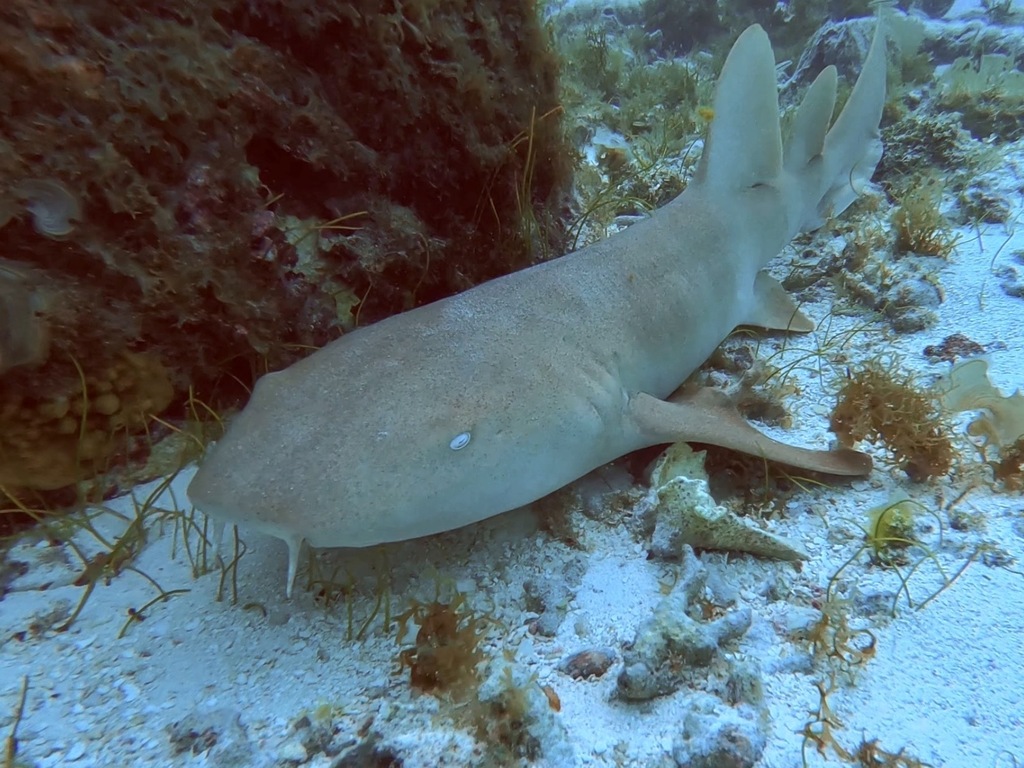
Atlantic nurse sharks rest on the bottom by day and hunt after dark with powerful suction. Some return to the same mating ground in Florida for decades.
Vulnerable (IUCN, 2019) means it is at high risk of extinction in the wild.
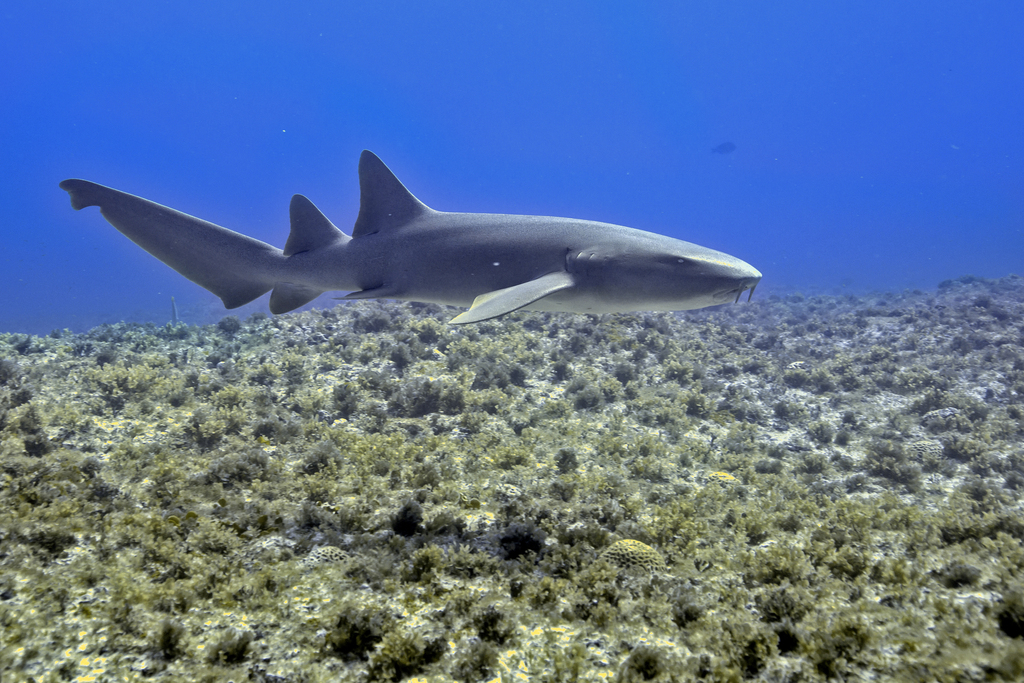
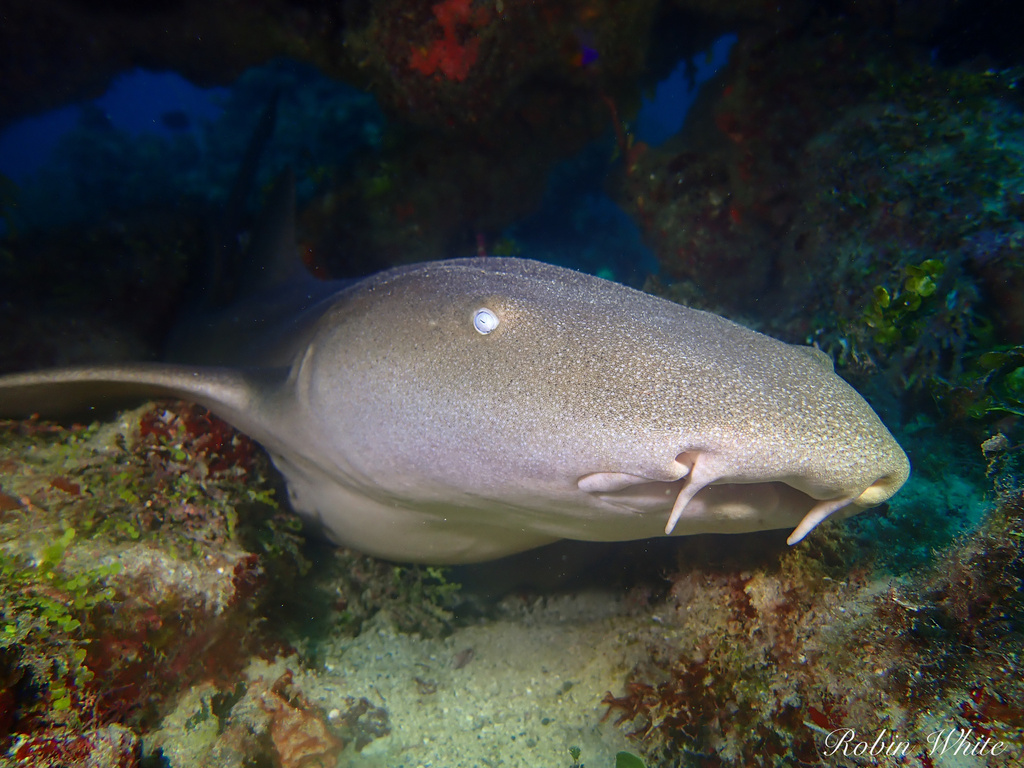
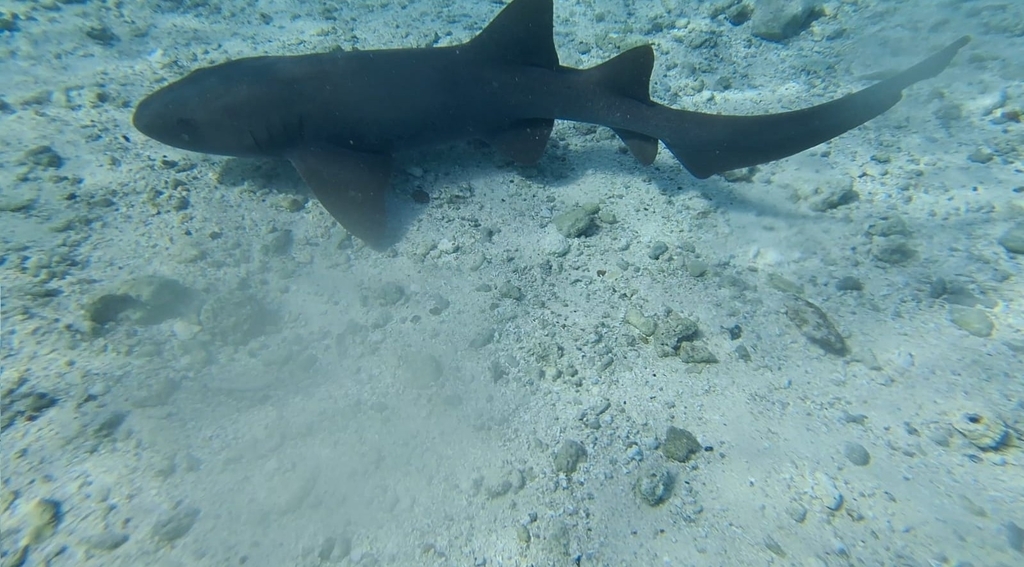
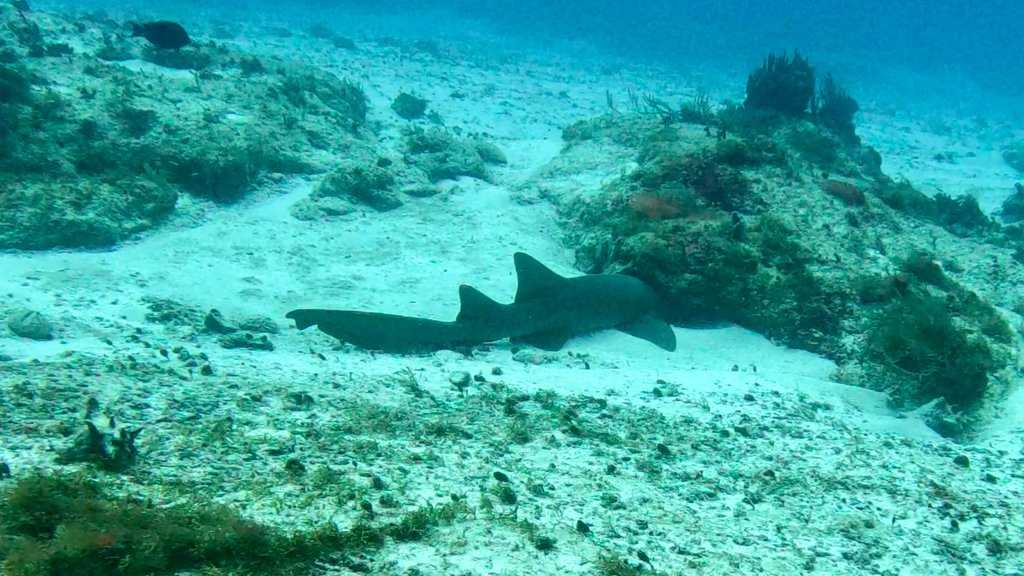
Photos show the species, not always the places on this page.
Length
Adults often about 2.3 to 3 m (7.5 to 10 ft); largest well recorded about 3.1 m (10.1 ft), with an older record of 4.3 m (14.1 ft)
Weight
Typical weight not reliably measured; largest published about 110 kg (242 lb)
Next to a person
An adult is about one-and-a-half times as long as a person
What it eats
Mostly bottom animals at night: spiny lobsters, shrimps, crabs, sea urchins, squid, octopus, snails and clams, and fish such as stingrays.
Around people
Defensive if pressured
How it lives
The Atlantic nurse shark is a slow, bottom-living shark of warm Atlantic reefs and sandy shallows. It rests by day, often in groups under ledges, and hunts at night, sucking prey from crevices. Females give birth to 21 to 28 pups. At the Dry Tortugas in Florida, adults gather in June and July to mate.
Where it goes
Nurse sharks are faithful to their mating ground. At the Dry Tortugas, Florida, 137 adults were tagged from 1992 to 2021, and at least 68% of those tagged by 2014 came back in later years. Males arrive each year in May and June, and females every two or three years. Between seasons, some travel several hundred kilometres, to the Florida Keys, the western Bahamas and north to at least South Carolina.
We only draw a journey on the map when scientists have tracked it or clearly documented it. For this animal we have not found one yet.
Populations
The Atlantic nurse shark lives from Rhode Island to southern Brazil, including the Gulf of Mexico and the Caribbean, and in the eastern Atlantic from Cabo Verde and Senegal to Gabon. Nurse sharks on the Pacific coast of the Americas are now treated as a separate species.
Meet it respectfully
Nurse sharks look sleepy, but they can bite hard when grabbed, stepped on or pressured. Never touch, ride, grab or pull them, and do not block or crowd a resting shark. At some sites, like Shark Ray Alley in Belize, guides are allowed to feed sharks to draw them close. Ocean Calling does not feed or bait sharks, even where it is allowed. Feeding sharks while diving or snorkelling is not allowed in Florida state waters.
Fun fact
Tap the bulb to light it up.
Nurse sharks feed by suction, pulling prey out of holes in the reef.
Nurse sharks on the Pacific coast of the Americas are now a separate species, Ginglymostoma unami.
Some nurse sharks came back to the same mating ground at the Dry Tortugas in up to 16 seasons over 28 years, so they may live into their forties.
Source: Pratt et al., 2022, PLOS ONE
Most female nurse sharks at the Dry Tortugas mate every two years, but about a third follow a three-year rhythm.
Source: Pratt et al., 2022, PLOS ONE
Atlantic nurse shark in the Ocean Atlas
Places we have researched where this animal is recorded. It is never guaranteed, and some places are for watching from the boat only.
Travel with usComing soonTrusted referralExploringOn pause, story onlyEthics pass
Country colour: pink where we travel, blue where we are exploring or refer, grey for story only.
 Antigua and Barbuda
 The Bahamas
 Belize
 Brazil
 British Virgin Islands
 Cabo Verde
 Cameroon
 Caribbean Netherlands
 Cayman Islands
 Colombia
 Costa Rica
 Côte d'Ivoire
 Curaçao
 Dominican Republic
 French Guiana
 Gabon
Gabon Ghana
Ghana Guadeloupe
 Guinea
 Honduras
 Jamaica
 Liberia
 Maldives
 Mauritania
 Mexico
 Nicaragua
 Nigeria
 Panama
 Saint Barthélemy
 Saint Lucia
 Saint Martin
 Senegal
 Sierra Leone
 Sint Maarten
 Trinidad and Tobago
 Turks and Caicos Islands
 United States
 US Virgin Islands
Sources for this page
- FishBase, Ginglymostoma cirratum
- Pratt et al., 2022, PLOS ONE
- MarAlliance, nurse sharks at Shark Ray Alley
- Florida Fish and Wildlife Conservation Commission, fish feeding rule
- Florida Museum of Natural History, Nurse shark
- Belize Fisheries Department, Hol Chan Marine Reserve
Facts checked 26 September 2026. Photos: Unsplash licence, or Creative Commons as shown on each photo.
Work in ocean travel?
We are always happy to hear from exceptional local operators, accommodation, conservation organisations and destination experts. If your work fits responsible, small-group ocean travel, we would love to learn more.
Partner with Ocean CallingSwim with humpback whales in Moʻorea, September 2027
from CHF 4,500