
Sooty shearwater
Ardenna grisea
Dark wings low over a heaving sea, sometimes in thousands. A sighting is a moment of luck, never a promise.
Near Threatened (IUCN, 2019) means it is close to qualifying as threatened. Numbers are falling, and threats include introduced predators on breeding islands, fishing bycatch and climate effects.
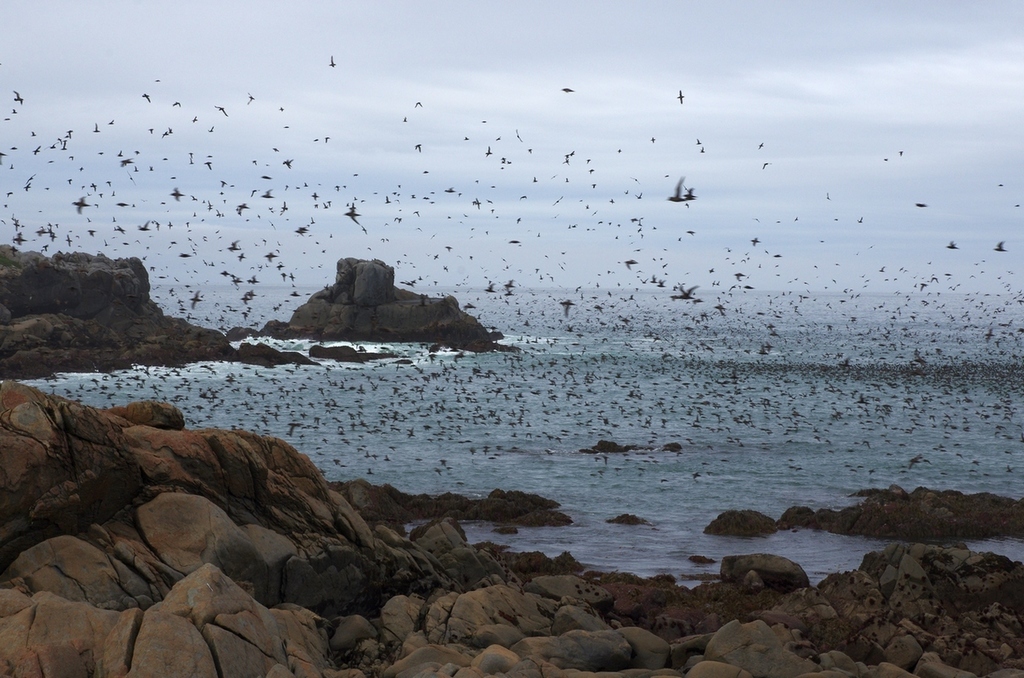
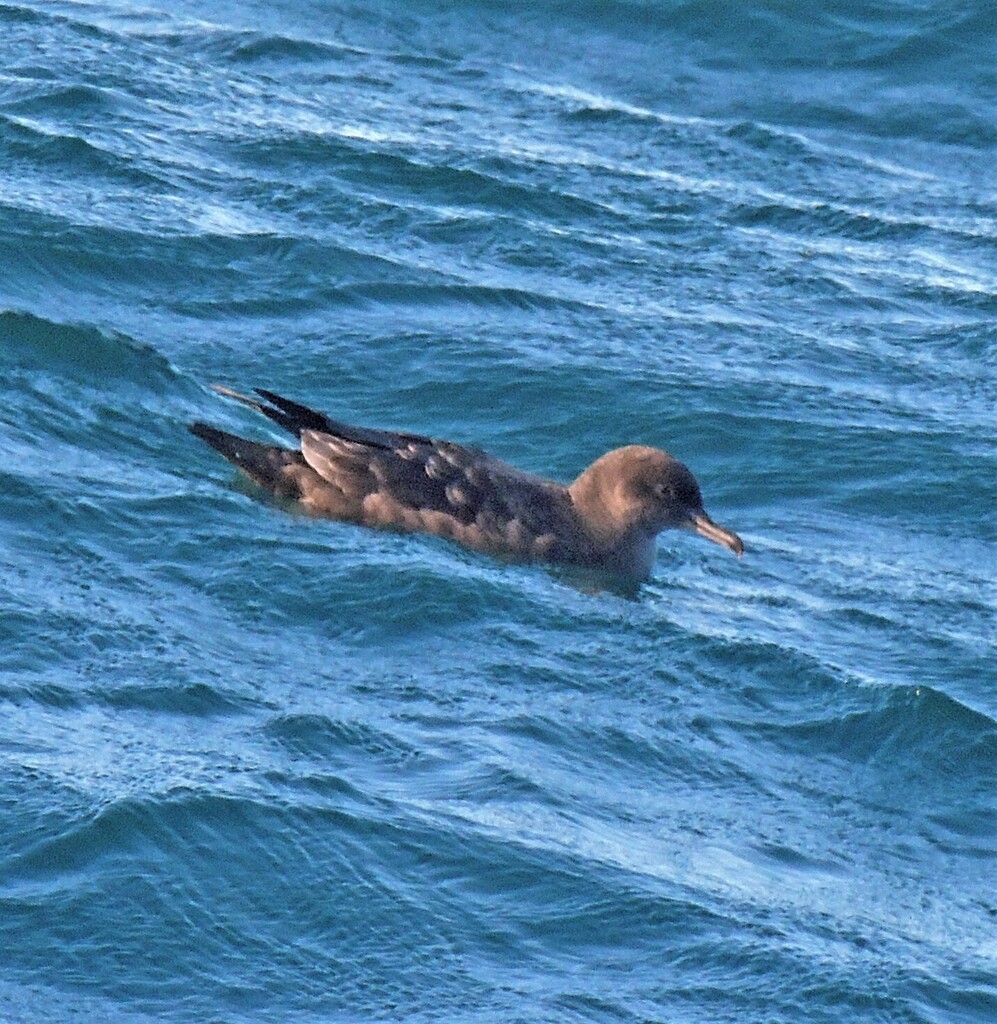
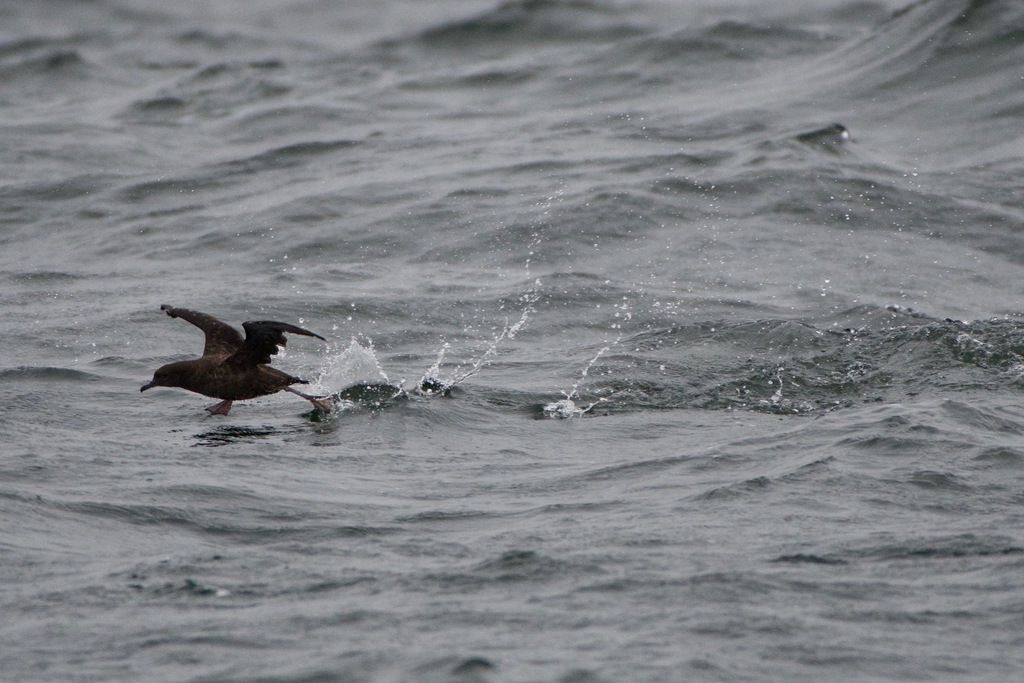
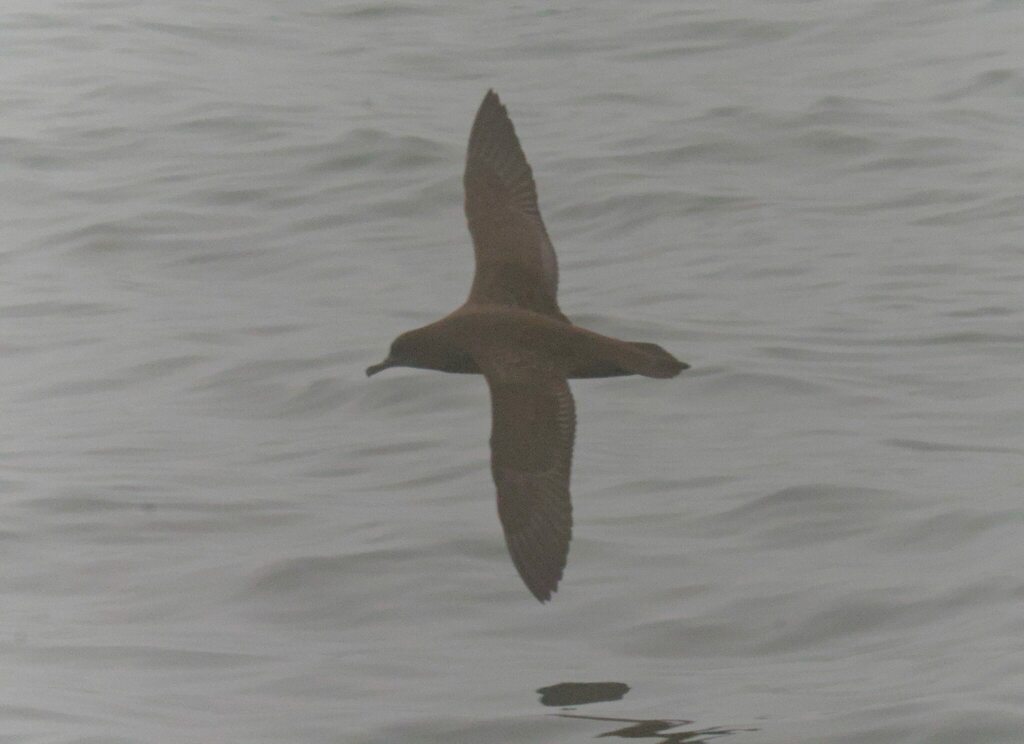
Photos show the species, not always the places on this page.
Length
About 40 to 51 cm (16 to 20 in) long, with a wingspan of about 94 to 110 cm (37 to 43 in).
Weight
About 650 to 950 g (1.4 to 2.1 lb) according to NZ Birds Online. Audubon gives 600 g to 1 kg (1.3 to 2.2 lb).
Next to a person
A wingspan about the width of a child's outstretched arms. It weighs a little less than a 1 kg bag of sugar.
What it eats
Fish, squid and krill, plus offal from fishing boats. In New Zealand, dives average about 16 m deep. In a tracking study, birds dived to a maximum of 68 m. It sometimes feeds alongside whales and dolphins.
Around people
Calm, give space
How it lives
Sooty shearwaters nest in burrows on southern islands, and adults visit them only at night. In New Zealand a pair lays one white egg from late November to mid-December. It hatches after about 53 to 56 days, and the chick fledges after about 86 to 106 days. Birds first breed at about 5 to 7 years and can live more than 25 years. About 92% of adults survive each year.
Where it goes
Sooty shearwaters make one of the longest migrations on record. In a 2006 tracking study of 19 birds from two New Zealand colonies, each bird flew about 64,000 km in a year, in a huge figure-of-eight across the Pacific. The birds stopped in three feeding areas in the North Pacific: off Japan and Kamchatka, in the Gulf of Alaska, and in the California Current.
We only draw a journey on the map when scientists have tracked it or clearly documented it. For this animal we have not found one yet.
Populations
Breeding colonies lie in the South Pacific, around New Zealand and Australia, and in the South Atlantic, including the Falkland Islands, Tierra del Fuego and Tristan da Cunha. NZ Birds Online puts about 21 million birds in New Zealand waters and lists the species as Declining. A 2020 study estimated that the New Zealand population fell from 39.6 million in 1976 to 22.7 million in 2005, about 1.9% a year. It found that climate, bycatch in fishing nets, harvest and introduced predators all play a part. About 11% of chicks were taken in the traditional harvest, a custom of Rakiura Māori families. IUCN assessed the species as Near Threatened in 2019.
Meet it respectfully
Watch from the shore or a steady boat and let the flock move as it wishes. Never chase flocks, drive a boat through feeding birds, or throw bait or food. Do not try to catch or handle a tired bird. Follow your guide.
Fun fact
Tap the bulb to light it up.
In a 2006 study, tracked birds flew about 64,037 km in a year, the longest animal migration recorded electronically at that time.
Tracked birds dived as deep as about 68 m.
Flocks can be huge. In New Zealand, flocks of tens of thousands gather around the southern South Island and Stewart Island.
Sooty shearwater in the Ocean Atlas
Places we have researched where this animal is recorded. It is never guaranteed, and some places are for watching from the boat only.
Travel with usComing soonTrusted referralExploringOn pause, story onlyEthics pass
Country colour: pink where we travel, blue where we are exploring or refer, grey for story only.
 Antarctica
 Argentina
 Australia
 Belgium
 Bermuda
 Brazil
 Canada
 Chile
Chile Cook Islands
 Costa Rica
 Denmark
 Ecuador
 Falkland Islands
 Faroe Islands
 Fiji
Fiji France
 French Polynesia
 Germany
 Greenland
 Guadeloupe
 Iceland
 India
India Ireland
 Israel
 Japan
Japan Kiribati
 Kuwait
 Mauritania
 Mexico
 Morocco
 Namibia
 Netherlands
 New Zealand
 Norfolk Island
 Norway
 Oman
Oman Panama
 Peru
Peru Poland
 Portugal
 Russia
 Saint Helena
 Senegal
 South Africa
 Spain
Spain Sri Lanka
 Sweden
 Tonga
Tonga United Arab Emirates
 United Kingdom
 United States
 Uruguay
 Wallis and Futuna
Sources for this page
- Wikipedia, Sooty shearwater, 2026
- NZ Birds Online, Sooty shearwater, 2022
- McKechnie et al., 2020, PLoS One
- Shaffer et al., 2006, PNAS
- Audubon, Sooty shearwater, 2026
- GBIF, IUCN Red List category, 2026
Facts checked 5 October 2026. Photos: Unsplash licence, or Creative Commons as shown on each photo.
Work in ocean travel?
We are always happy to hear from exceptional local operators, accommodation, conservation organisations and destination experts. If your work fits responsible, small-group ocean travel, we would love to learn more.
Partner with Ocean CallingNew: mobula rays in La Ventana, May 2027
CHF 2,720