
Picasso triggerfish (lagoon triggerfish)
Rhinecanthus aculeatus
A small Picasso-patterned triggerfish of shallow lagoons and reef flats. Lively and territorial, so give its nest and sand patch space.
Least Concern (IUCN, year not confirmed) means it is not at high risk of extinction worldwide today.
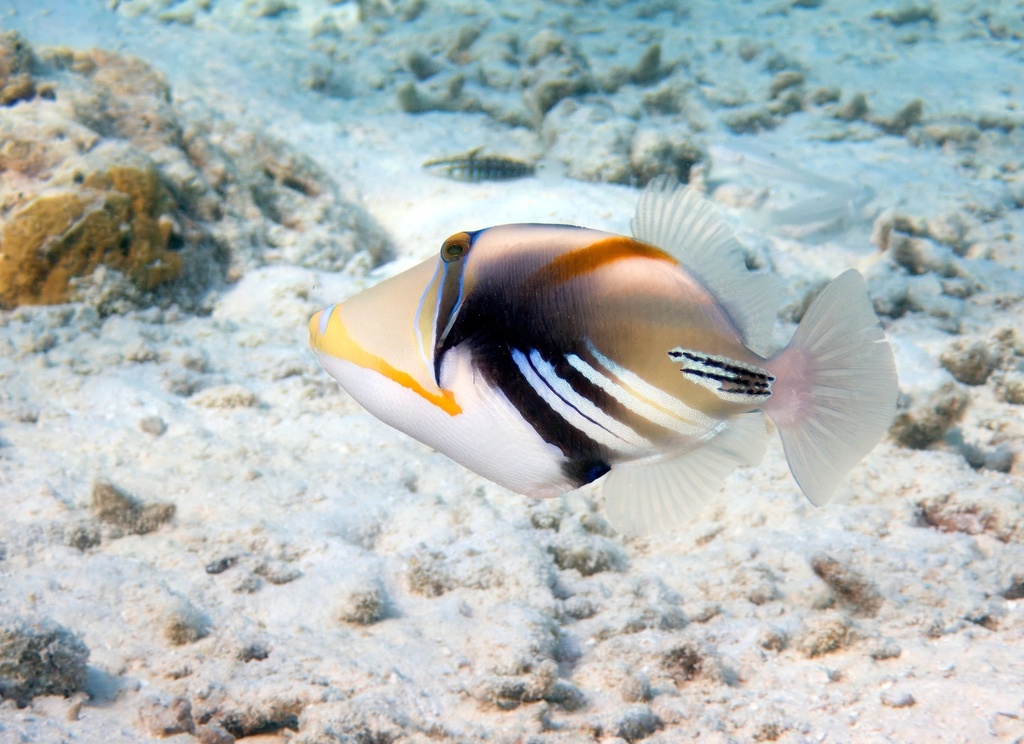
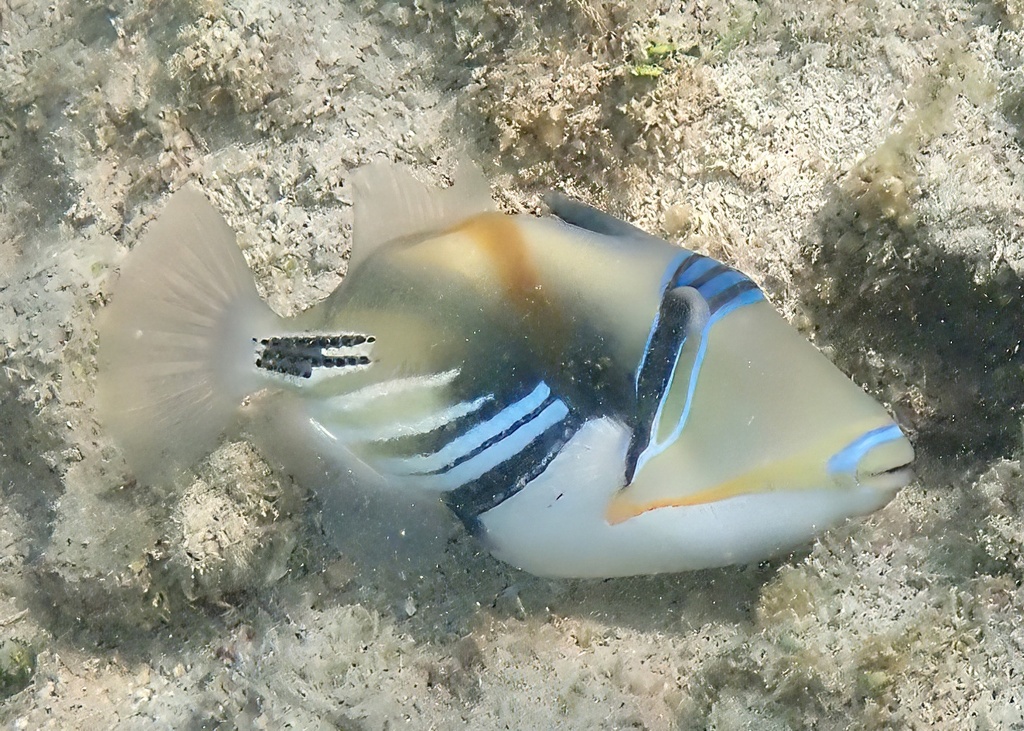
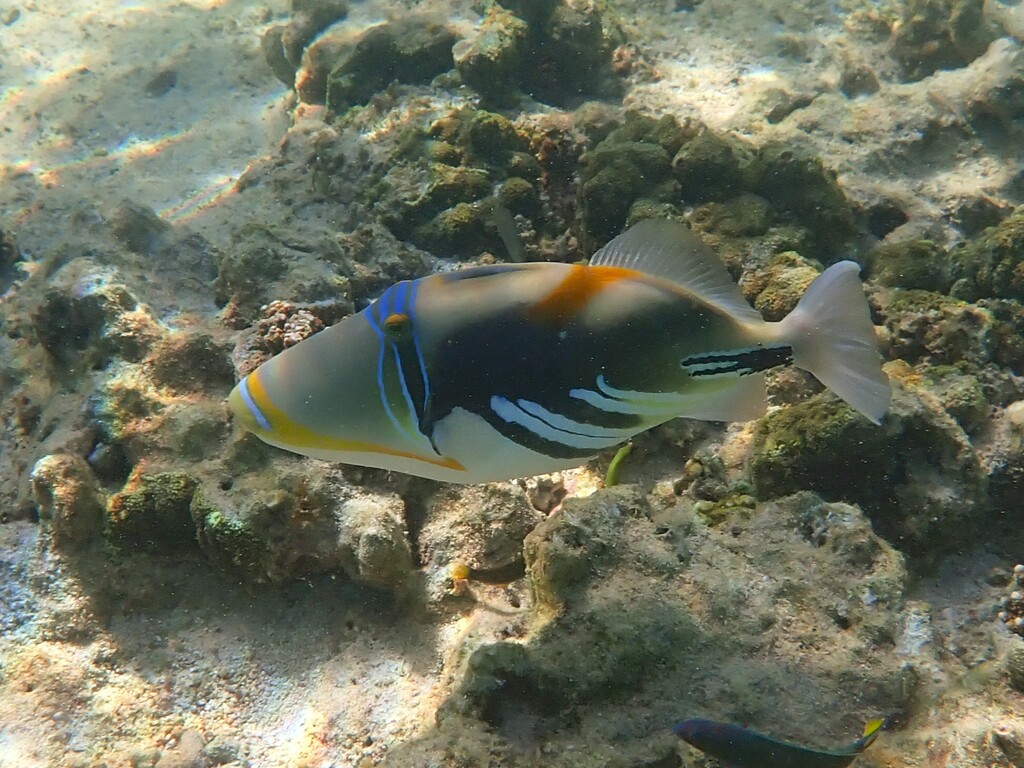
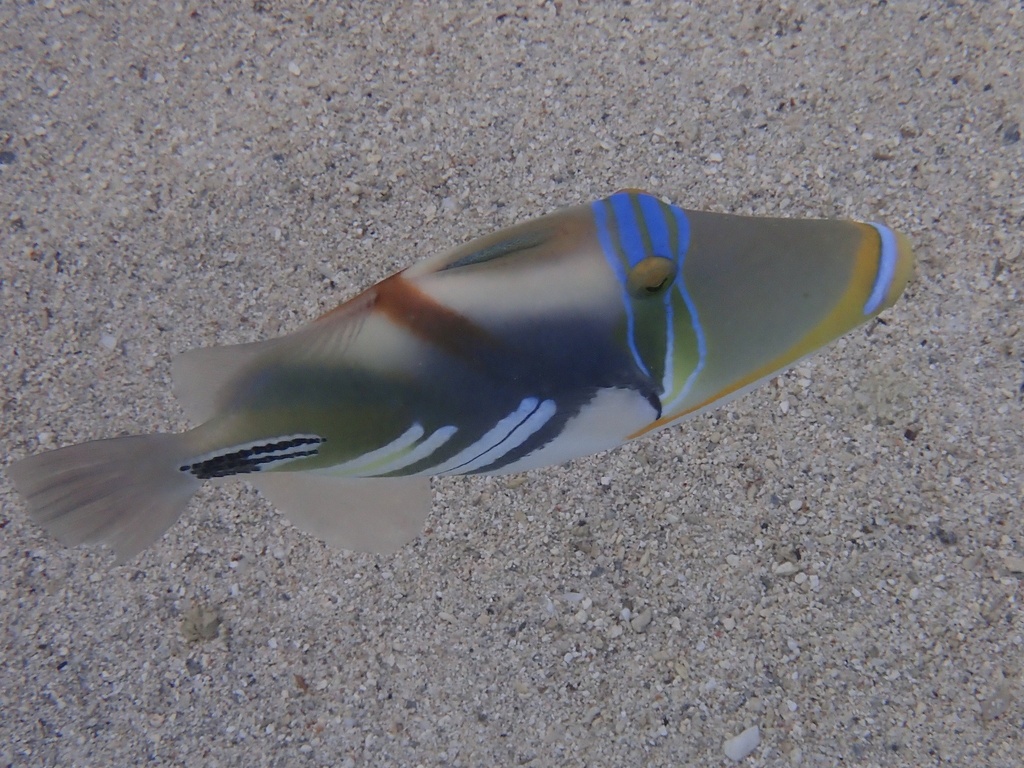
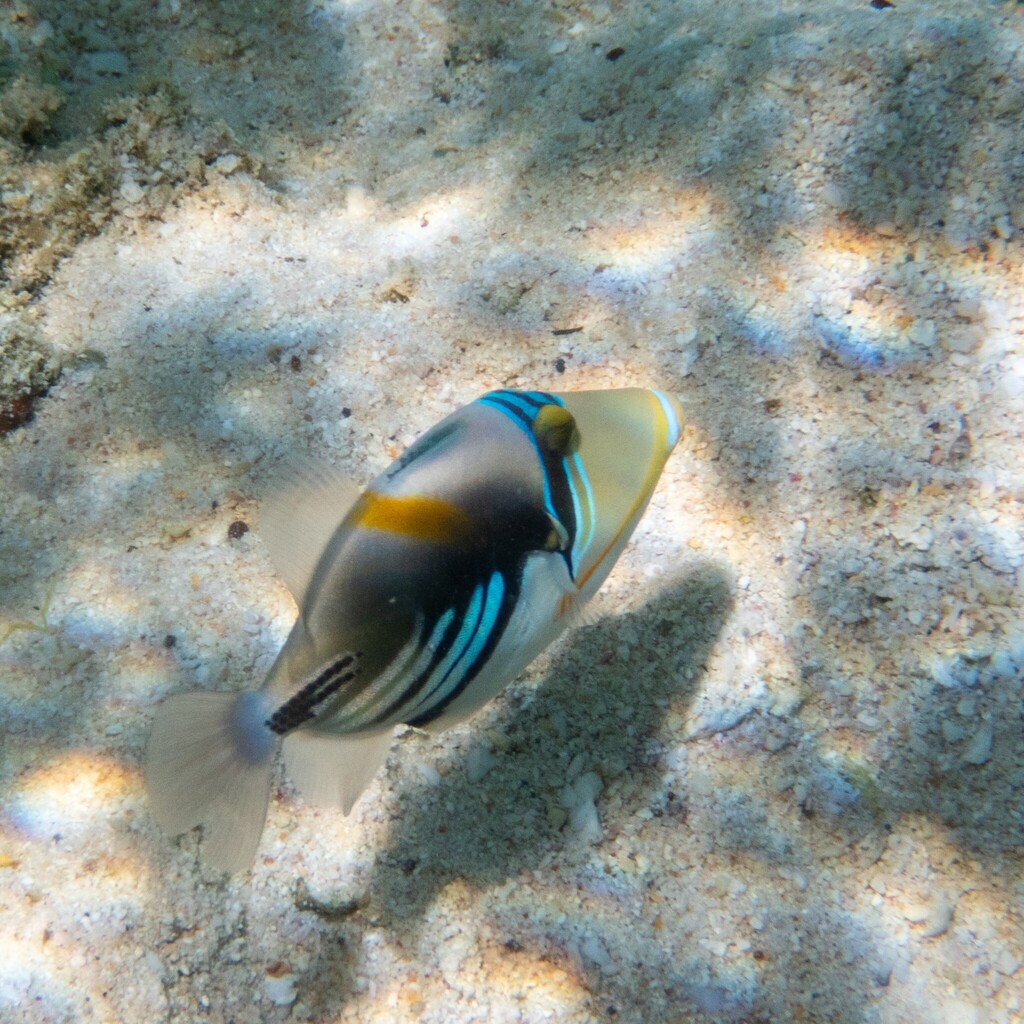
Photos show the species, not always the places on this page.
Length
Commonly about 15 cm (6 in); largest recorded about 30 cm (12 in), though some sources give 25 cm (10 in)
Weight
Not reliably measured
Next to a person
Most are about a handspan long; the largest reach from hand to forearm
What it eats
Algae, detritus, small crabs, molluscs, worms, sea urchins, small fish and some coral.
Around people
Defensive if pressured
How it lives
The Picasso triggerfish lives on shallow reef flats and sandy lagoons. Adults swim openly but are usually shy, and young ones hide in rubble. It is territorial, makes a whirring alarm sound, and sleeps on its side. Males mate with several females, and the females guard the eggs. In one study in Okinawa, some adults kept the same patch of reef for more than 8 years.
Where it goes
Resident. It keeps a small territory in shallow water and does not migrate.
We only draw a journey on the map when scientists have tracked it or clearly documented it. For this animal we have not found one yet.
Populations
Found from East Africa across northern Australia to Hawaiʻi, the Marquesas and Tuamotu islands, and north to southern Japan, from 0 to 50 m, usually in the shallows. It can be common in good shallow habitat, but it is not found at every reef.
Meet it respectfully
It may chase or nip snorkellers who come near its eggs. Keep a little distance and do not hover over its sand patch. If it rushes at you, move away calmly and sideways, not straight up. Never touch, chase or feed it. It is much smaller than a titan triggerfish, and its bite is less serious.
Fun fact
Tap the bulb to light it up.
It is not Hawaiʻi's state fish. The state fish is its cousin the reef triggerfish, but both can be called humuhumunukunukuāpuaʻa.
The female alone guards the eggs for about 12 to 14 hours, from spawning at sunrise until they hatch after sunset.
In an Okinawa study, one male's territory covered the territories of 2 to 3 females.
The Picasso triggerfish can make audible alarm sounds and sleeps lying on its side.
Source: FishBase, Rhinecanthus aculeatus
Picasso triggerfish (lagoon triggerfish) in the Ocean Atlas
Places we have researched where this animal is recorded. It is never guaranteed, and some places are for watching from the boat only.
Travel with usComing soonTrusted referralExploringOn pause, story onlyEthics pass
Country colour: pink where we travel, blue where we are exploring or refer, grey for story only.
 American Samoa
 Australia
 Chagos (British Indian Ocean Territory)
 Cocos (Keeling) Islands
 Comoros
 Cook Islands
 Egypt
Egypt Fiji
Fiji French Polynesia
 Guam
Guam India
India Indonesia
 Japan
Japan Kenya
Kenya Kiribati
 Madagascar
 Malaysia
 Maldives
 Marshall Islands
 Mauritius
 Mayotte
 Micronesia (FSM)
 Mozambique
 New Caledonia
 Northern Mariana Islands
 Palau
Palau Papua New Guinea
 Philippines
 Réunion
 Samoa
Samoa Seychelles
 Solomon Islands
 South Africa
 Sri Lanka
 Taiwan
 Tanzania
 Tonga
Tonga Tuvalu
 United States
 Vanuatu
 Wallis and Futuna
Sources for this page
- FishBase, Rhinecanthus aculeatus
- GBIF occurrence records
- Australian Museum, Hawaiian Triggerfish
- Reef Life Survey, Rhinecanthus aculeatus
- Hawaii Revised Statutes, §5-11.5, State fish
- Matsuura, 2022, IUCN Red List
Facts checked 26 September 2026. Photos: Unsplash licence, or Creative Commons as shown on each photo.
Work in ocean travel?
We are always happy to hear from exceptional local operators, accommodation, conservation organisations and destination experts. If your work fits responsible, small-group ocean travel, we would love to learn more.
Partner with Ocean CallingNew: tiger sharks in Fuvahmulah, January or March 2027
from CHF 2,900