
Striped dolphin
Stenella coeruleoalba
Sleek offshore dolphins with bold flank stripes, often fast and leaping. Watch from a calm boat and never cut across a school.
Least Concern (IUCN, 2018) means it is not at high risk of extinction worldwide today. In the Mediterranean, the population is Vulnerable.
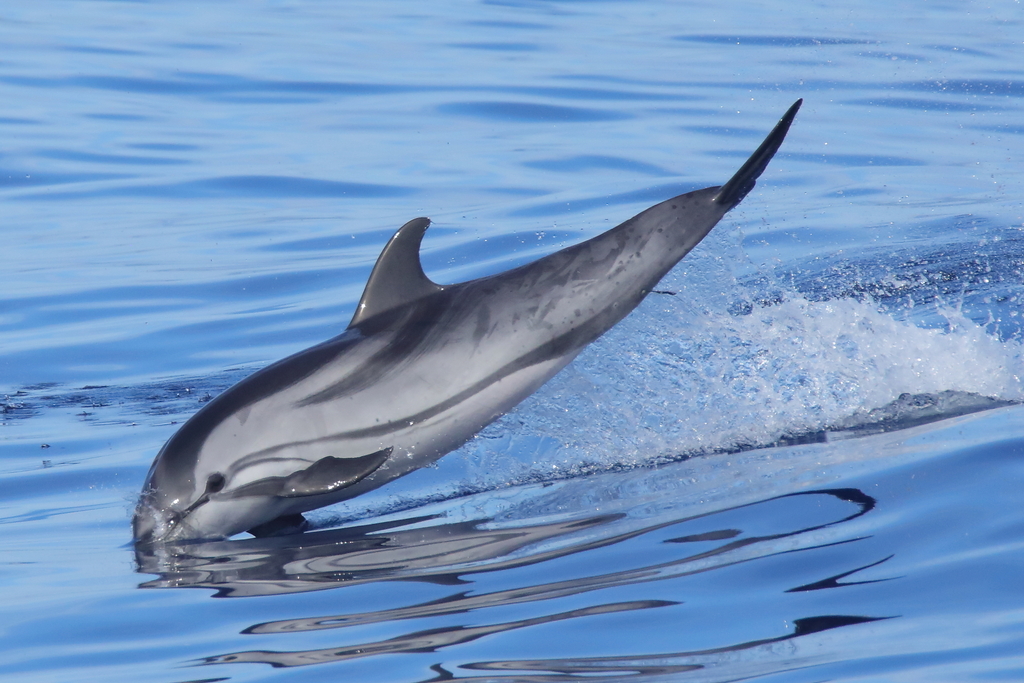
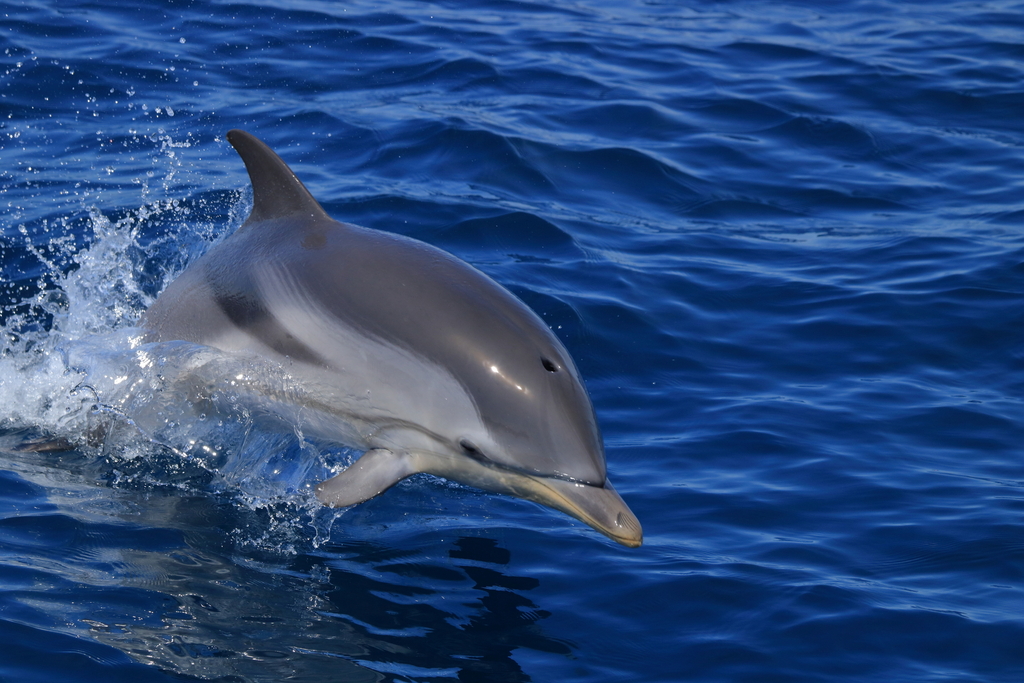
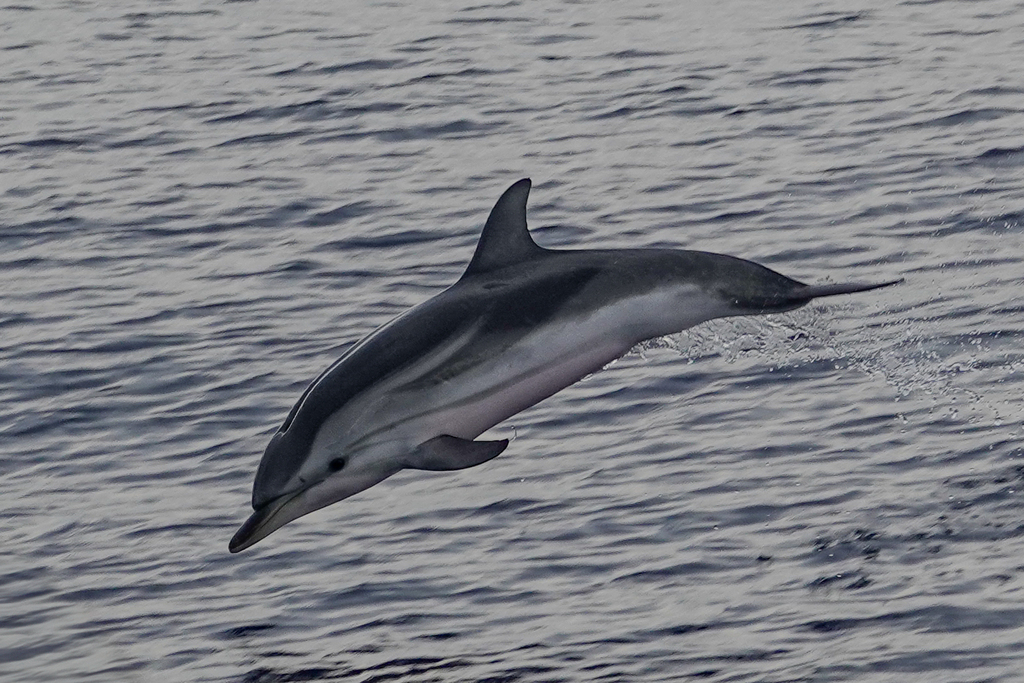
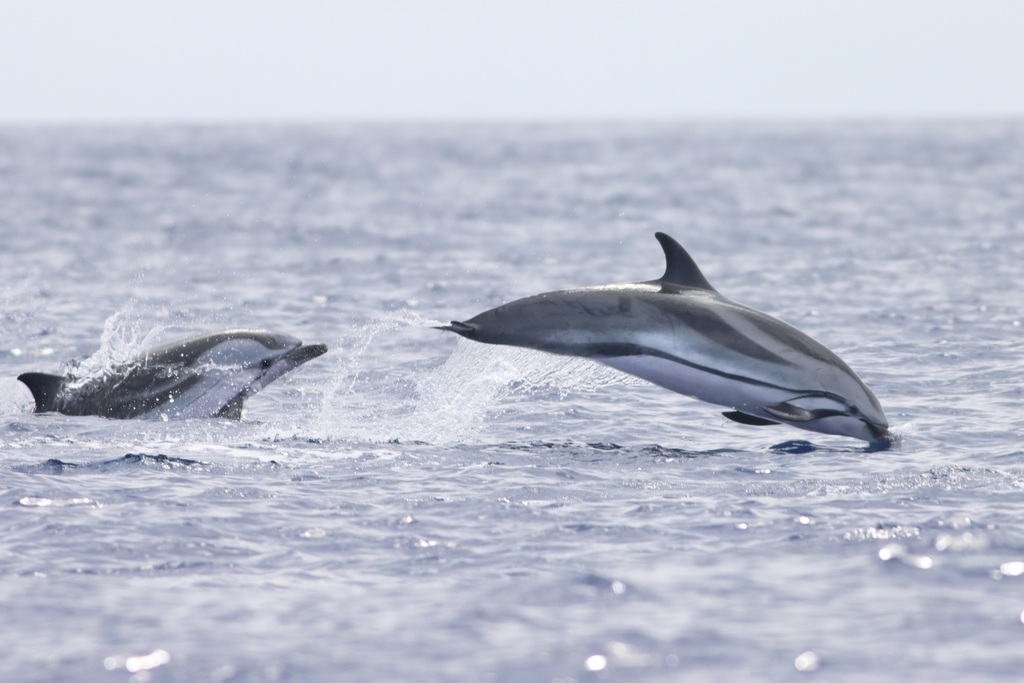
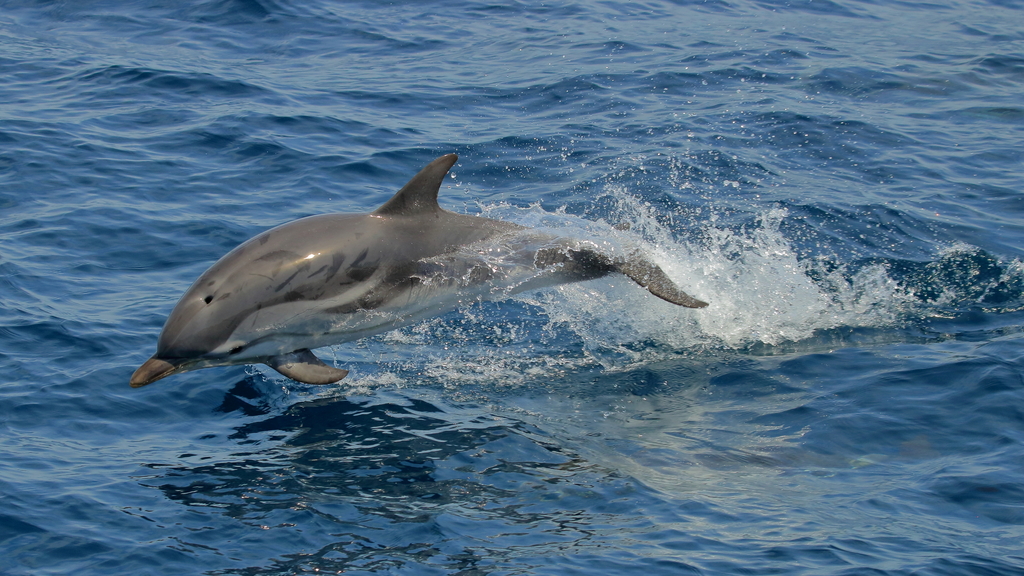
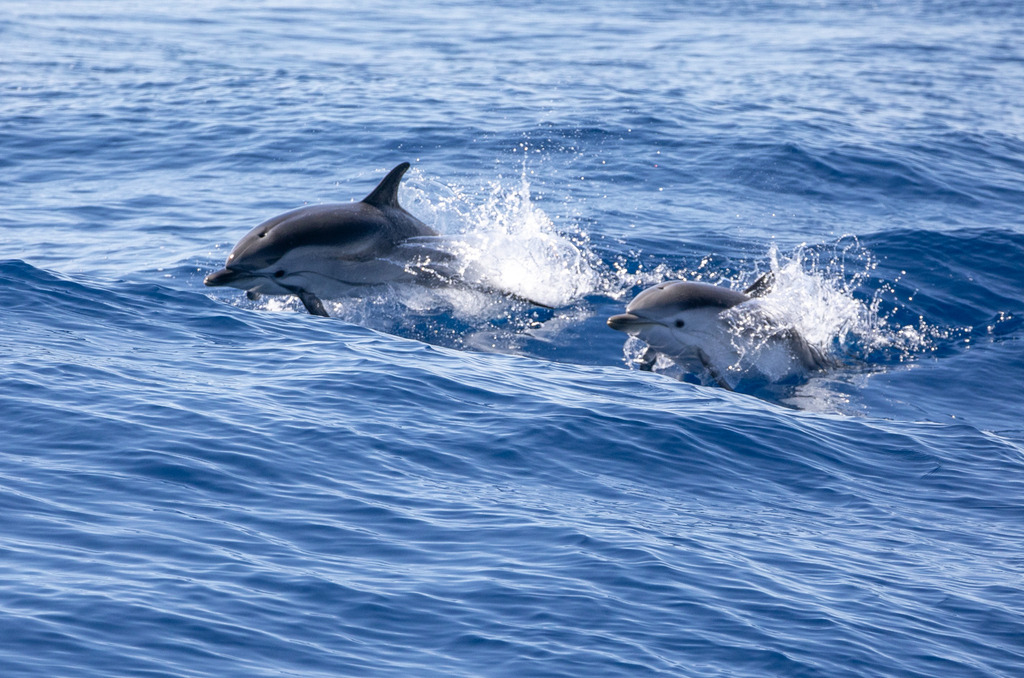
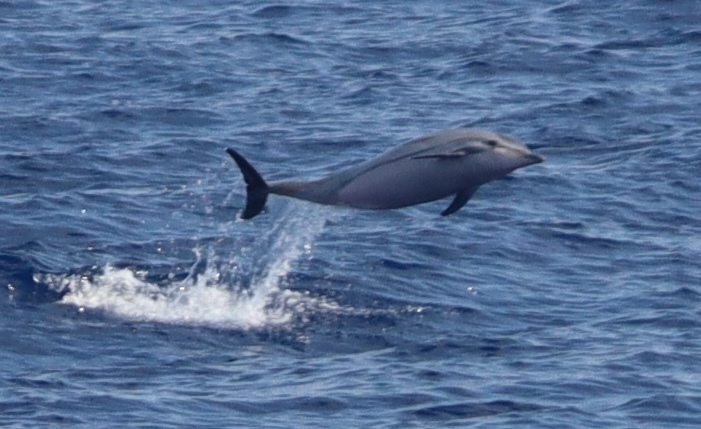
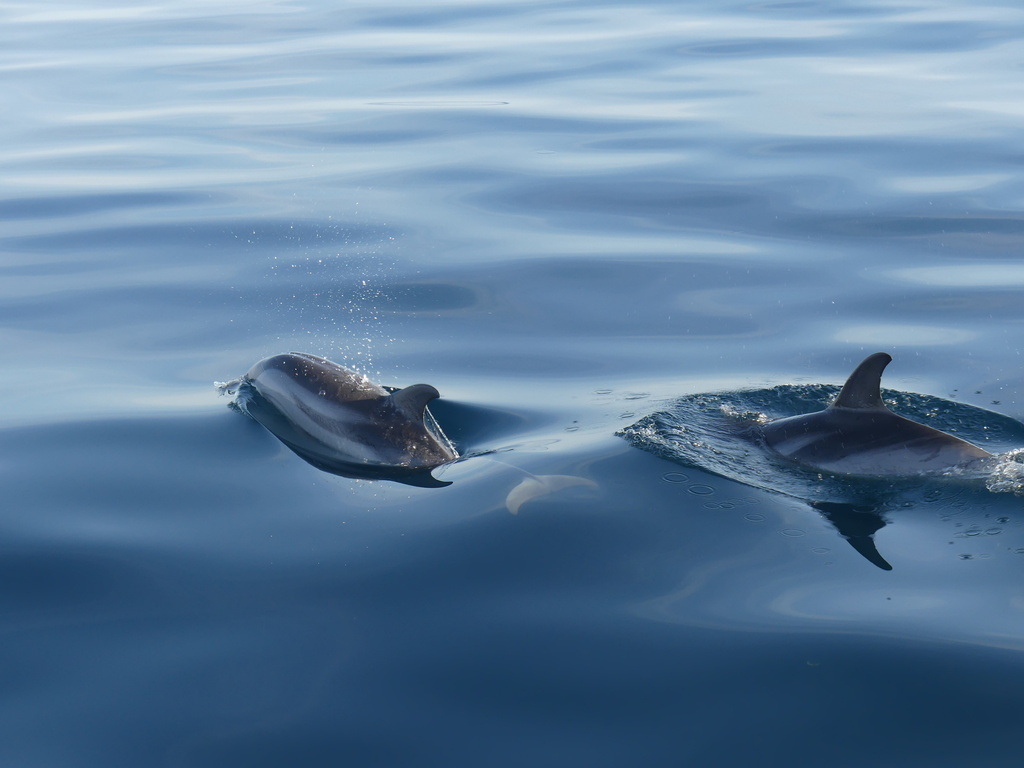
Photos show the species, not always the places on this page.
Length
Adults usually about 1.8 to 2.6 m (5.9 to 8.5 ft); large males up to about 2.7 m (9 ft)
Weight
Adults usually about 110 to 160 kg (240 to 350 lb)
Next to a person
About as long as an adult person, and roughly 1.5 to 2 times their weight
What it eats
Small midwater fish, especially lanternfish, and small squid. It can dive to at least about 700 m (2,300 ft) to feed, and the diet changes by region.
Around people
Calm, give space
How it lives
Striped dolphins are fast ocean dolphins with dark stripes along their sides. They usually travel in schools and often leap from the water. They feed in the middle depths of the sea, especially on lanternfish and squid, and prefer deep offshore and slope waters to shallow bays.
Where it goes
Striped dolphins live in deep, warm to temperate open ocean, roughly between 50°N and 40°S. They like shelf edges and places where currents meet and bring food up. They are fast swimmers and often move away quickly from boats.
We only draw a journey on the map when scientists have tracked it or clearly documented it. For this animal we have not found one yet.
Populations
The species is listed as Least Concern worldwide. The Mediterranean subpopulation was assessed as Least Concern in 2021, after an earlier Vulnerable listing. The small group in the Gulf of Corinth, Greece, is assessed separately as Endangered. Mediterranean striped dolphins suffered large virus outbreaks in 1990 to 1992 and again in 2006 to 2008.
Meet it respectfully
Watch from the boat and let the dolphins choose how close they come. Never chase, circle, feed or cut across a school, and never come between mothers and calves. Travel slowly and parallel to them, and move away if they change direction. In Spain, national rules keep boats at least 60 m away and do not allow swimming in that zone; other places have their own local rules.
Fun fact
Tap the bulb to light it up.
It is named after the dark stripe that runs from the eye to the flipper and along the side.
It can leap more than 6 m (20 ft) above the surface, and sometimes spins its tail in the air, a move called roto-tailing.
Calves are born about 0.9 m (3 ft) long after about one year of pregnancy.
It prefers deep offshore water to shallow bays.
Striped dolphin in the Ocean Atlas
Places we have researched where this animal is recorded. It is never guaranteed, and some places are for watching from the boat only.
Travel with usComing soonTrusted referralExploringOn pause, story onlyEthics pass
Country colour: pink where we travel, blue where we are exploring or refer, grey for story only.
 Albania
 Algeria
 Angola
 Argentina
 Australia
 Brazil
 Cabo Verde
 Canada
 Colombia
 Costa Rica
 Croatia
 Curaçao
 Cyprus
 Ecuador
 El Salvador
 France
 Greece
 Guadeloupe
 Guatemala
 Iran
Iran Ireland
 Israel
 Japan
Japan Martinique
 Mayotte
 Mexico
 Netherlands
 New Caledonia
 Nicaragua
 Norway
 Oman
Oman Panama
 Portugal
 Réunion
 Saint Lucia
 South Africa
 Spain
Spain Sri Lanka
 Sweden
 Türkiye
 United Kingdom
 United States
 Western Sahara
Sources for this page
- NOAA Fisheries
- IUCN Red List
- IUCN Red List, Mediterranean subpopulation (Lauriano), 2021
- IUCN SSC Cetacean Specialist Group, 2022
- SeaLifeBase
- FAO species account
- Raga et al., 2008
- NOAA Fisheries, dolphin viewing guidelines
Facts checked 26 September 2026. Photos: Unsplash licence, or Creative Commons as shown on each photo.
Work in ocean travel?
We are always happy to hear from exceptional local operators, accommodation, conservation organisations and destination experts. If your work fits responsible, small-group ocean travel, we would love to learn more.
Partner with Ocean Calling7-day freediving course in Coron, Palawan
CHF 1,480