
Blacktip shark
Carcharhinus limbatus
Blacktip sharks are fast coastal migrants. Thousands can gather off southeast Florida in some winters, while others stay local. Not every shark follows the same route.
Vulnerable (IUCN, 2021) means it is at high risk of extinction in the wild.
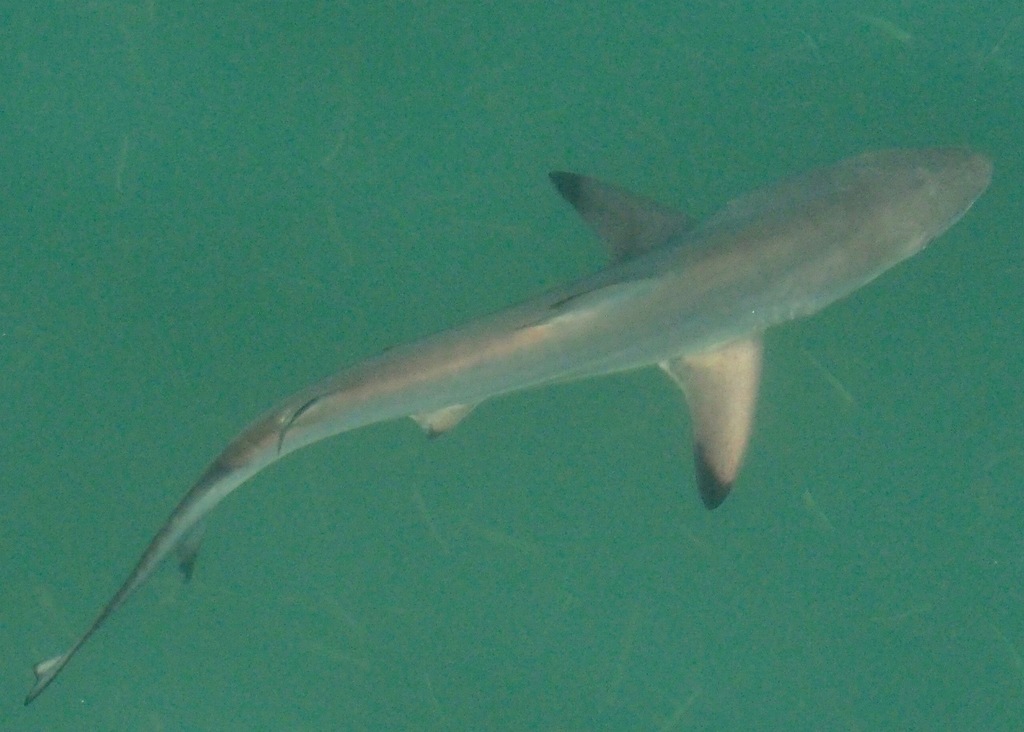
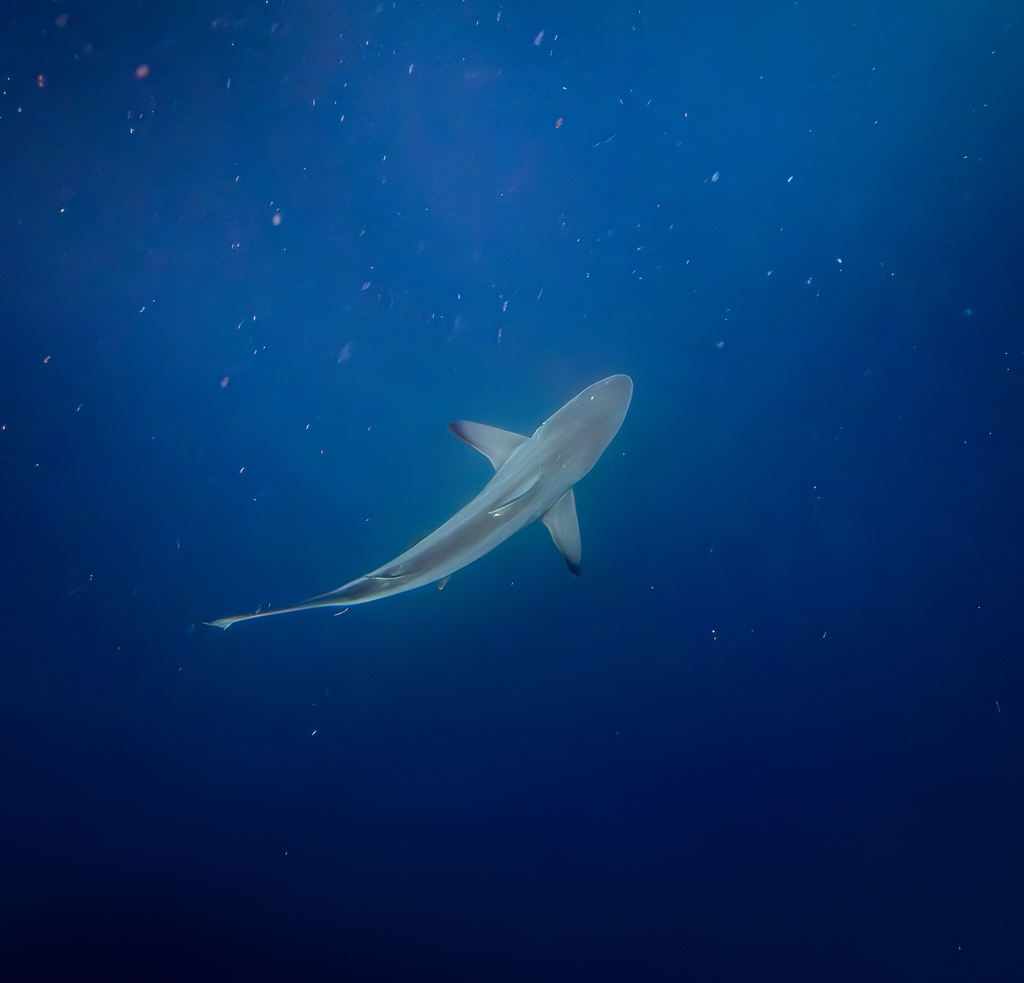
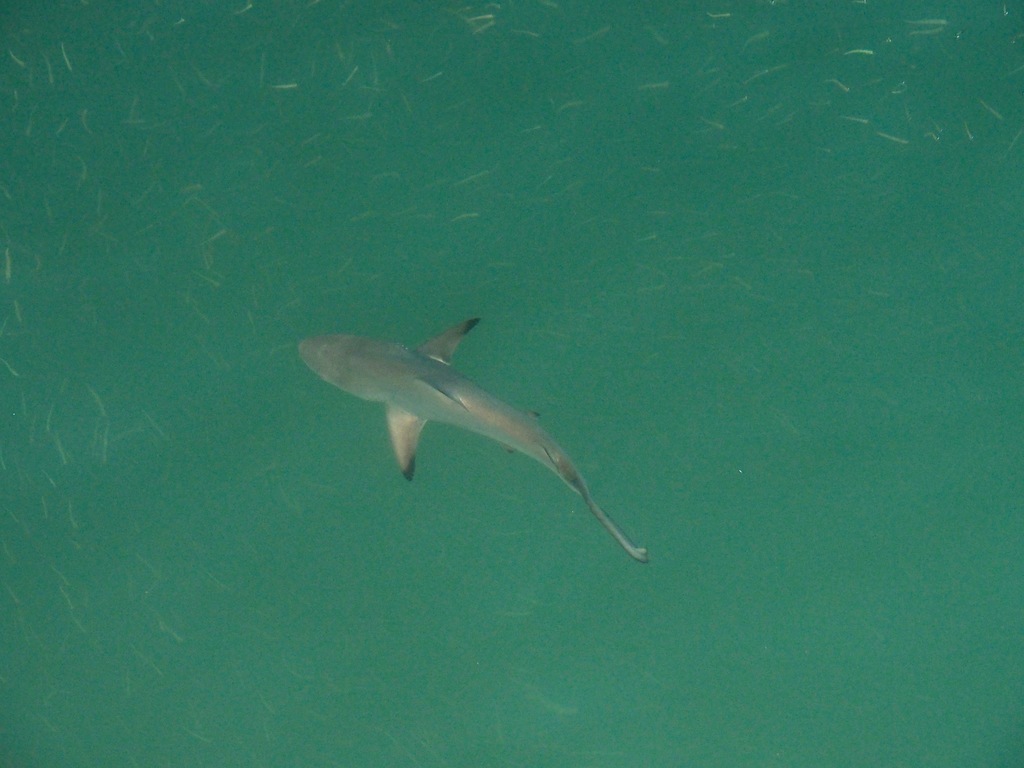
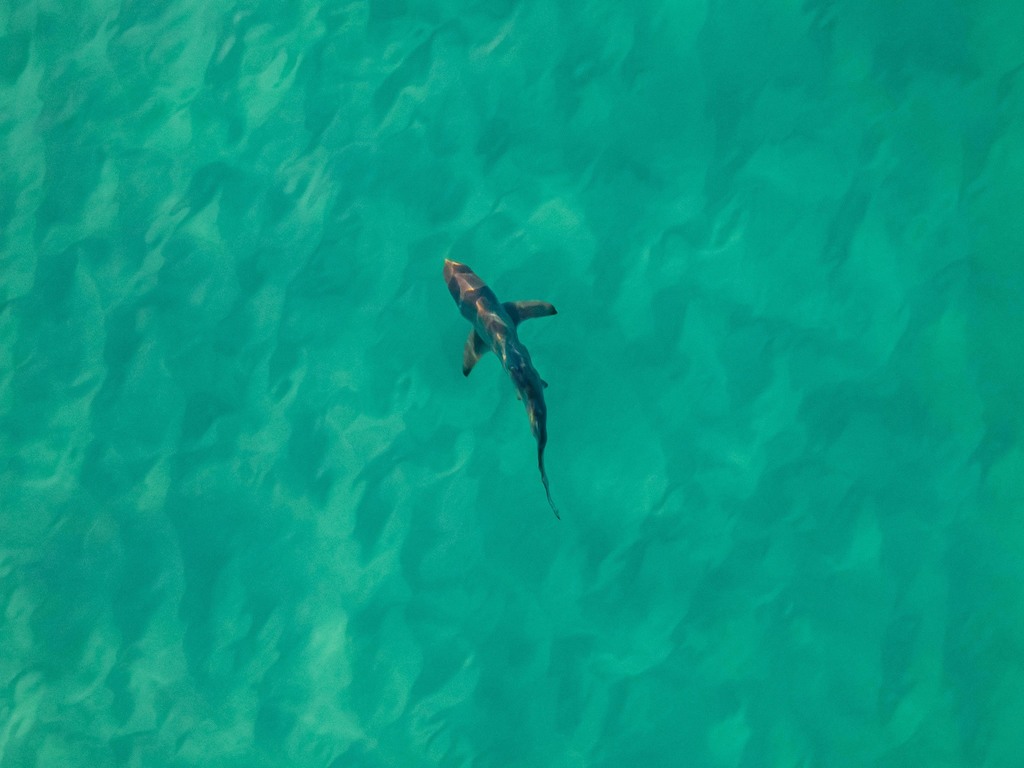
Photos show the species, not always the places on this page.
Length
Usually about 1.5 m (4.9 ft); largest recorded about 2.9 m (9.4 ft)
Weight
Typical weight not reliably measured; largest recorded about 123 kg (271 lb)
Next to a person
A typical adult is a little shorter than a person is tall; the largest are much longer
What it eats
Mainly fish in open water and near the bottom, also small sharks and rays, squid and crustaceans.
Around people
Defensive if pressured
How it lives
The blacktip shark is a fast, active hunter of coastal waters, often near beaches, river mouths, lagoons and reef edges. Young sharks are common close to shore. It often travels in groups. Females give birth to one to 10 live pups. The black tips on most fins help to tell it apart.
Where it goes
Many blacktip sharks off the US East Coast migrate with the seasons. They crowd southeast Florida in winter, when the water is below about 25°C, and move north in spring. Tagged males travelled from Palm Beach County, Florida, to as far as Long Island, New York. Some males stay off southeast Florida all year.
Populations
In aerial surveys off Palm Beach County, Florida, from 2011 to 2014, the highest count was 12,128 sharks in 2011 in a 75.6 km² strip along the beach. Numbers peaked from January to March and fell to 1.1% of the peak by April and May. At Darwin and Wolf in the Galápagos, blacktips made up 5.1% of the fish biomass in 2013 and 2014.
Meet it respectfully
Watch blacktips from the beach, a pier or the water with calm, slow movement, and give schooling sharks a clear path. Never feed or chase them. Feeding sharks while diving or snorkelling is not allowed in Florida state waters. Do not swim near people fishing or among bait fish, where sharks hunt and bites can happen.
Fun fact
Tap the bulb to light it up.
The blacktip shark and the blacktip reef shark are two different species.
Blacktip sharks give birth to 1 to 10 live pups, and young sharks grow up in shallow coastal nurseries.
Not every blacktip migrates: some males stay off southeast Florida all year.
In 2011, researchers counted 12,128 blacktip sharks from the air along a short strip of Palm Beach County coast in Florida.
Some male blacktip sharks tagged in Palm Beach County, Florida, swam north all the way to Long Island, New York, for the summer.
Source: Bowers & Kajiura, 2025, Marine Ecology Progress Series
Follow its journey
Watch it travel. Every line comes from satellite tracking or documented research, and the source is named.
StartEndJourney (the line joins documented areas; real paths vary)
Blacktip shark in the Ocean Atlas
Places we have researched where this animal is recorded. It is never guaranteed, and some places are for watching from the boat only.
Travel with usComing soonTrusted referralExploringOn pause, story onlyEthics pass
Country colour: pink where we travel, blue where we are exploring or refer, grey for story only.
 Australia
 The Bahamas
 Bangladesh
 Belize
 Benin
Benin Brazil
 Cabo Verde
 Cameroon
 Colombia
 Côte d'Ivoire
 Ecuador
 Egypt
Egypt Equatorial Guinea
 Faroe Islands
 Fiji
Fiji French Guiana
 French Polynesia
 Gabon
Gabon Germany
 Ghana
Ghana Guinea
 Guinea-Bissau
 India
India Indonesia
 Italy
Italy Japan
Japan Liberia
 Malaysia
 Maldives
 Mexico
 Mozambique
 Netherlands
 New Caledonia
 Nigeria
 Oman
Oman Panama
 Papua New Guinea
 Philippines
 Republic of the Congo
 Senegal
 Sierra Leone
 South Africa
 Spain
Spain Taiwan
 Thailand
 United Arab Emirates
 United Kingdom
 United States
 Venezuela
Sources for this page
- FishBase, Carcharhinus limbatus
- Kajiura & Tellman, 2016, PLOS ONE
- Bowers & Kajiura, 2025, Marine Ecology Progress Series
- Florida Fish and Wildlife Conservation Commission, fish feeding rule
- Salinas-de-Leon et al., 2016, PeerJ
- Florida Museum of Natural History, Blacktip shark
Facts checked 26 September 2026. Photos: Unsplash licence, or Creative Commons as shown on each photo.
Work in ocean travel?
We are always happy to hear from exceptional local operators, accommodation, conservation organisations and destination experts. If your work fits responsible, small-group ocean travel, we would love to learn more.
Partner with Ocean CallingNot sure where to go? Get your Ocean Match
from CHF 19