
American flamingo
Phoenicopterus ruber
A tall pink wader of salt ponds, returned to the islands by people. No sighting is ever a promise.
Least Concern (IUCN, latest category listed by GBIF) means it is not currently at high risk of extinction, although many Caribbean colonies were lost to hunting in the past.
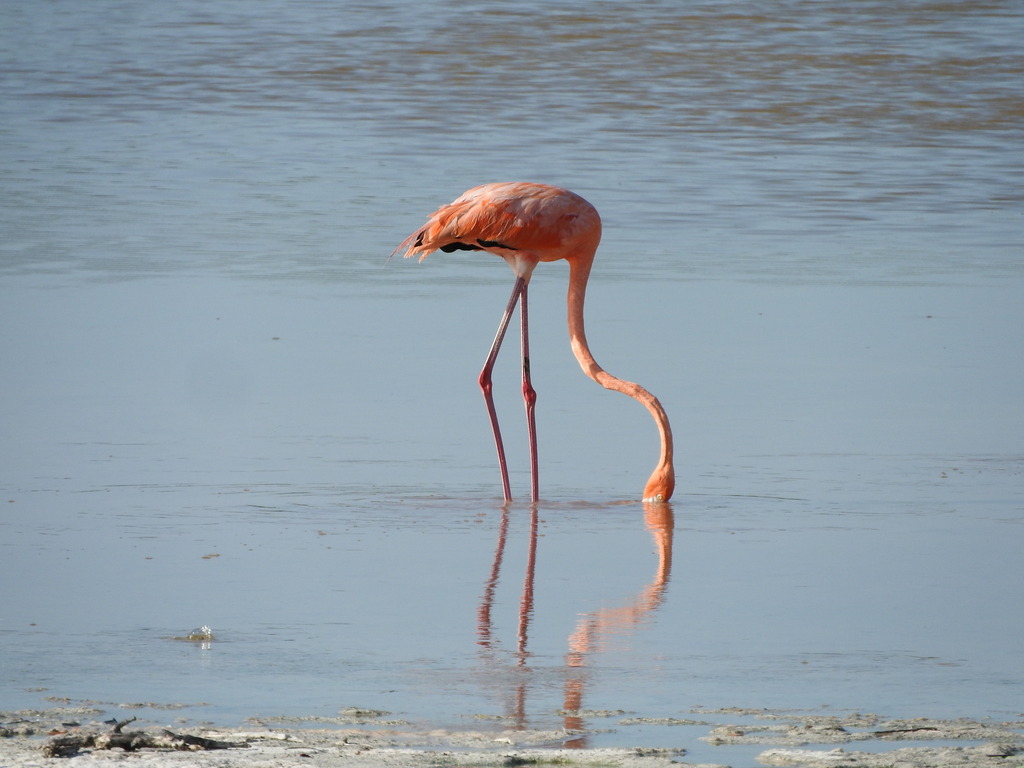
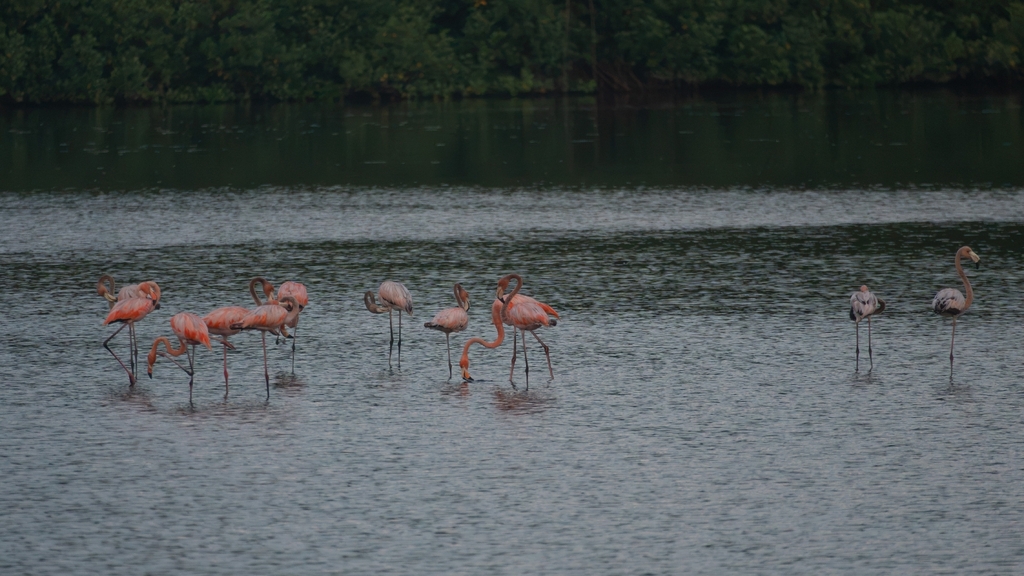
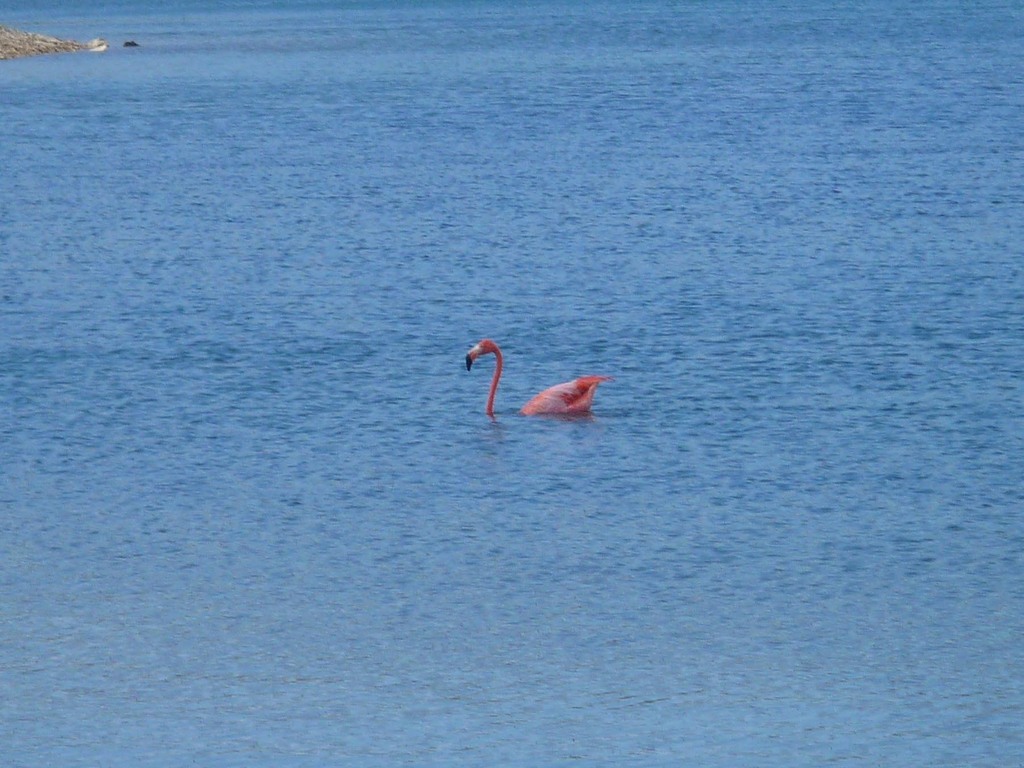
Photos show the species, not always the places on this page.
Length
About 120 to 145 cm (47 to 57 in) tall
Weight
Males average about 2.8 kg (6.2 lb) and females about 2.2 kg (4.9 lb)
Next to a person
About as tall as a ten-year-old to a small adult, and as light as a large bag of flour
What it eats
Small crustaceans, molluscs, worms, insects and larvae, small fish, aquatic plants, algae and diatoms. It filters food from water and mud with a hooked beak, with its head under the water. The pink colour comes from carotenoids in its food.
Around people
Calm, give space
How it lives
It lives in shallow salt lagoons, ponds and mud flats, in colonies that can number in the thousands. It lays a single egg, incubated for about 28 to 32 days, and chicks fledge at about 65 to 90 days. It breeds across the Caribbean, including the Bahamas, Cuba, Hispaniola, Turks and Caicos and the Virgin Islands. On Anegada, flamingos use the old salt ponds, where Flamingo Pond has a raised lookout.
Where it goes
Flamingos can move between salt ponds, and in the British Virgin Islands they have also been recorded away from Anegada, including at Necker Island, Mosquito Island and ponds on Tortola. On Anegada the flock lives mainly in the western salt ponds.
We only draw a journey on the map when scientists have tracked it or clearly documented it. For this animal we have not found one yet.
Populations
Listed as Least Concern. In the Caribbean, hunting wiped out many colonies: thousands of flamingos lived on Anegada in the 1830s, and they had gone by about 1950 to the 1960s, depending on the source. In 1992, 22 birds from Bermuda were released on Anegada and the flock has grown, with about 200 birds counted in 2016. The western salt ponds were designated a Ramsar site on 11 May 1999 and are an Important Bird Area. In Florida, flamingos were largely wiped out by 1900.
Meet it respectfully
Watch from the lookout or from a distance with binoculars; flamingos stay far out on the pond. Never walk into nesting areas, chase or flush the flock, and do not feed them. On Anegada, tourist interference once damaged flamingo nesting mounds, and visitor access to flamingo areas is managed, so use local guides and follow their instructions.
Fun fact
Tap the bulb to light it up.
Thousands of flamingos lived on Anegada in the 1830s, but hunting removed them.
The flock today descends from 22 birds released on Anegada in 1992.
Standing on one leg may help flamingos keep body heat, according to researchers.
American flamingo in the Ocean Atlas
Places we have researched where this animal is recorded. It is never guaranteed, and some places are for watching from the boat only.
Travel with usComing soonTrusted referralExploringOn pause, story onlyEthics pass
Country colour: pink where we travel, blue where we are exploring or refer, grey for story only.
 Algeria
 Anguilla
 Argentina
 Aruba
Aruba The Bahamas
 Barbados
 Belgium
 Bermuda
 British Virgin Islands
 Bulgaria
 Canada
 Caribbean Netherlands
 Cayman Islands
 Colombia
 Costa Rica
 Cuba
Cuba Curaçao
 Dominican Republic
 Ecuador
 France
 French Guiana
 Germany
 Guyana
 Haiti
Haiti Israel
 Italy
Italy Jamaica
 Kenya
Kenya Mexico
 Morocco
 Mozambique
 Namibia
 Netherlands
 Portugal
 Puerto Rico
 Saint Martin
 South Africa
 Spain
Spain Suriname
 Sweden
 Trinidad and Tobago
 Tunisia
 Turks and Caicos Islands
 United Kingdom
 United States
 US Virgin Islands
 Venezuela
Sources for this page
- Wikipedia, American flamingo
- Wikipedia, Anegada
- Animal Diversity Web, Phoenicopterus ruber
- The Conservation Agency, Flamingo reintroduction to Anegada
- BVI Traveller, 2019
- GBIF, IUCN category
Facts checked 5 October 2026. Photos: Unsplash licence, or Creative Commons as shown on each photo.
Work in ocean travel?
We are always happy to hear from exceptional local operators, accommodation, conservation organisations and destination experts. If your work fits responsible, small-group ocean travel, we would love to learn more.
Partner with Ocean CallingNot sure where to go? Get your Ocean Match
from CHF 19