
Lesser frigatebird
Fregata ariel
A dark kite-like shape riding the warm air above an island. A sighting is a gift of the day, never a promise.
Least Concern (IUCN, 2018) means it is not at high risk of extinction overall. The Atlantic subspecies on Trindade Island is Critically Endangered or may be extinct.
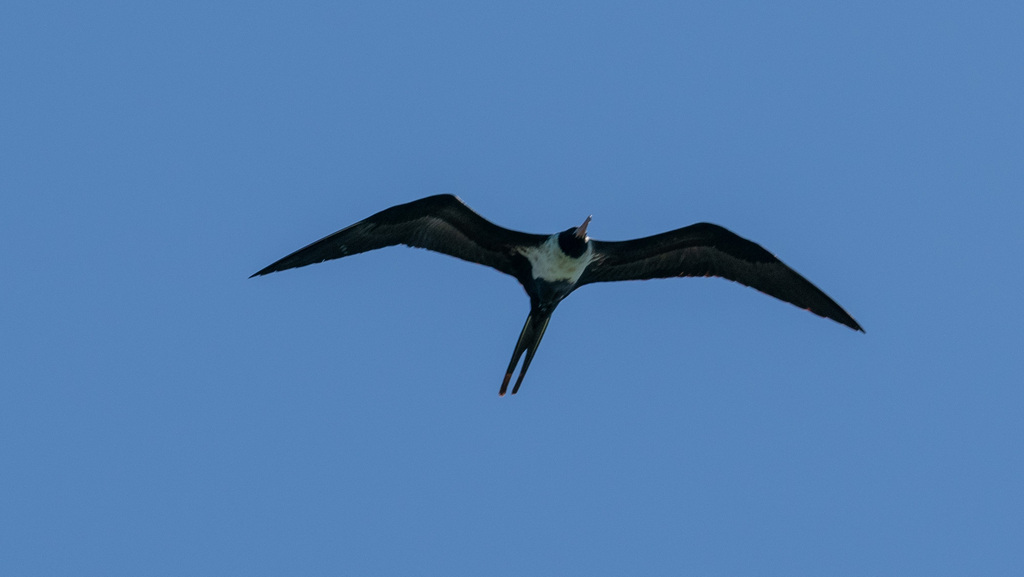
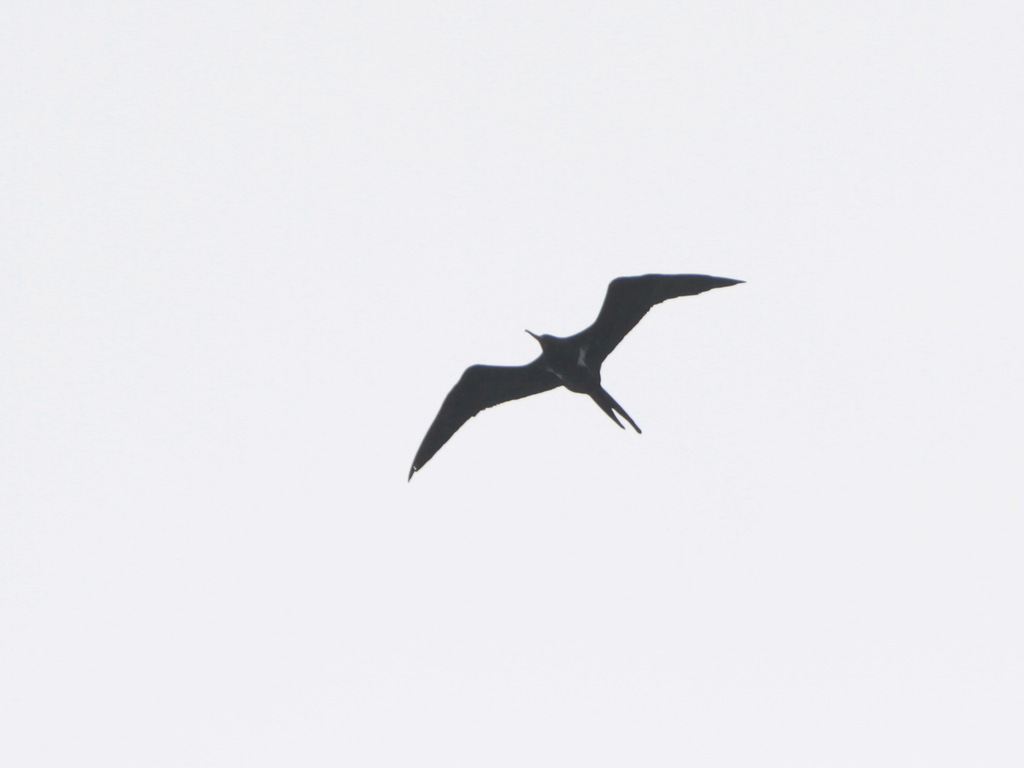
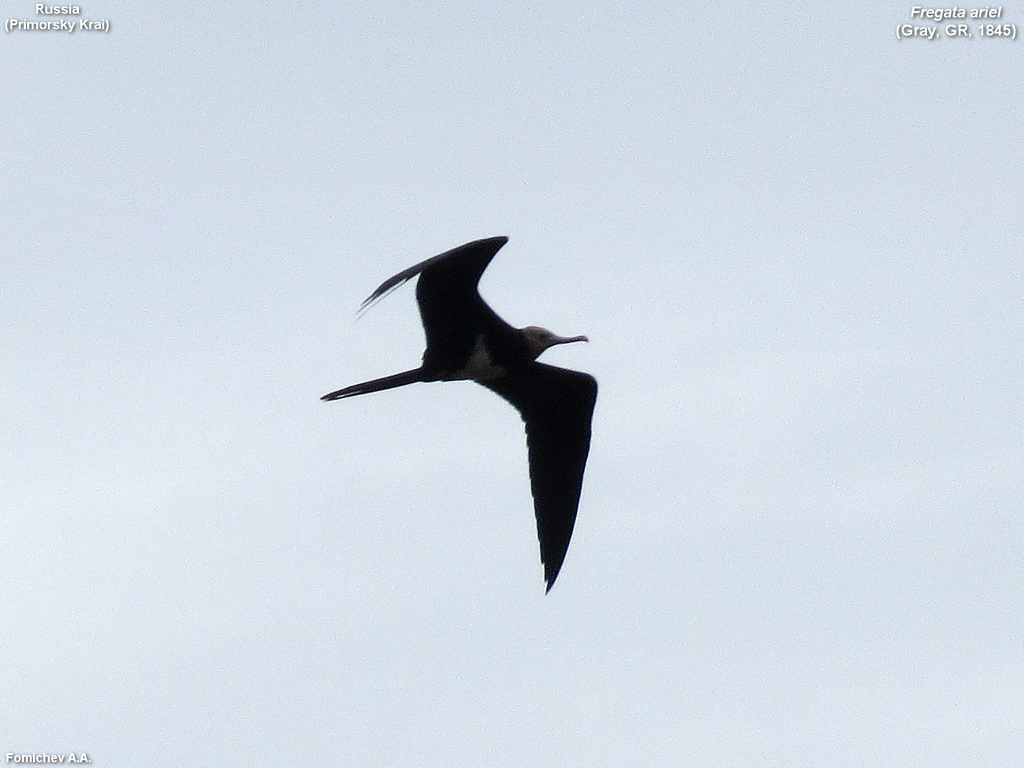
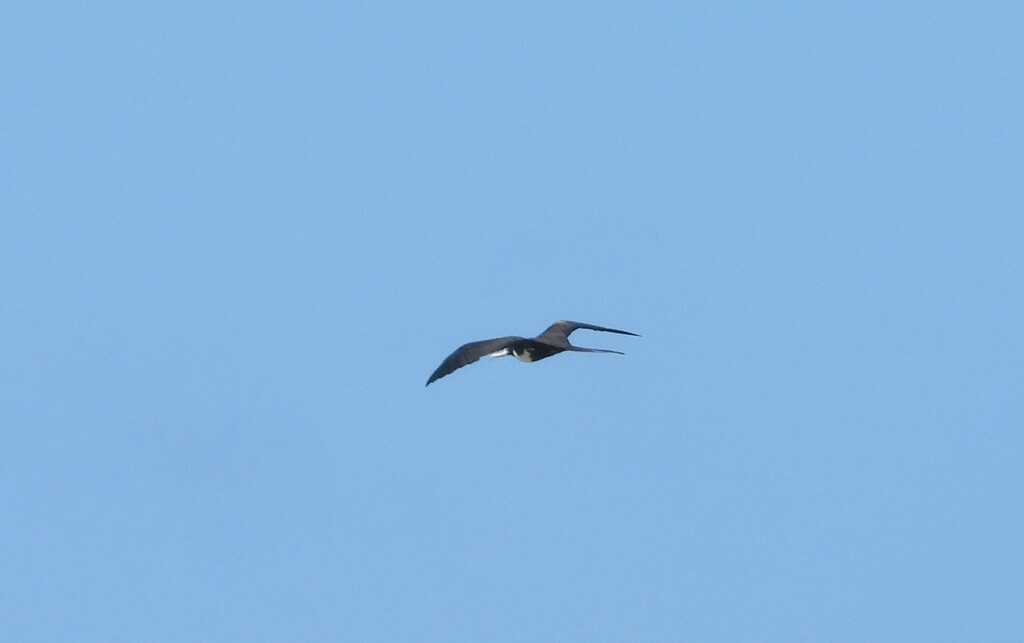
Photos show the species, not always the places on this page.
Length
About 66 to 81 cm (26 to 32 in) long, with a wingspan of about 155 to 193 cm (61 to 76 in).
Weight
Males about 625 to 875 g (1.4 to 1.9 lb). Females are larger, at about 760 to 955 g (1.7 to 2.1 lb).
Next to a person
A wingspan about as wide as a tall adult's outstretched arms, yet it weighs less than a 1 kg bag of sugar.
What it eats
Mostly fish taken from the sea surface in flight, often flying fish, and squid. Like other frigatebirds, it sometimes forces other seabirds to give up their catch. Birds of the World says it gets most of its food by its own foraging.
Around people
Calm, give space
How it lives
Lesser frigatebirds nest in colonies on isolated islands and atolls, laying one egg on a platform of twigs. It hatches after about 6 to 7 weeks. The chick stays in the nest for about 6 months and is fed for longer after that. Adults breed every other year at best, and only 10 to 15% of eggs produce a fledged chick. In Australia the season runs from May to December. Frigatebirds do not land on the sea. Their feathers have little oil, and they cannot take off from water. Lifespan was not given in the sources I opened.
Where it goes
Young birds disperse hundreds or thousands of kilometres from where they hatched. One lesser frigatebird tracked after breeding on Europa Island flew across the tropical Indian Ocean to Indonesia and on towards the Solomon Islands.
We only draw a journey on the map when scientists have tracked it or clearly documented it. For this animal we have not found one yet.
Populations
It breeds on islands in the Indian and southern Pacific oceans. Wikipedia gives several hundred thousand birds. Birds of the World gives 100,000 to 499,999 and calls the population stable. Key colonies include Aldabra (more than 6,000 pairs), northern Australia (about 15,000 pairs), and the Phoenix and Line Islands. The Atlantic subspecies, F. a. trinitatis on Trindade Island, is Critically Endangered, with fewer than 40 breeding pairs according to Wikipedia. Birds of the World says it may be extinct, with breeding last documented in 1975 to 1976. There are three subspecies. IUCN assessed the species as Least Concern in 2018.
Meet it respectfully
Watch quietly from a distance and let the birds go about their day. Stay away from nesting areas on islands. Never chase, touch, feed or bait a frigatebird, and never throw fish to draw it close. Keep boats back from nesting islands. Follow your guide.
Fun fact
Tap the bulb to light it up.
It has the lowest wing loading of any bird, which means the least body weight for each unit of wing area.
Frigatebirds never settle on the sea. They have little oil in their feathers and cannot take off from water.
Males show a red throat pouch to attract a mate.
Lesser frigatebird in the Ocean Atlas
Places we have researched where this animal is recorded. It is never guaranteed, and some places are for watching from the boat only.
Travel with usComing soonTrusted referralExploringOn pause, story onlyEthics pass
Country colour: pink where we travel, blue where we are exploring or refer, grey for story only.
 American Samoa
 Australia
 Brazil
 Chagos (British Indian Ocean Territory)
 China
China Christmas Island
 Cocos (Keeling) Islands
 Comoros
 Cook Islands
 Fiji
Fiji French Polynesia
 Hong Kong
 India
India Indonesia
 Japan
Japan Kenya
Kenya Kiribati
 Madagascar
 Malaysia
 Maldives
 Marshall Islands
 Mozambique
 New Caledonia
 New Zealand
 Papua New Guinea
 Philippines
 Pitcairn Islands
 Samoa
Samoa Seychelles
 Singapore
 Solomon Islands
 South Africa
 Sri Lanka
 Taiwan
 Thailand
 Timor-Leste
 Tonga
Tonga United States
 Vanuatu
Sources for this page
- Wikipedia, Lesser frigatebird, 2026
- Birds of the World, Lesser frigatebird, 2026
- Wikipedia, Frigatebird, 2026
- Western Indian Ocean frigatebird study, PLoS One, 2014
- GBIF, IUCN Red List category, 2026
Facts checked 5 October 2026. Photos: Unsplash licence, or Creative Commons as shown on each photo.
Work in ocean travel?
We are always happy to hear from exceptional local operators, accommodation, conservation organisations and destination experts. If your work fits responsible, small-group ocean travel, we would love to learn more.
Partner with Ocean CallingNew: mobula rays in La Ventana, May 2027
CHF 2,720