
Brown pelican
Pelecanus occidentalis
A large bird gliding low over the swell, then folding into the water for a fish. Brown pelicans go about their day as they please, and no sighting is a promise.
Least Concern (IUCN Red List) means it is not at high risk of extinction at present; the species recovered after the DDT era.
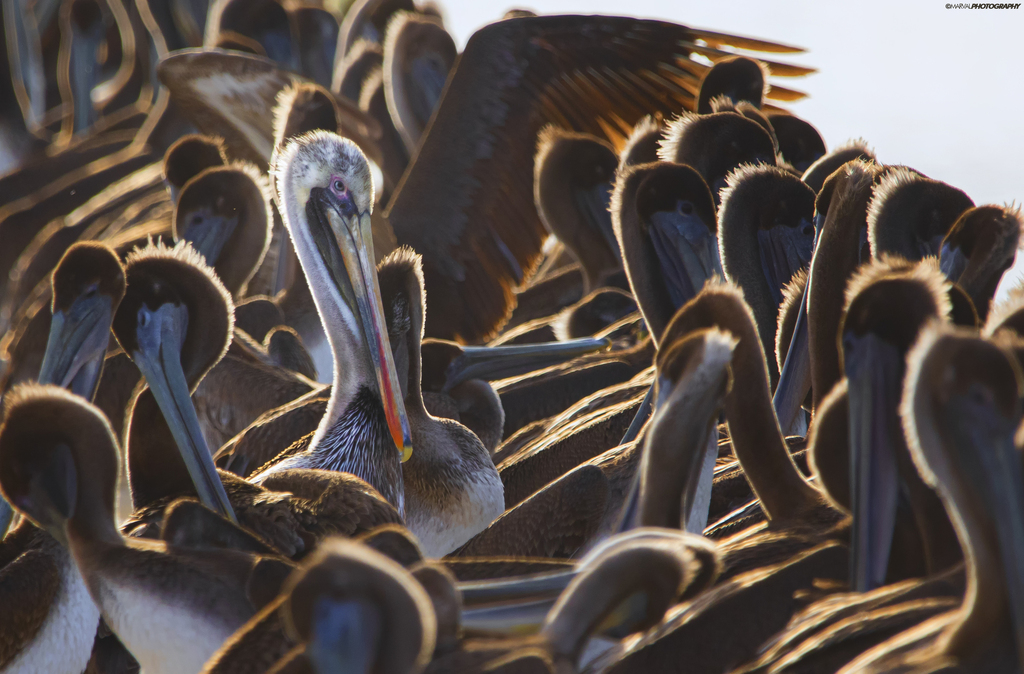
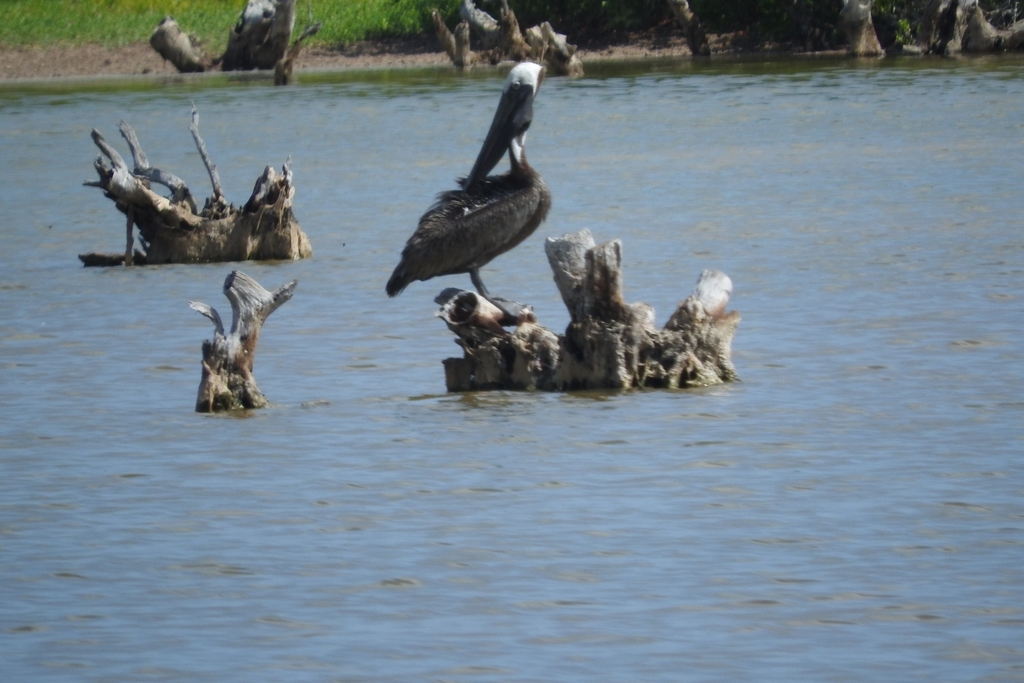
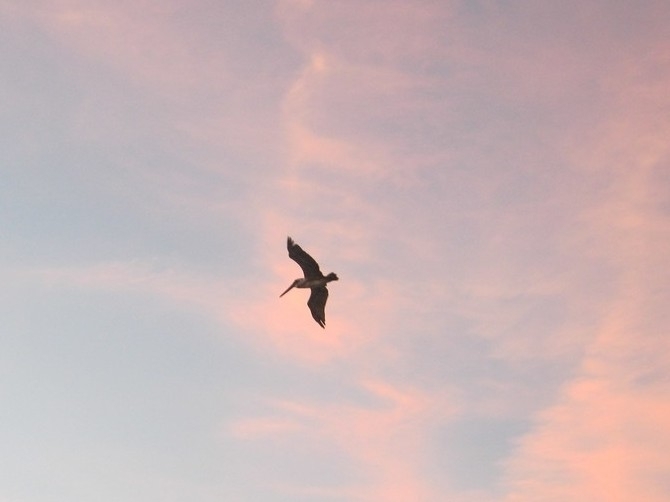
Photos show the species, not always the places on this page.
Length
About 1.0 to 1.5 m (3.3 to 5 ft) long, with a wingspan of about 2.0 to 2.3 m (6.7 to 7.5 ft). Sources differ a little: Audubon gives up to about 1.4 m (4.5 ft) long and 2 m (6.5 ft) across the wings.
Weight
About 2 to 5 kg (4.4 to 11 lb). Males are heavier than females, averaging about 3.7 kg (8.2 lb) against about 3.2 kg (7 lb) for females.
Next to a person
Wings spread wider than most adults are tall, yet it weighs about as much as a newborn baby or a large cat.
What it eats
Mostly fish, such as menhaden, anchovies, herring and sardines, with a few crustaceans now and then. It is the only pelican that plunge-dives, dropping bill-first into the water from as high as about 18 to 21 m (60 to 70 ft). It sees poorly underwater, so it relies on spotting fish from above.
Around people
Calm, give space
How it lives
Brown pelicans live on salt bays, beaches and nearshore ocean. They nest in colonies on islands, either bare ground or mangroves and other low trees. A clutch is usually 2 or 3 eggs, incubated by both parents for about 28 to 30 days. Chicks fledge after about 9 to 12 weeks. Birds first breed at about 3 to 5 years old. The oldest recorded wild bird reached 43 years, according to Animal Diversity Web.
Where it goes
Brown pelicans mostly stay along the coast all year. Birds of the World calls them permanent coastal residents rather than true migrants. Animal Diversity Web says birds in the northern part of the range move seasonally. In the tropics they may nest at any time of year.
We only draw a journey on the map when scientists have tracked it or clearly documented it. For this animal we have not found one yet.
Populations
Estimates of the world population range from about 300,000 (Partners in Flight, quoted by Isla Contoy) to about 370,000 (Audubon) and about 650,000 (Wikipedia summary), so the true figure is uncertain. The IUCN Red List rates the species Least Concern. In the United States it was listed as endangered from 1970 because DDT thinned its eggshells. After DDT was banned in 1972 it recovered, and it was removed from the endangered list in the south-east in 1985 and across the rest of its range in 2009. In Mexico, Isla Contoy National Park, run by CONANP, is a protected nesting and feeding area for seabirds. Pacific sardine declines since about 2014 are a concern for breeding birds in California.
Meet it respectfully
Watch from a distance and let the birds go about their day. Nesting colonies sit on small islands because the birds need to be free of disturbance, so stay well back from nests and roosting groups and keep boats and drones away. Never chase, touch or feed them. Pelicans may come close to fishing boats looking for scraps, and feeding teaches them to depend on people. I did not read specific visitor rules for Mexican sites, so follow park rules and your guide.
Fun fact
Tap the bulb to light it up.
A brown pelican dives bill-first from the air, like a kingfisher, and is the only pelican that does so.
Its throat pouch can hold up to about 11 litres (3 US gallons) of water, according to Animal Diversity Web.
DDT nearly wiped out brown pelicans in the 1960s, and they came back after the pesticide was banned in 1972.
Brown pelican in the Ocean Atlas
Places we have researched where this animal is recorded. It is never guaranteed, and some places are for watching from the boat only.
Travel with usComing soonTrusted referralExploringOn pause, story onlyEthics pass
Country colour: pink where we travel, blue where we are exploring or refer, grey for story only.
 Anguilla
 Antigua and Barbuda
 Aruba
 The Bahamas
 Barbados
 Belize
 Bermuda
 Brazil
 British Virgin Islands
 Canada
 Caribbean Netherlands
 Cayman Islands
 Chile
 Colombia
 Costa Rica
 Cuba
 Curaçao
 Dominica
 Dominican Republic
 Ecuador
 El Salvador
 French Guiana
 Grenada
 Guadeloupe
 Guatemala
 Guyana
 Haiti
 Honduras
 Jamaica
 Martinique
 Mexico
 Montserrat
 Nicaragua
 Panama
 Peru
 Puerto Rico
 Saint Barthélemy
 Saint Kitts and Nevis
 Saint Lucia
 Saint Martin
 Saint Vincent and the Grenadines
 Sint Maarten
 Suriname
 Trinidad and Tobago
 Turks and Caicos Islands
 United States
 US Virgin Islands
 Venezuela
Sources for this page
- Wikipedia, Brown pelican
- University of Michigan, Animal Diversity Web
- National Audubon Society, Field Guide
- U.S. Fish and Wildlife Service
- Cornell Lab, Birds of the World
- IUCN Red List record via GBIF
- Isla Contoy Experience
Facts checked 5 October 2026. Photos: Unsplash licence, or Creative Commons as shown on each photo.
Work in ocean travel?
We are always happy to hear from exceptional local operators, accommodation, conservation organisations and destination experts. If your work fits responsible, small-group ocean travel, we would love to learn more.
Partner with Ocean CallingNot sure where to go? Get your Ocean Match
from CHF 19