Home / Retreats / Moʻorea, September 2027
Moʻorea, French Polynesia

Swim with humpback whales in Moʻorea

Small group, September 2027

Time in the blue, on the whales’ terms.

A small-group, ethical whale retreat in Moʻorea, French Polynesia, September 2027. Six guests at most. You stay at Villa Royal Palms in Tiahura, enjoy a lagoon day, then spend two open-water days with humpback whales and a professional local operator. Solo travellers welcome. Nothing is guaranteed, and nothing is chased.

Whale encounter retreat7 days / 6 nightsSmall group, maximum 6 guestsPersonally hosted by Rocío
WhenSept 1–7 or Sept 9–15, 2027
PriceFrom CHF 4,500 per person · deposit CHF 800
GroupSmall group, maximum 6 guests
BookingBook with Rocío

Not sure yet? Tell us about you and ask a question.

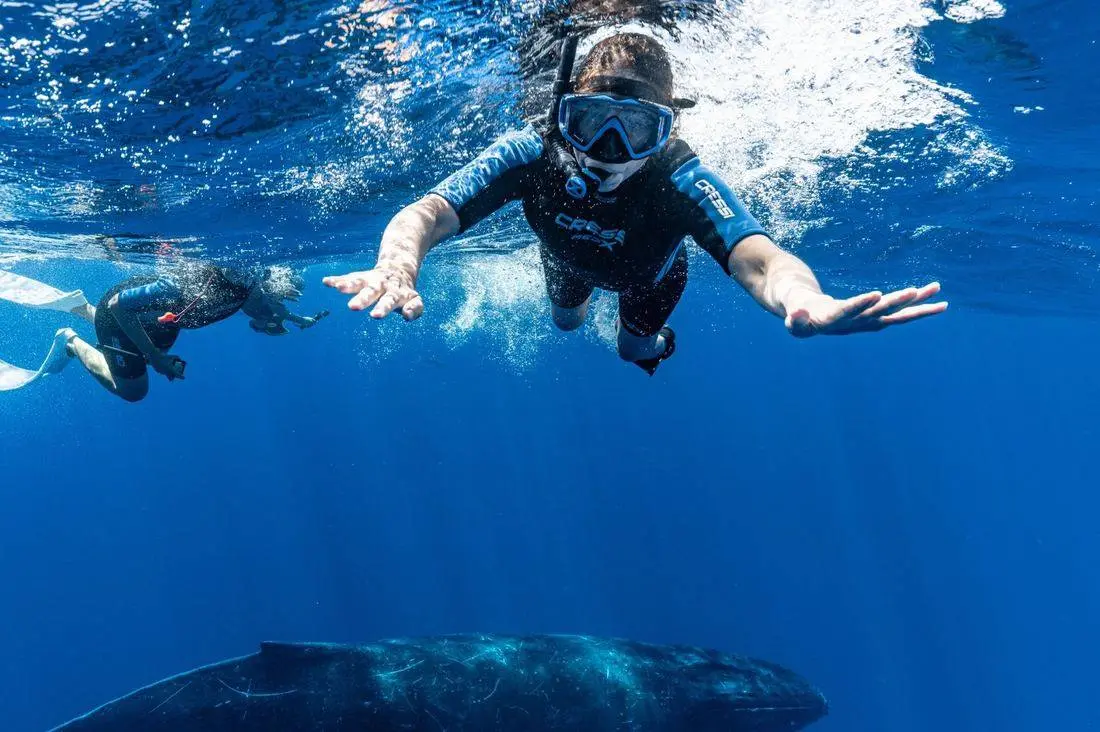
A freediver swimming toward the surface with a humpback whale below
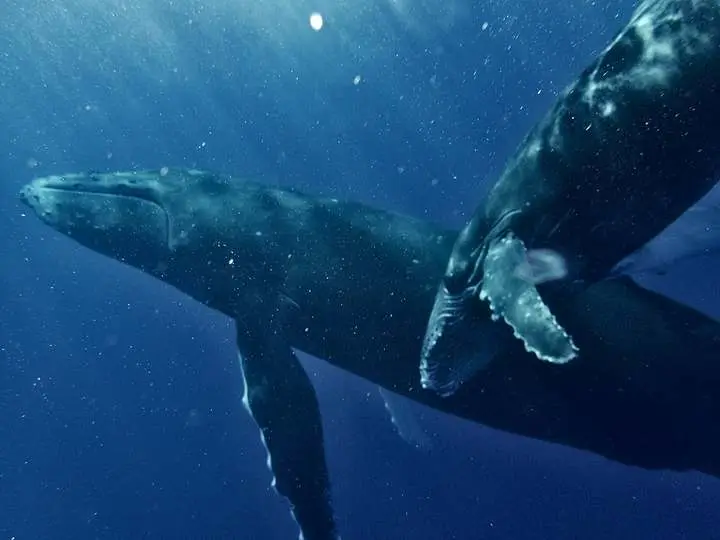
A humpback whale and her calf underwater
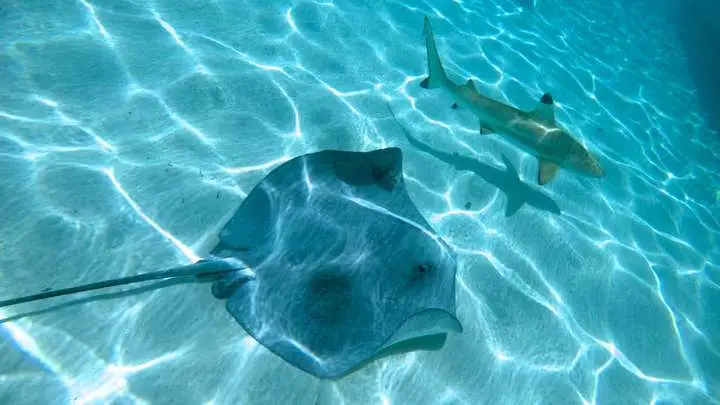
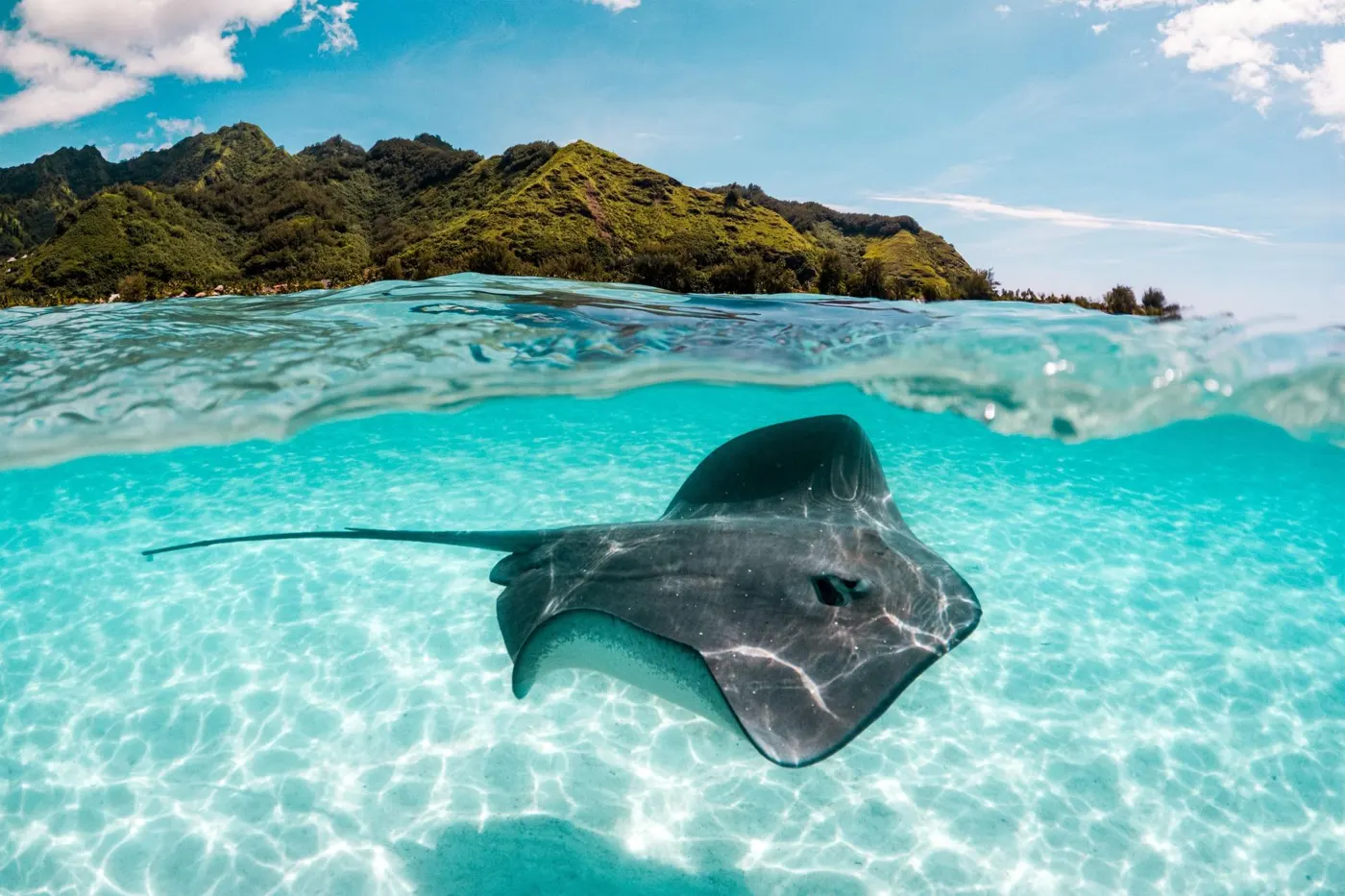
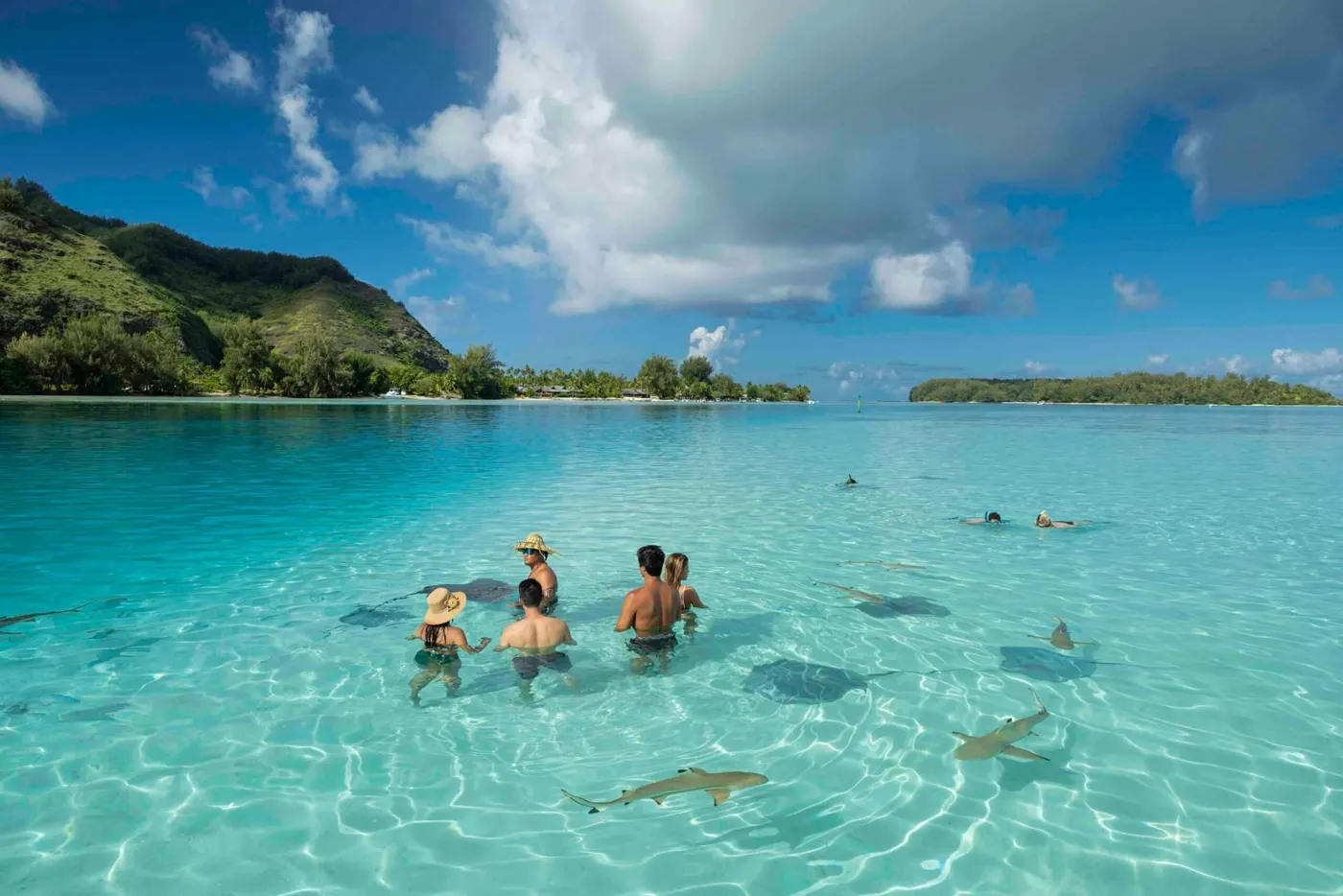
A stingray and a reef shark gliding over sand
  • 5.00 from 33 public reviews on BookRetreats · Read guest stories
  • Small group, six guests at most
  • Professional local whale operator, calm water entries
  • Travel insurance required (water-activity cover from your own policy or the dive centre’s insurance)
  • Pause or skip any activity, any time
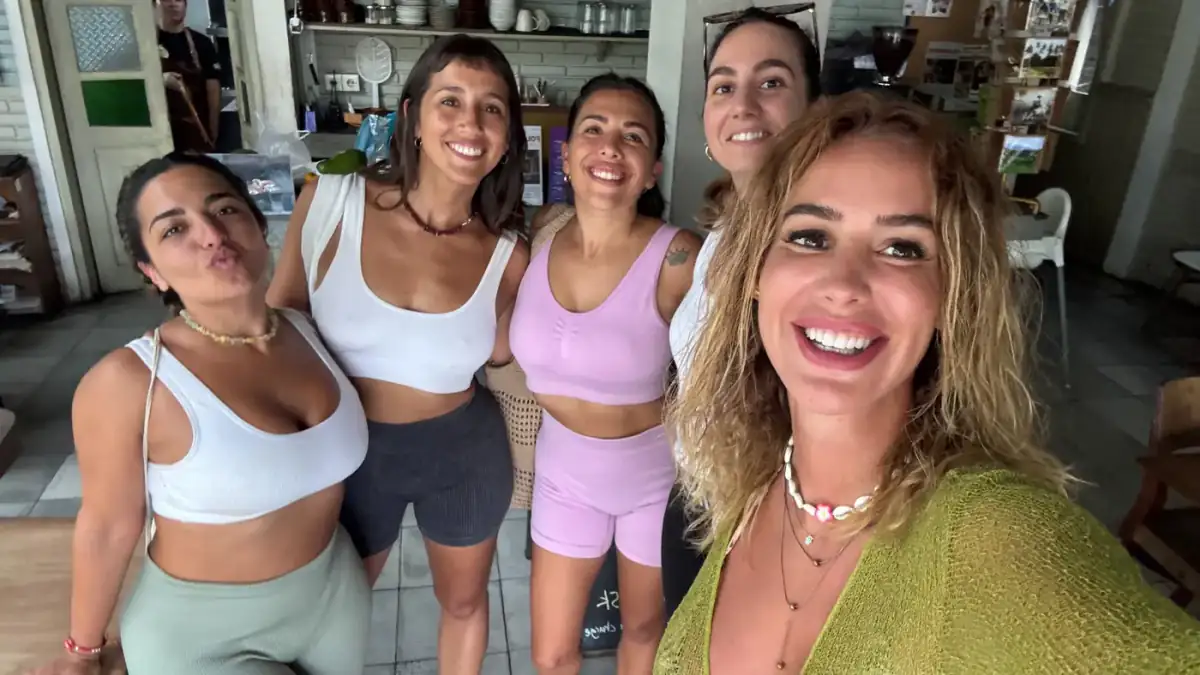
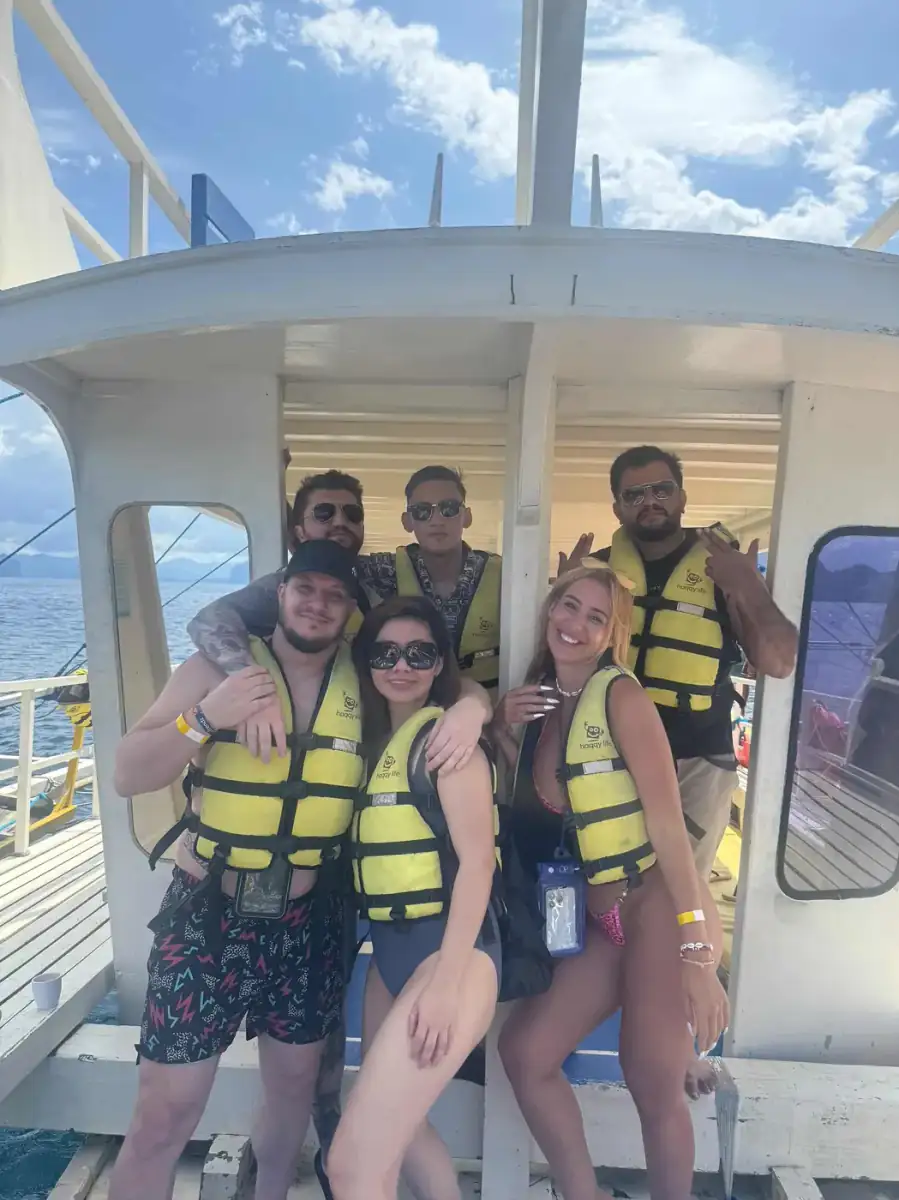
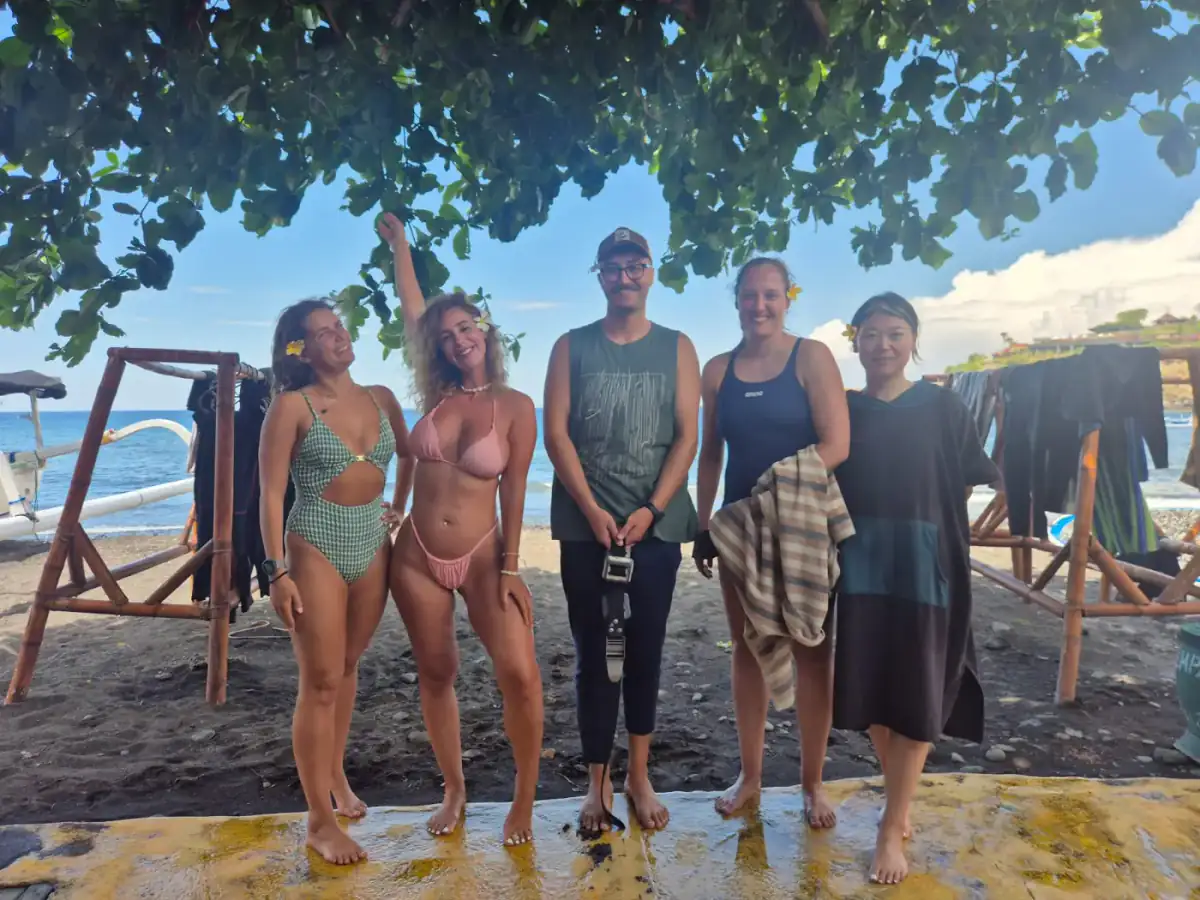
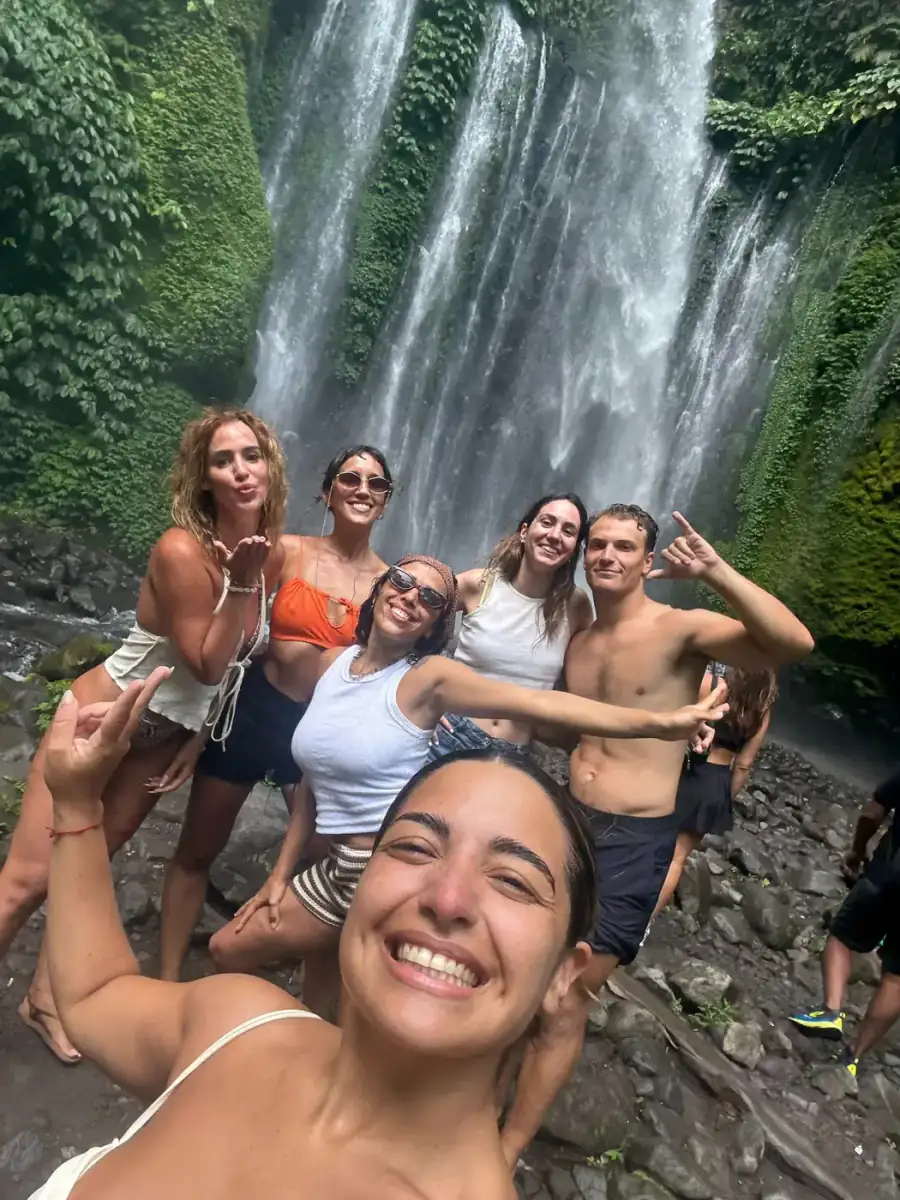
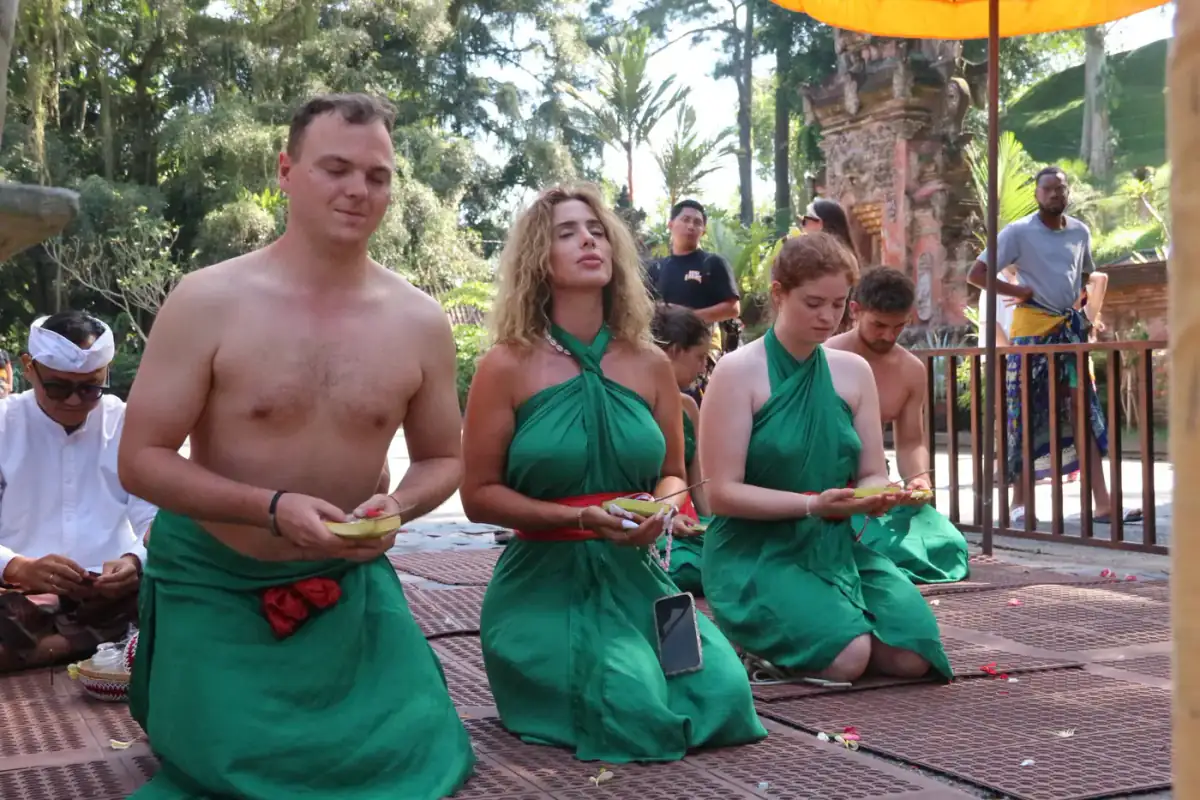
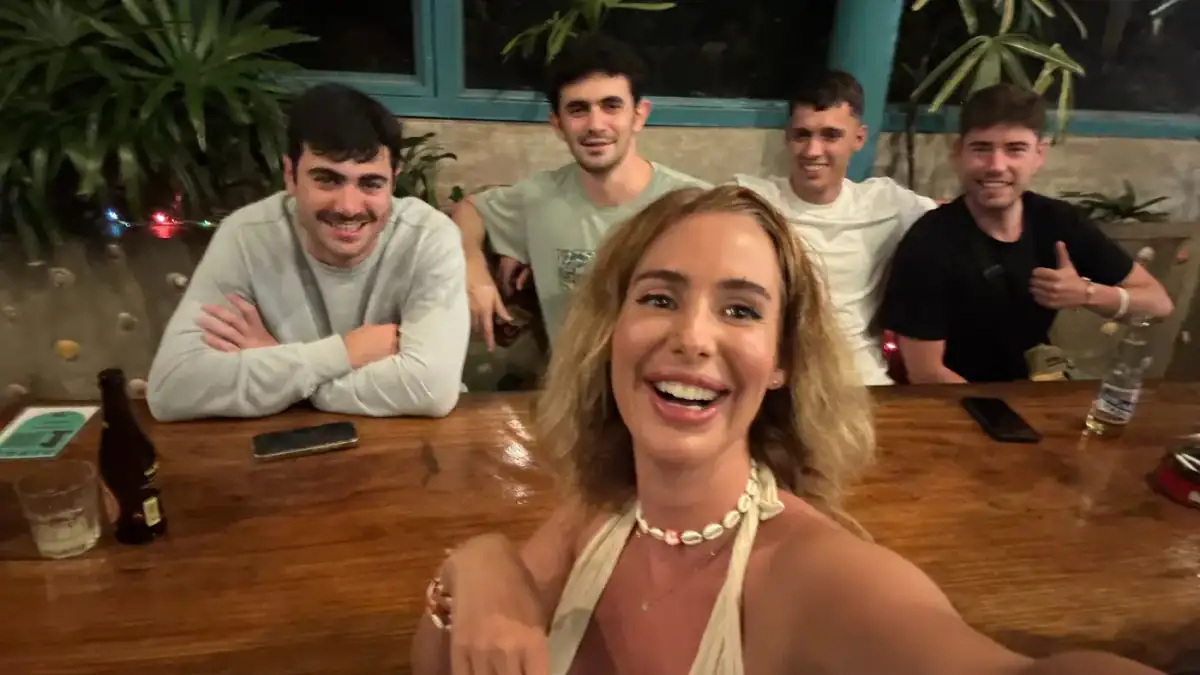
Guests laughing together in a kitchen after a morning on the waterA group of guests in life jackets on the boatGuests and a guide together on the beach after snorkellingGuests together at a waterfallGuests wearing matching green sarongs togetherRocío with guests around a table at the end of the dayReal guests on past trips

“Highly recommended! Rocio is an excellent guide and very knowledgeable about the best locations.”

Kimmy L., public review on BookRetreats, March 2026

“Joining Ocean Calling Retreats was honestly one of the most special travel experiences I’ve had. It’s so much more than just a trip — it’s a beautiful mix of adventure, connection, and time to truly reset.”

Wev C., public review on BookRetreats, March 2026

Quotes are copied as written from public reviews on BookRetreats. See all guest photos · Read all reviews

Check dates on WhatsAppSend an enquiry

At a glance

Length7 days / 6 nights
LevelModerate
StayVilla Royal Palms and studio, Tiahura (Haapiti)
MealsContinental breakfast daily and lunch on scheduled excursions
CertificationNone needed
Water levelComfortable in the water, curious about the ocean
EffortLow to moderate (boat days, early starts)
Led byProfessional local whale operator
Who it’s forOpen to all

Your place is waiting. Reserve it now, or say hello to Rocío first.

Flexible payment plan The non-refundable deposit secures your place. The balance is due 60 days before departure. Where possible, you can pay it in monthly instalments, with the last one paid by that date. Ask Rocío for a schedule.

Book with RocíoAsk on WhatsApp

To book, message Rocío by email or WhatsApp. No payment here: she replies personally, confirms your place and sends the next steps.

Real guest reviews: Google · BookRetreats

Conservation-led. Ocean Calling guests never chase, touch or bait animals.

Why Moderate? Open-ocean boat days with calm in-water entries. You need to feel comfortable in the water. You do not need freediving experience.

What do the difficulty grades mean?

Gentle. The easiest we offer. Beginner-friendly, at your own pace. Good if you are nervous. No skills needed.

Easy. A beginner course or guided session in calm water, at your own pace. No experience needed.

Moderate. Open-ocean or deeper water with boat days. You should feel comfortable in the water and follow guidance.

Adventurous. Longer days, stronger conditions or more skills needed.

Photo gallery

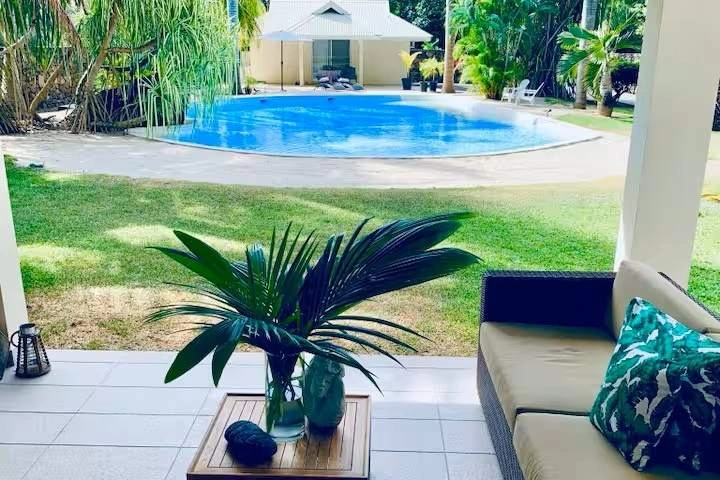
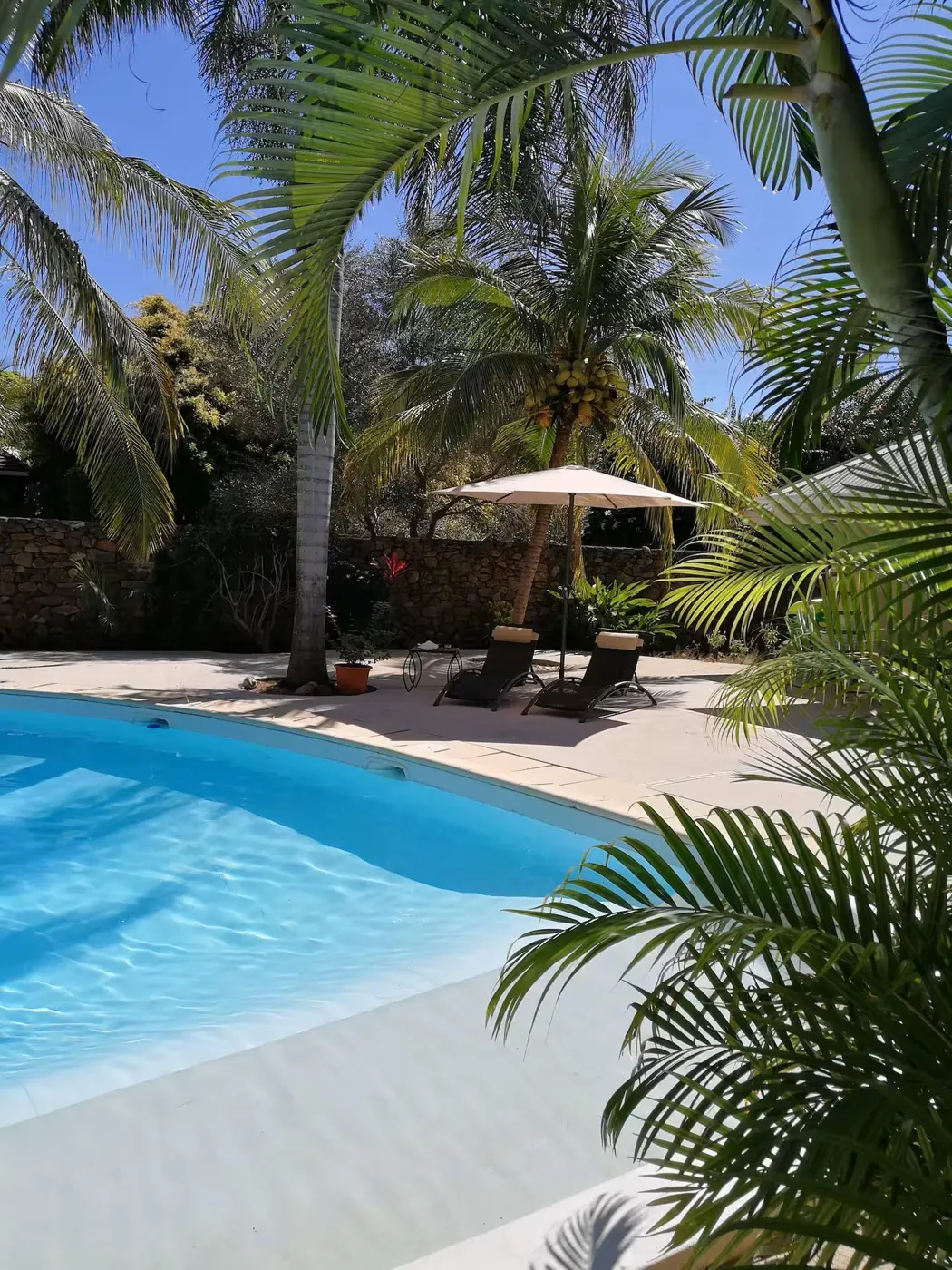
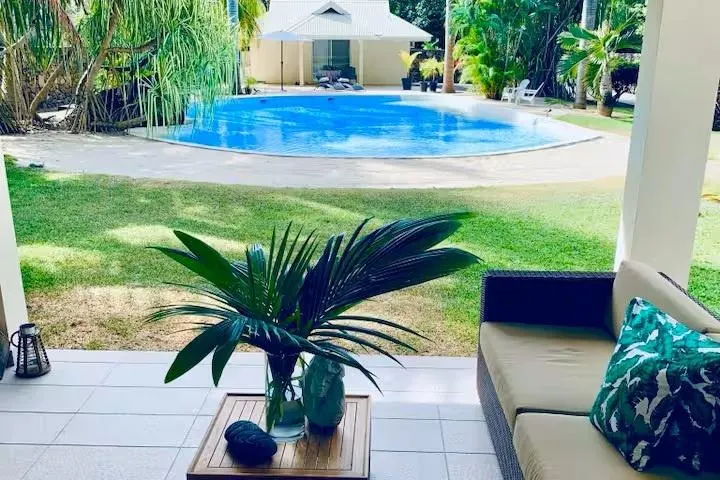
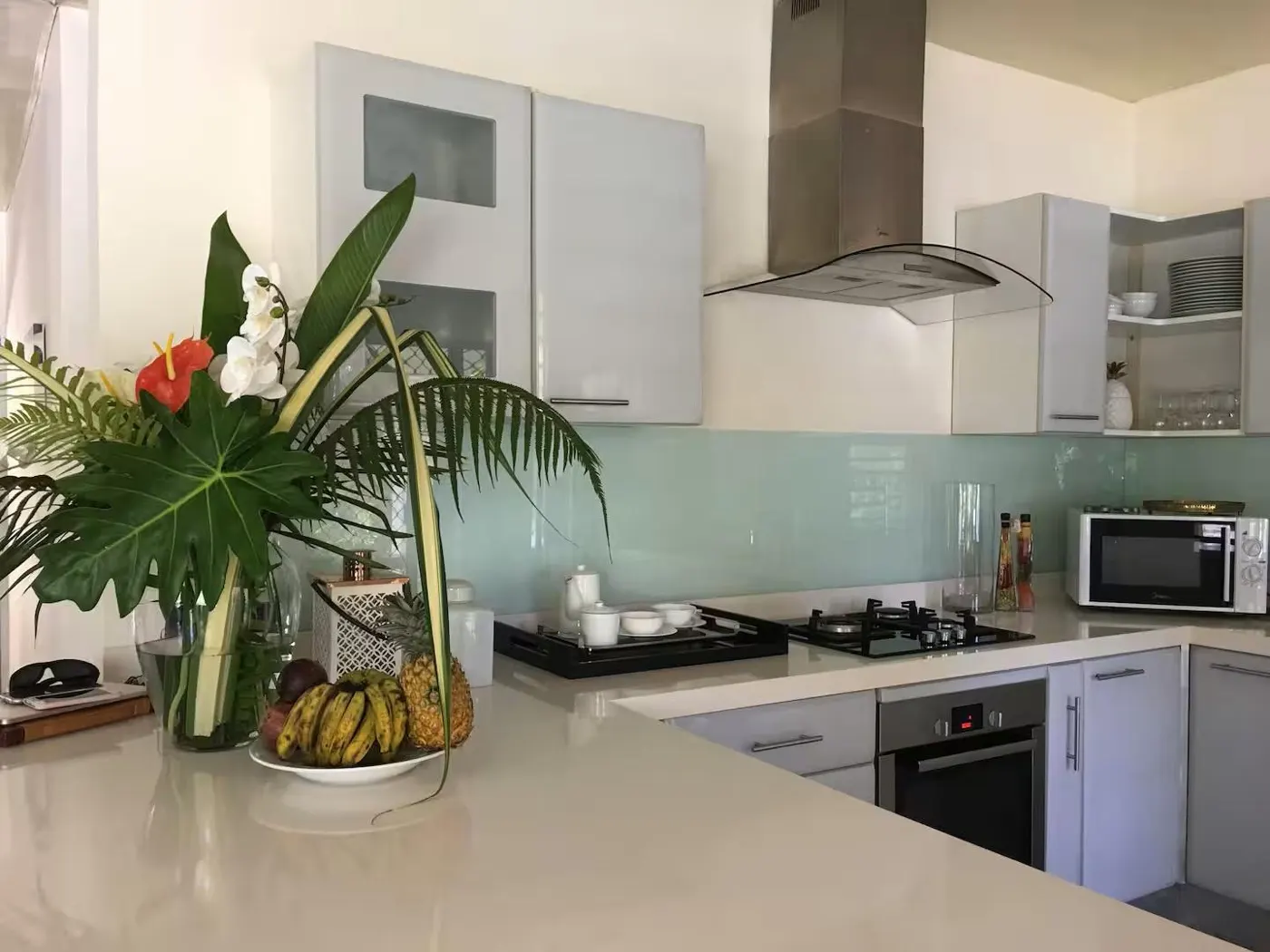
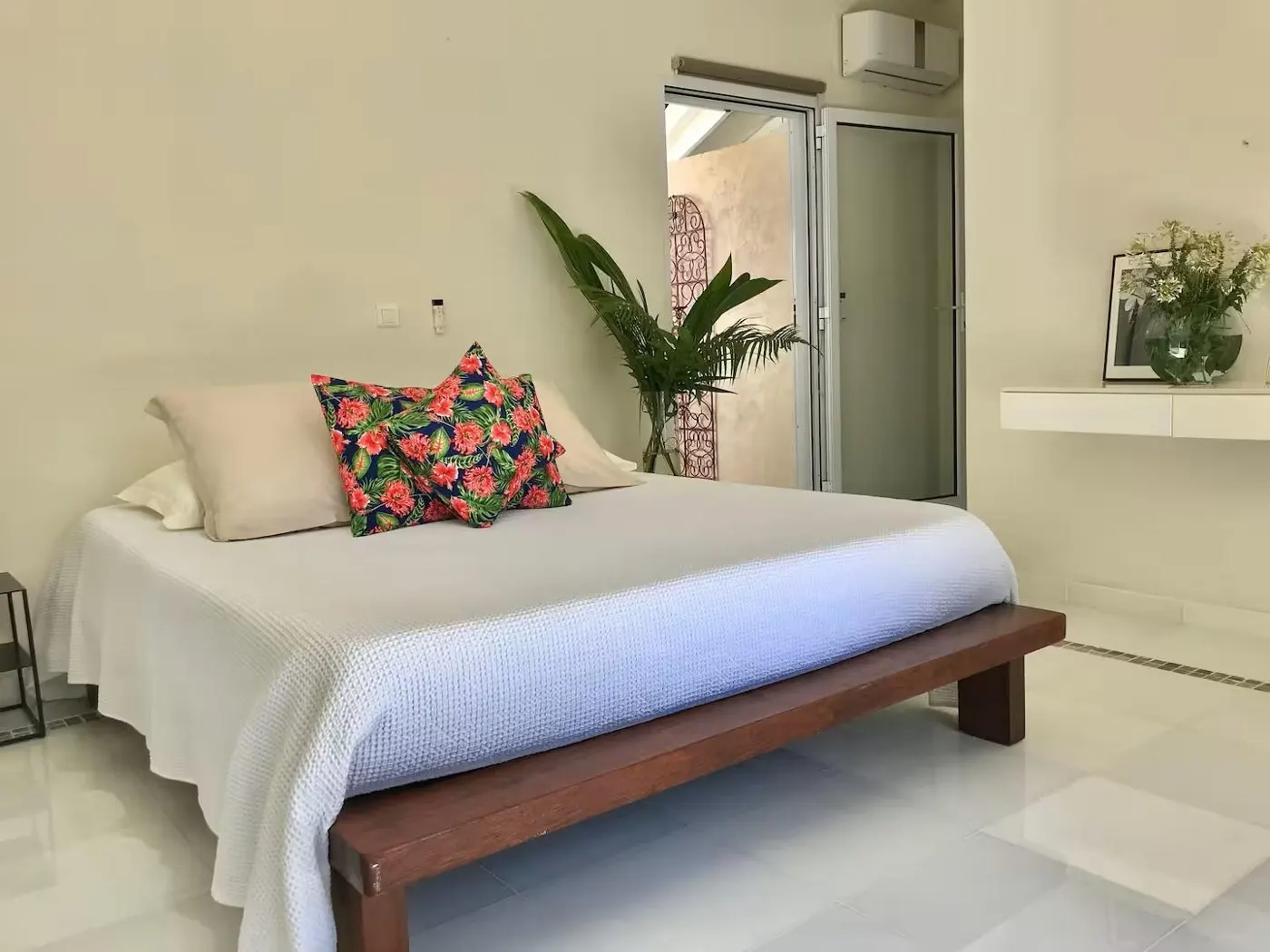
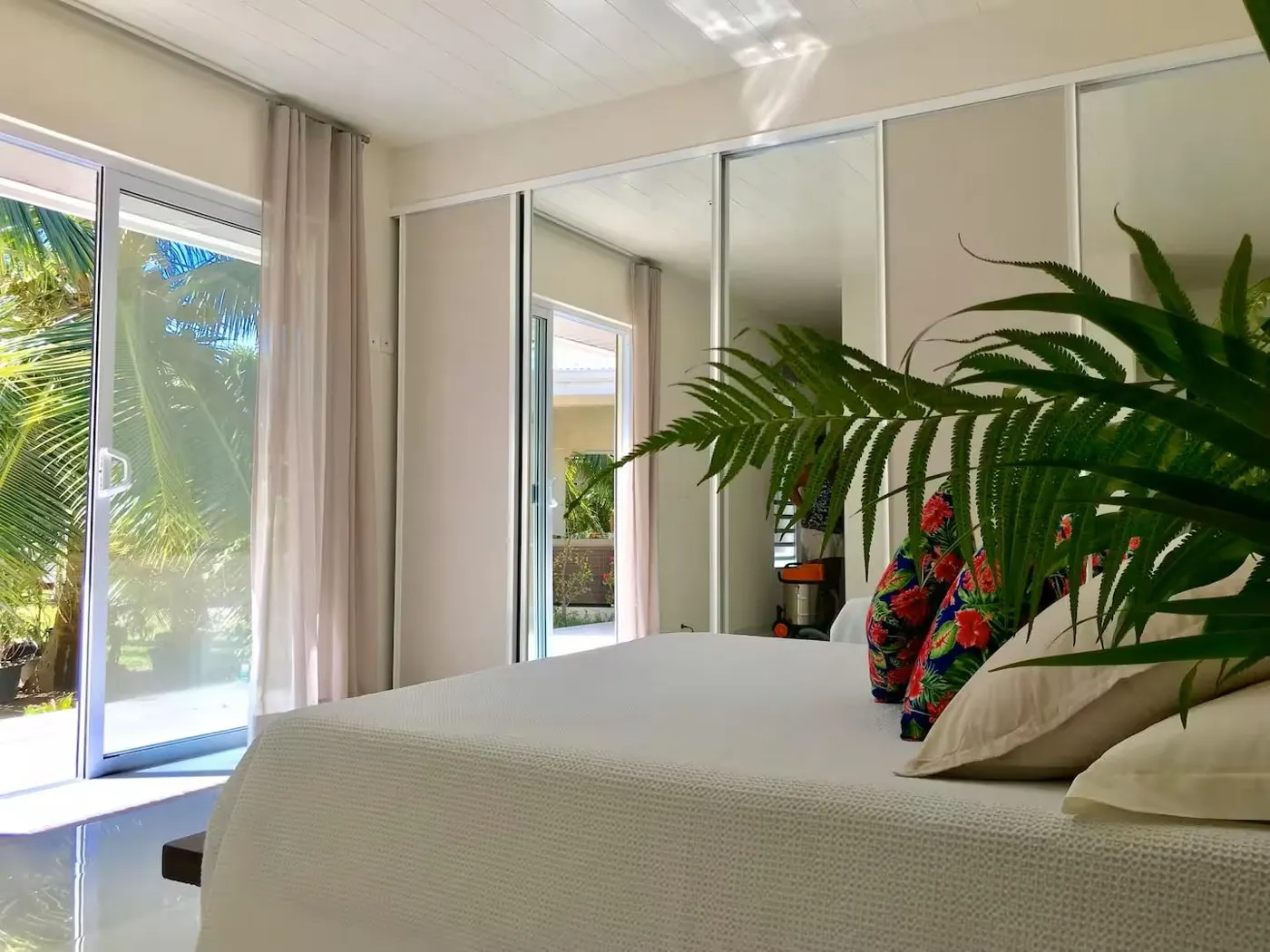
You stay at Villa Royal Palms and its studio in Tiahura (Haapiti): five air-conditioned bedrooms around a pool, a full kitchen and shared living space. The lagoon, Tipaniers and the Tiahura motu are in the same district.

The covered veranda and pool at Villa Royal Palms
1 / 48

The covered veranda and pool at Villa Royal Palms

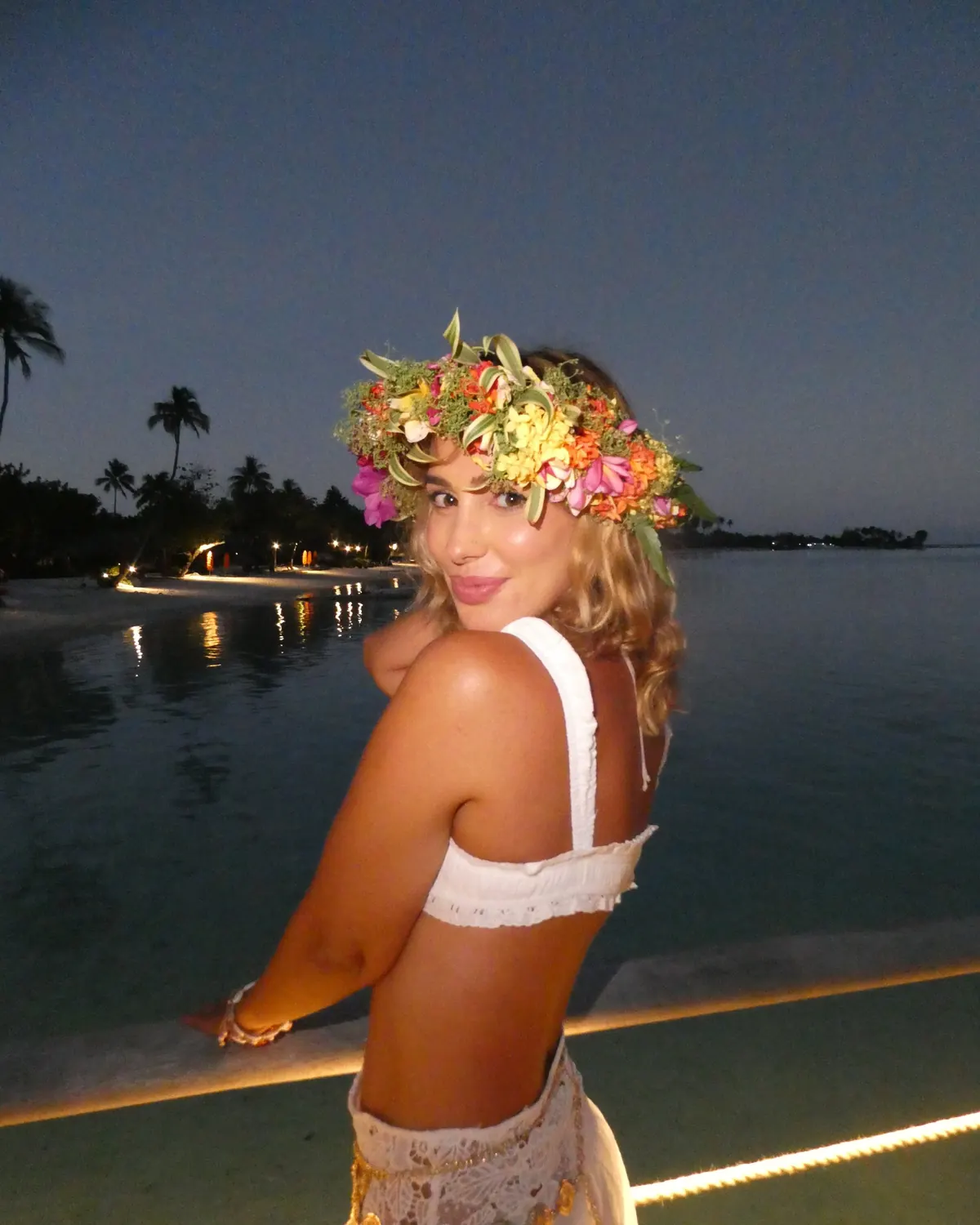
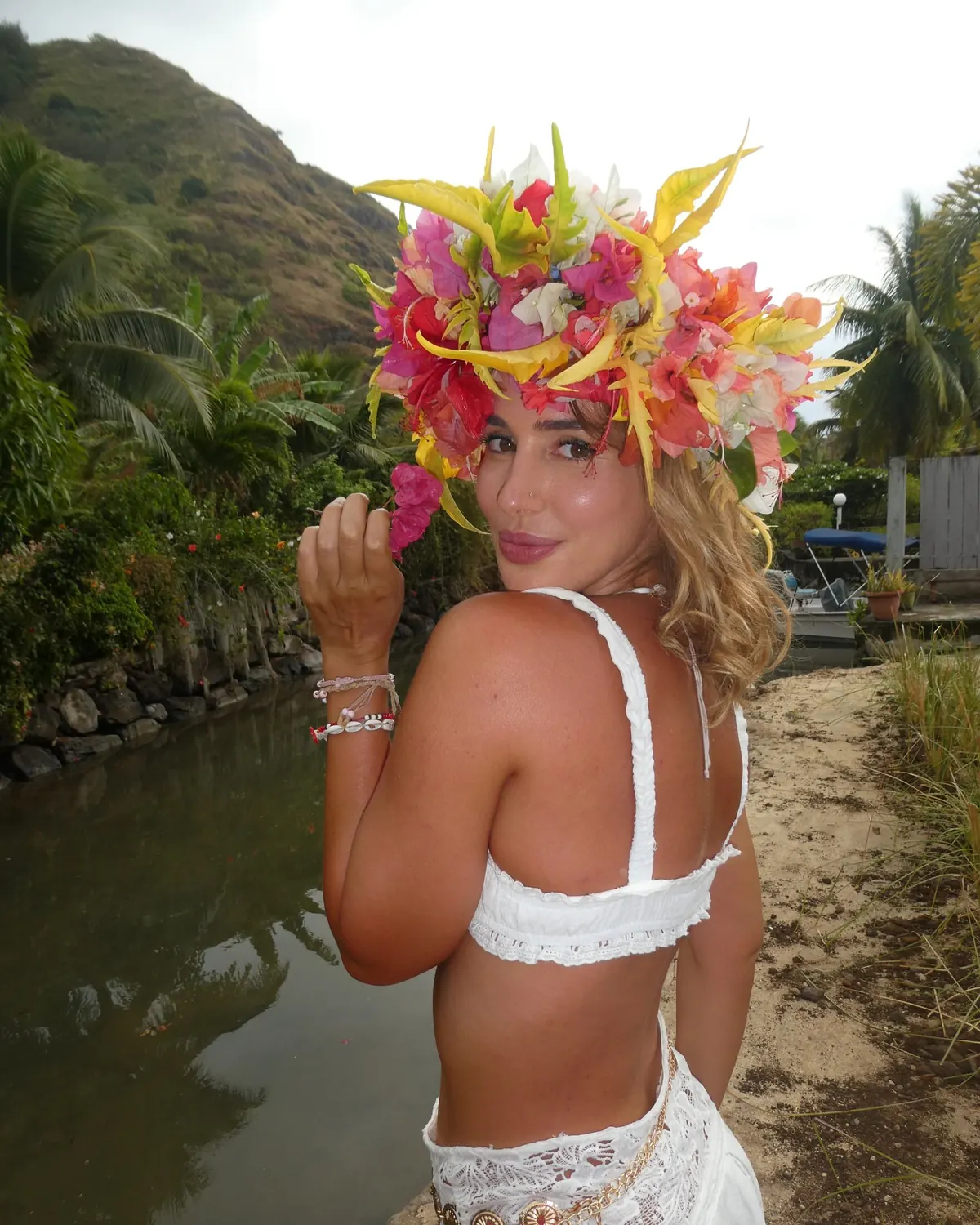
Your host in Moʻorea

Rocío in Moʻorea

Rocío in a fresh Tahitian flower crown by the lagoon at dusk
Rocío in a fresh flower crown by a river in Moʻorea

Rooms and prices

All prices are per person, for the whole 6 nights and everything listed in Trip details. The room is chosen when you book.

Coming with a partner or a friend?

You can share one room together. Each of you pays the shared price, so in a double room that is CHF 4,500 each. Shared rooms are only for two people who travel together. Coming alone? You get your own room, from CHF 4,700.

Double room #02, #03 or #04

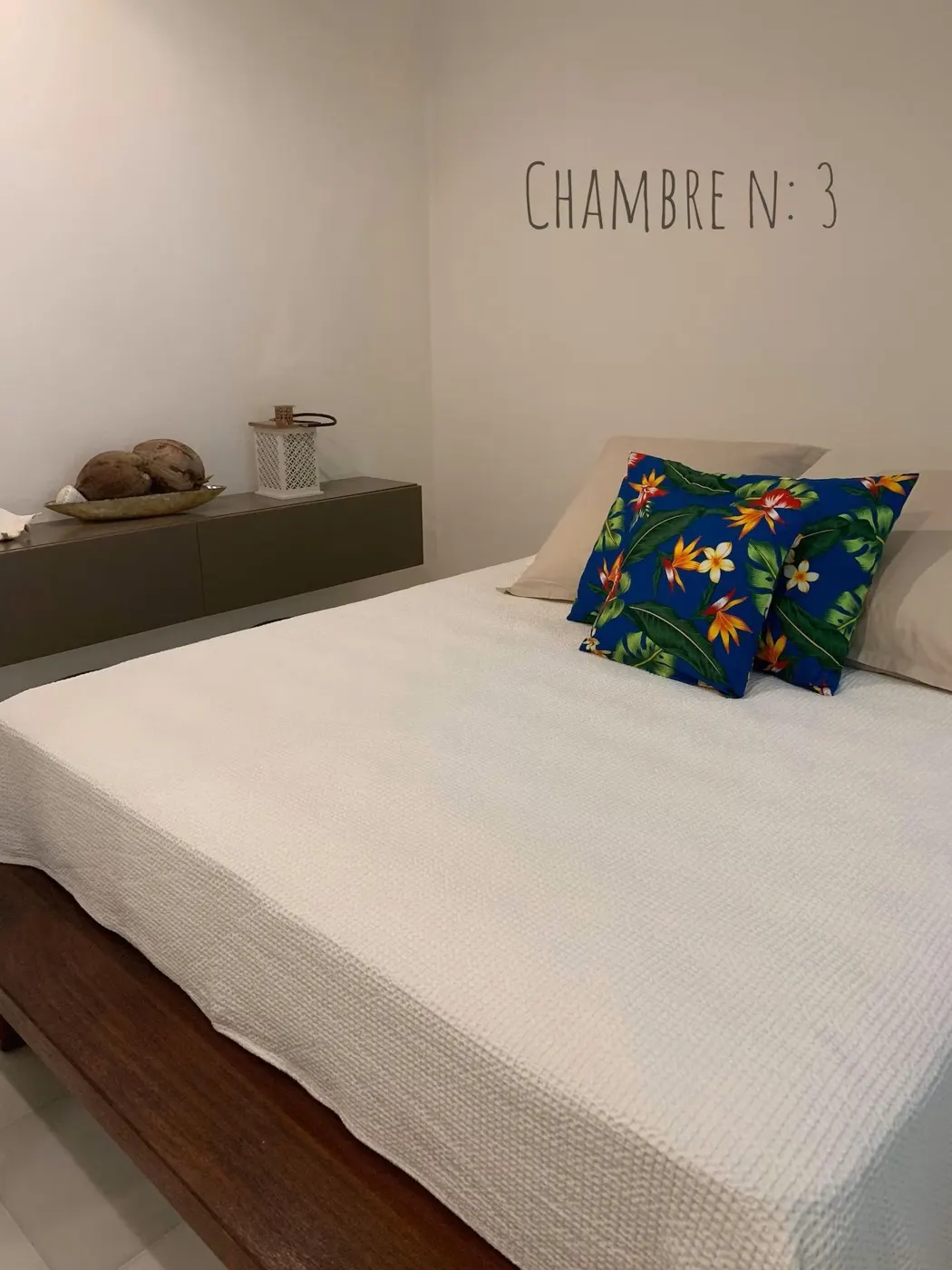
A villa bedroom with a double bed. Quiet, air-conditioned, your own space inside the house.

Shared with your own partner or friend: CHF 4,500 each

On your own: CHF 4,700

Queen bed room #01

The bigger bedroom in the villa: a queen bed, more space after boat days, air-conditioning, mosquito nets and a door you can close.

Shared with your own partner or friend: CHF 4,700 each

On your own: CHF 4,900

Studio #05

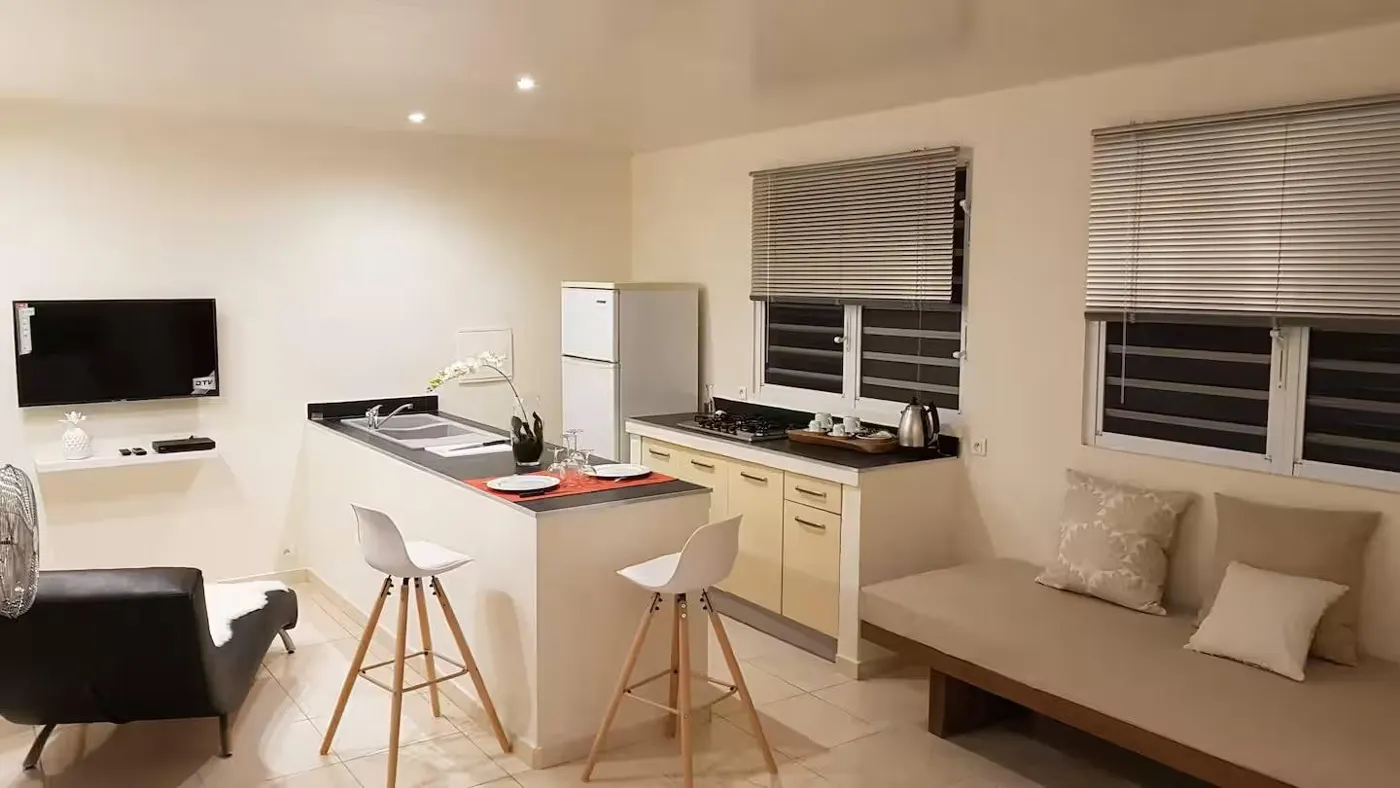
Across the pool from the villa, with its own entrance and a kitchenette. A little more independence, same house, same mornings.

Shared with your own partner or friend: CHF 5,200 each

On your own: CHF 5,400*

* Studio on your own: available until 35 days before departure.

The house
Villa Royal Palms and its studio in Tiahura, shared only by the retreat group. Six guests at most, five air-conditioned bedrooms.
Shared spaces
Private pool, a fully equipped kitchen, living areas, covered veranda dining and WiFi
Location
Tiahura (Haapiti), on the north-west coast. The lagoon and the Tipaniers are in the same district.
Deposit
CHF 800 per person, non-refundable. The balance is due 60 days before departure.
A group of three or more?
The villa has five bedrooms and the whale boat takes six guests at most. Message Rocío before booking, so she can make sure the rooms, transfers and boat work for all of you.
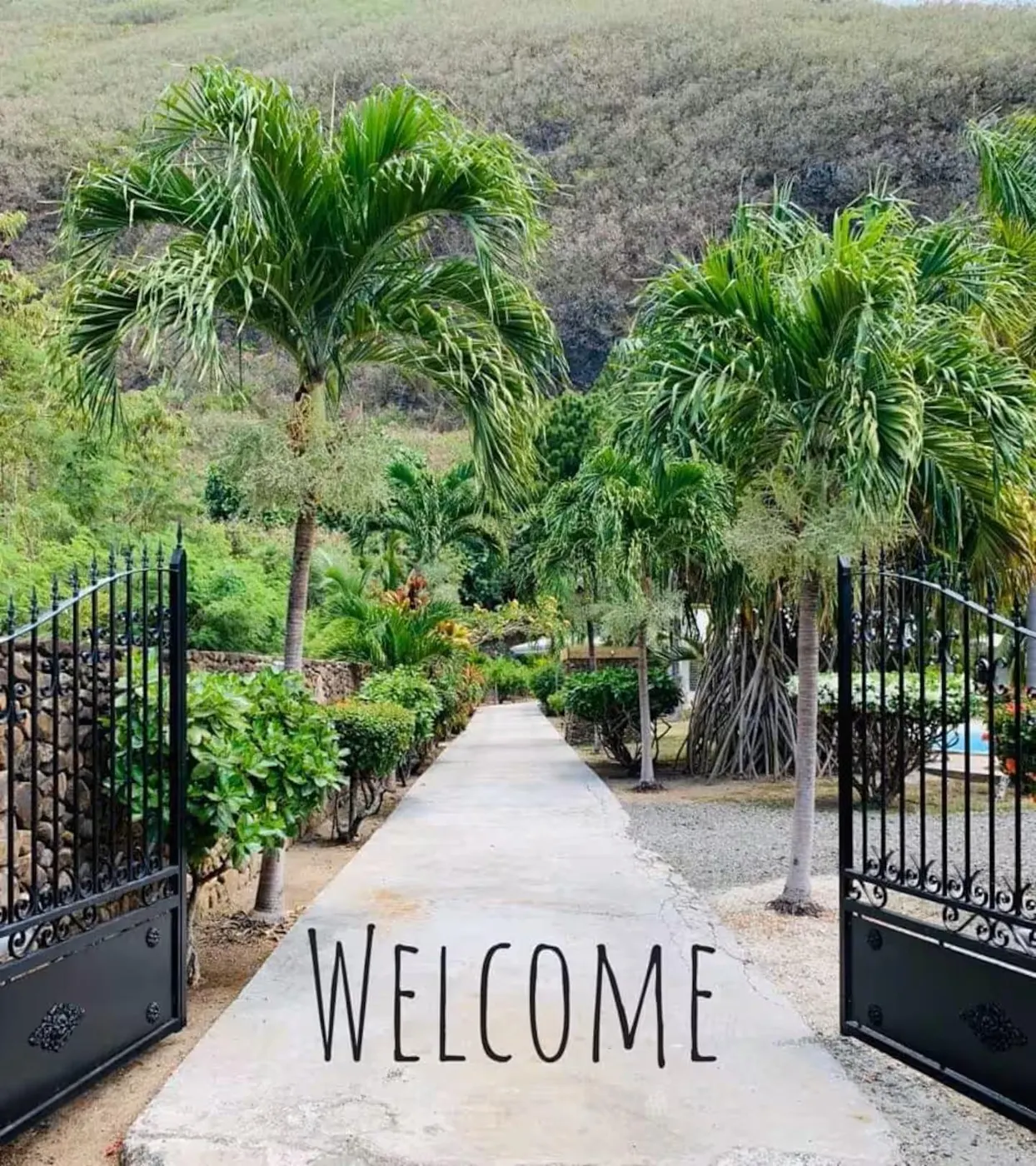
The gate of Villa Royal Palms, Tiahura
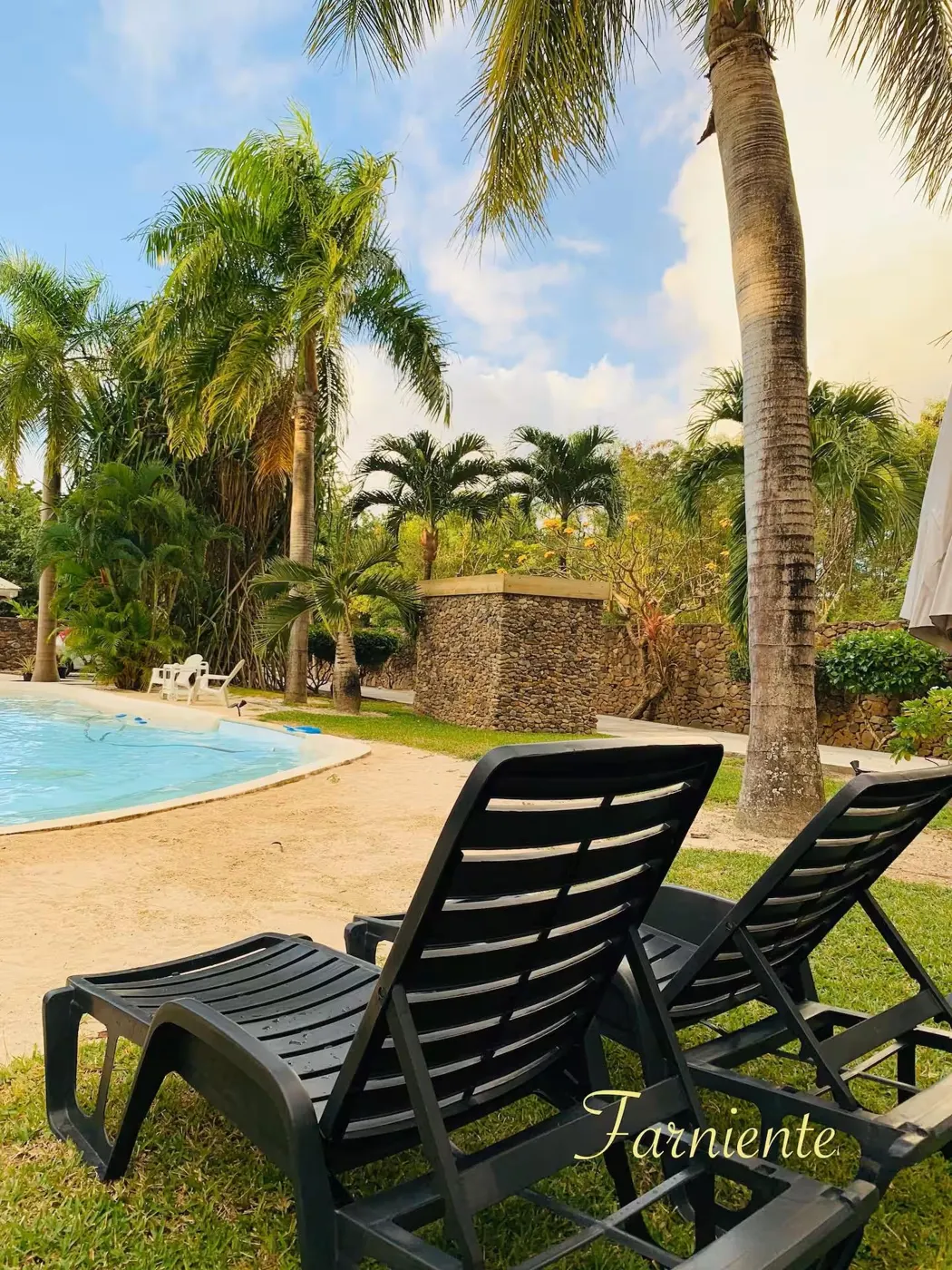
The villa pool between palm trees
The covered terrace looking out to the pool
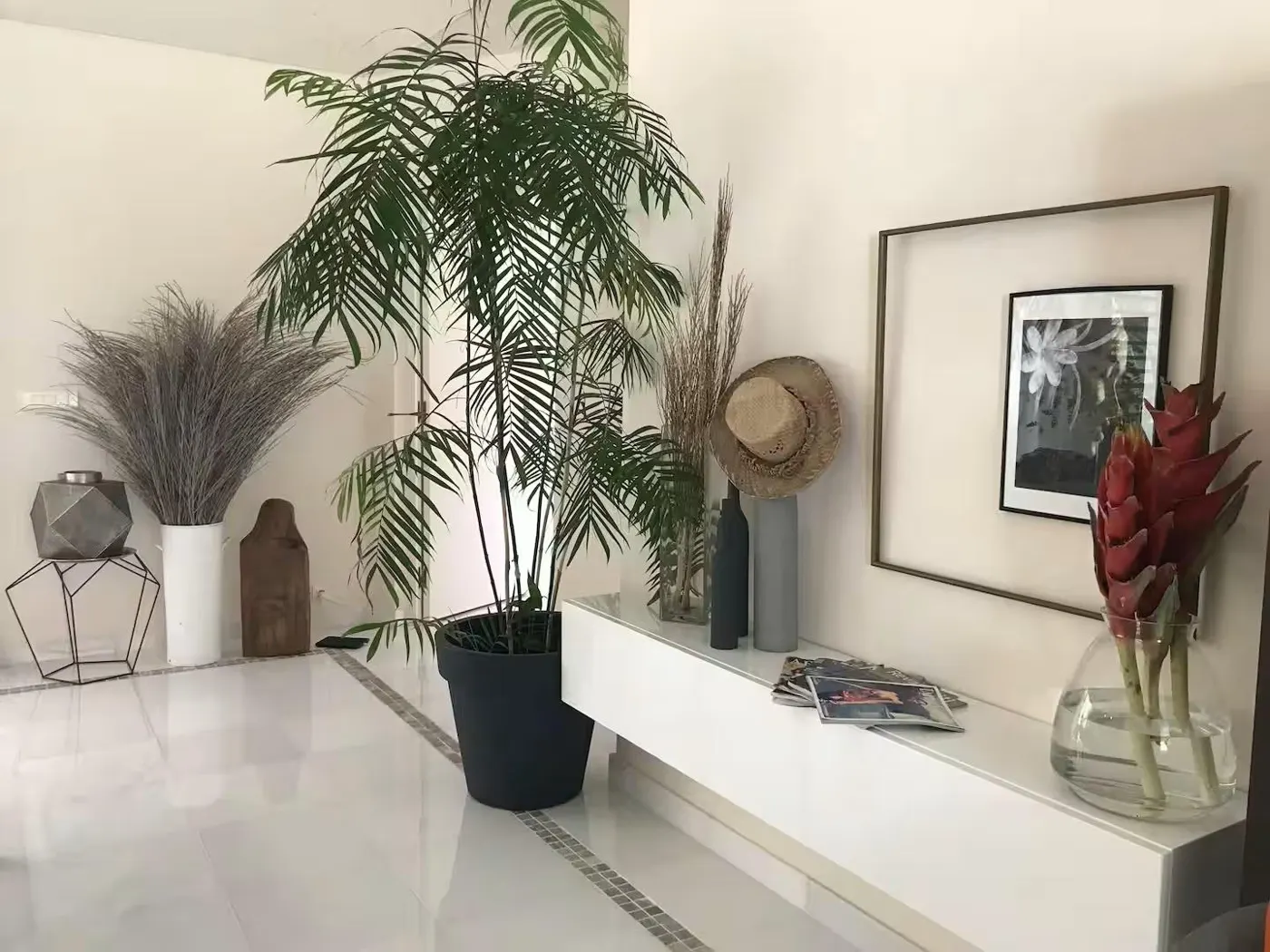
The bright living room of the villa
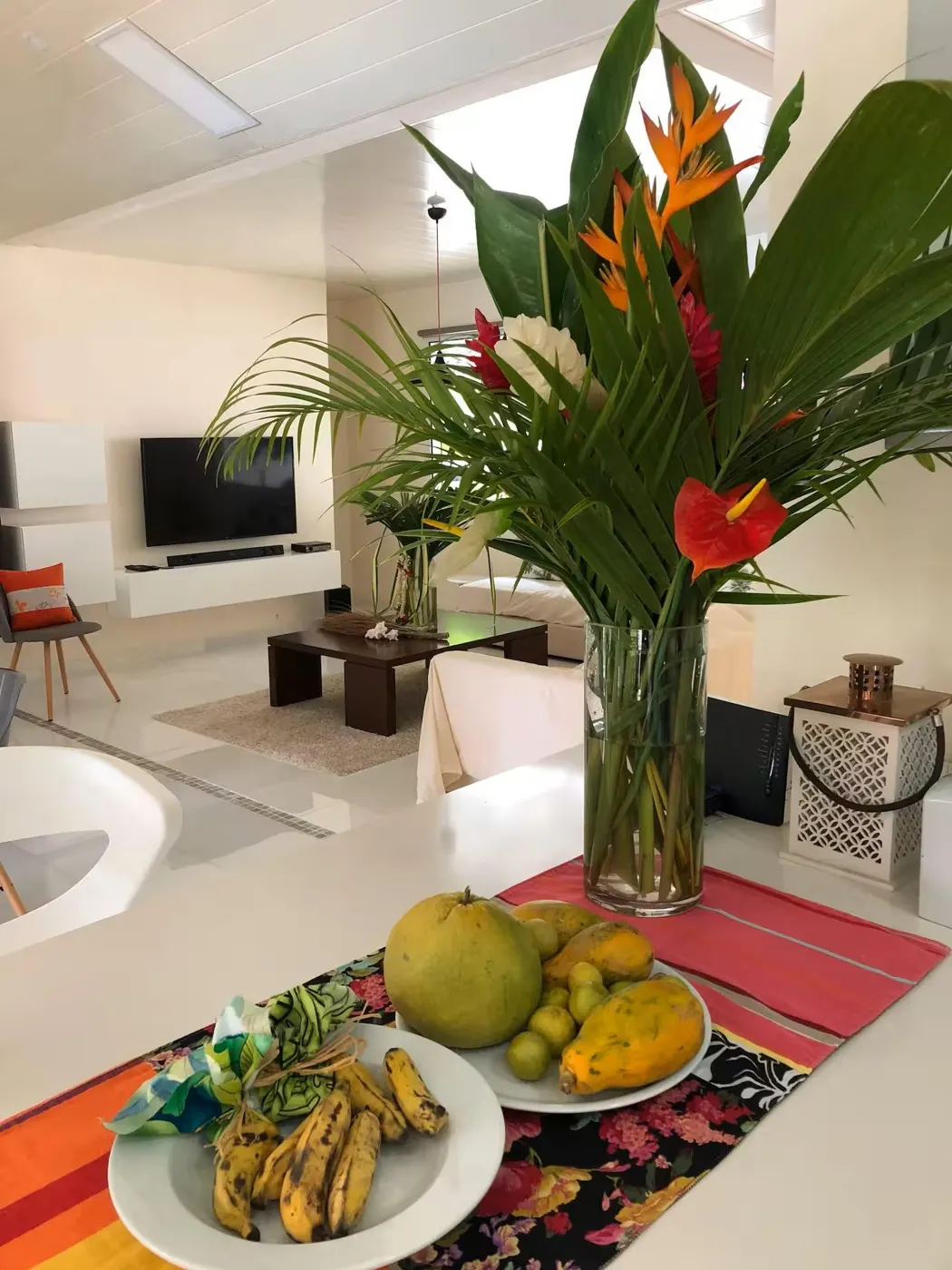
The villa kitchen with fresh flowers and fruit
A villa bedroom with a double bed
A villa bedroom with sliding doors to the garden
Double room number 3
The studio kitchenette and living space
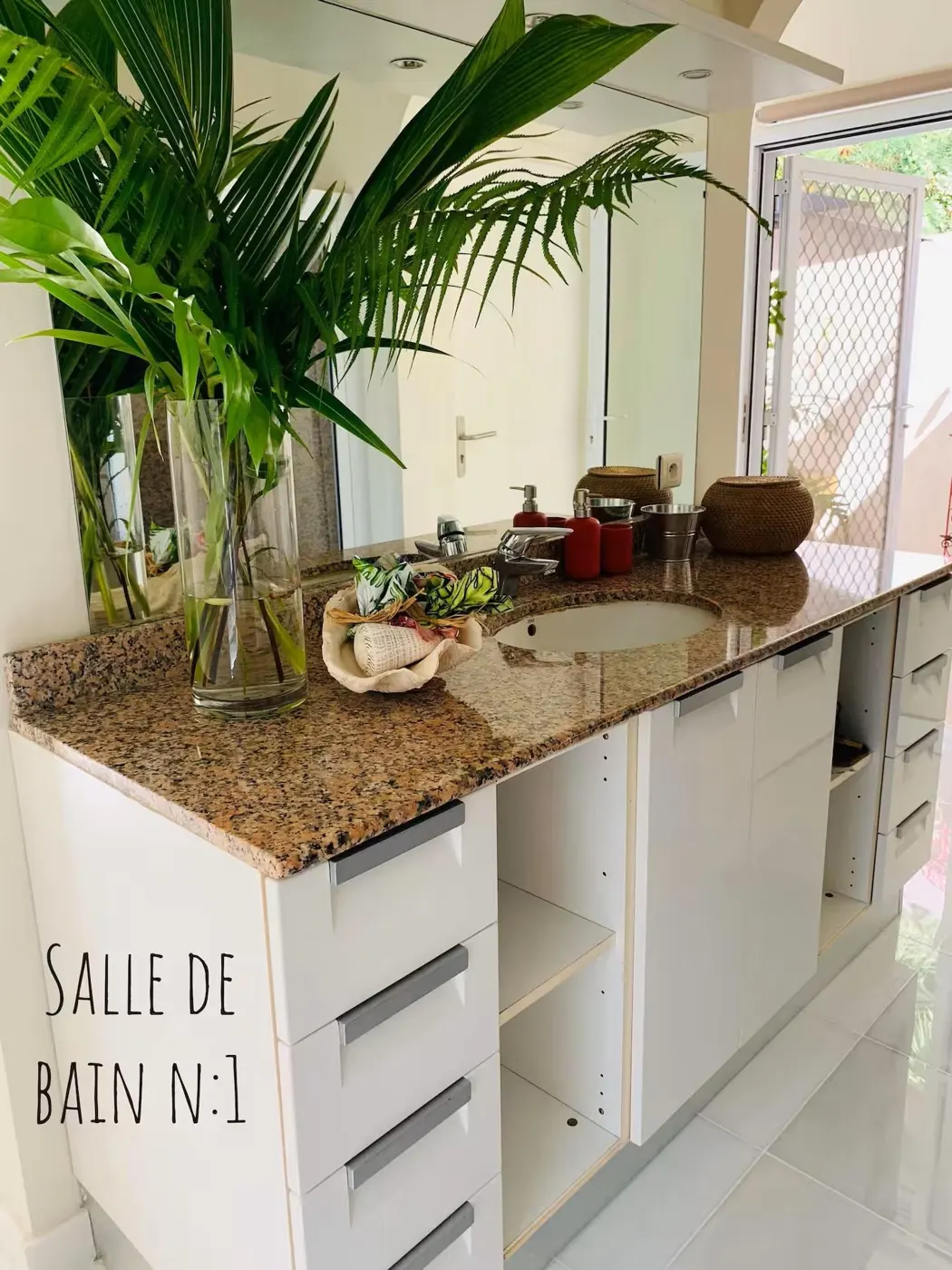
The bathroom of room number 1
Sun loungers by the pool
Tropical flowers and fruit on the villa table

Ask Rocío which rooms are free

Your seven days

Week one is September 1 to 7, week two is September 9 to 15, 2027. The whale mornings are September 3 and 4, or September 11 and 12. Weather, rules and the animals can change the plan, and we adapt with you.

  1. Day 1

    Welcome to Moʻorea

    Arrive in Tahiti and take the ferry to Moʻorea. We pick you up at the ferry terminal and drive to the villa in Tiahura, by the lagoon. Settle in, unpack and take your first swim. Welcome dinner together in the evening.

  2. Day 2

    Flowers and lagoon life

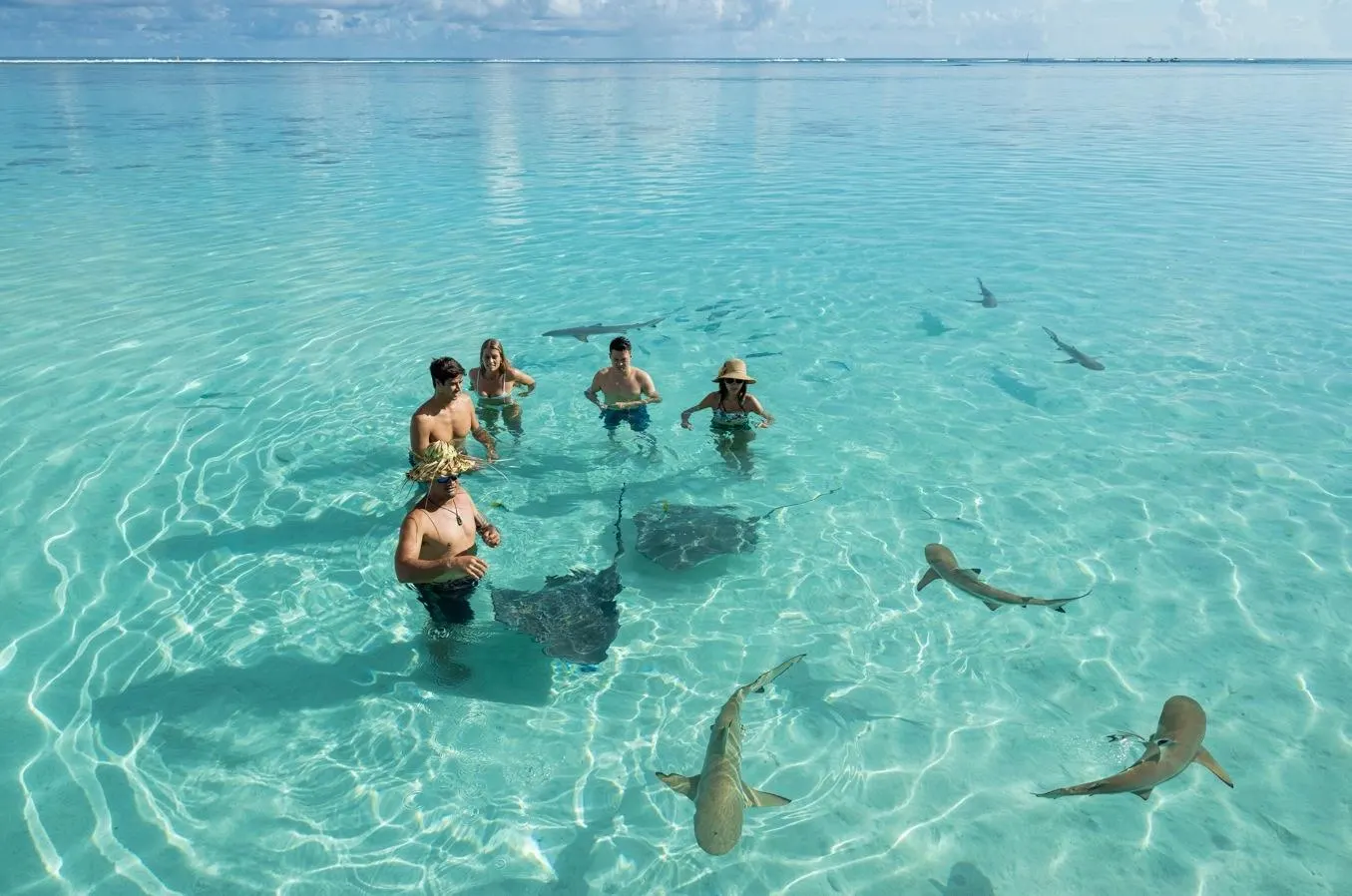
    In the morning you make your own flower crown with a local mama. In the afternoon we take the kayaks from the villa across the lagoon to North Beach, swim, and meet the stingrays at the sandbank. Dinner, an optional game night, or simply rest.

  3. Day 3

    The whales, first morning

    From 09:00 to 13:00 we are on the ocean with the whale guide, with professional photos included. The whales decide what happens. In the afternoon you slow down at the villa, swim and relive the morning.

  4. Day 4

    The whales, second morning

    Back on the ocean from 09:00 to 13:00. Two mornings give more chances with the weather and the animals, never a promise. Free afternoon to kayak, swim or explore Tiahura.

  5. Day 5

    Discover Moʻorea

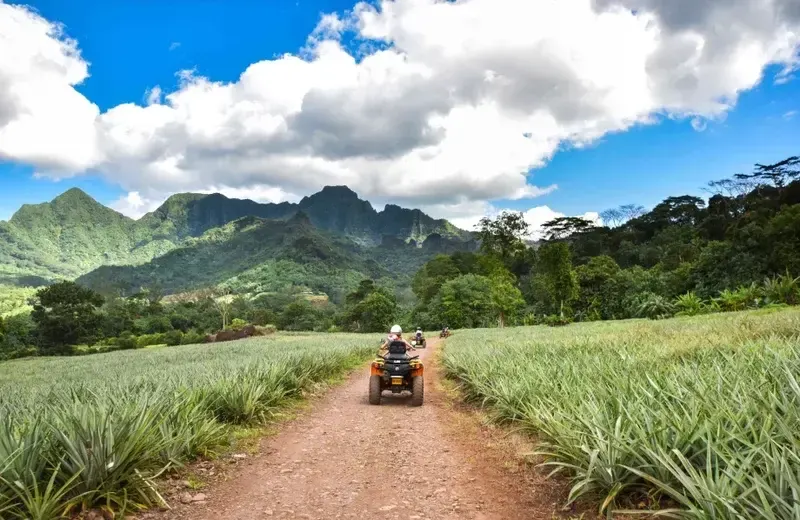
    A 4x4 trip through the volcanic inside of the island: pineapple fields, green valleys and the viewpoints over Cook’s Bay and Opunohu Bay. In the afternoon, a natural-light portrait session in the villa gardens.

  6. Day 6

    Your day, your choice

    Choose what you want: another whale snorkelling trip, a scuba dive, an introduction to freediving, or something else on the island. Rocío tells you the cost before you choose. Farewell dinner together in the evening.

  7. Day 7

    Until next time

    Last breakfast, one more swim in the lagoon, then we drive you to the ferry for Tahiti and your flight home.

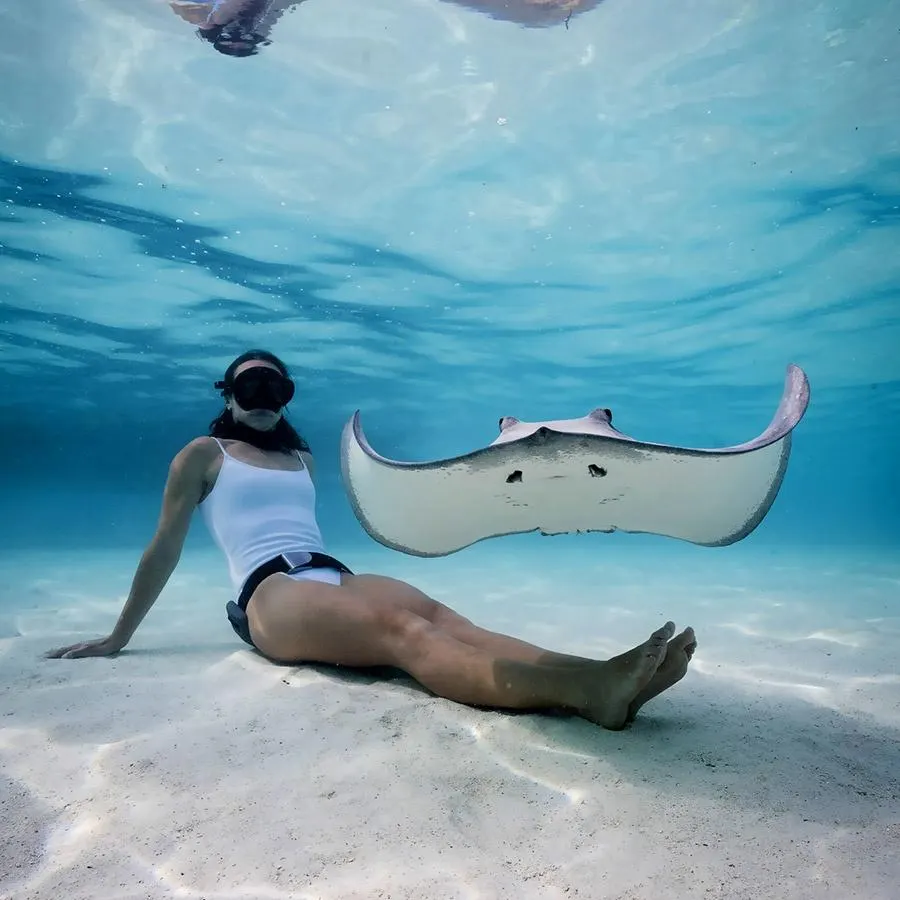
A snorkeller sitting on the sand next to a stingray in shallow water
A stingray gliding over white sand in the lagoon
Snorkellers at the sandbank with stingrays and reef sharks around
Snorkellers in the turquoise lagoon with the mountains behind
A 4x4 track through pineapple fields below the mountains
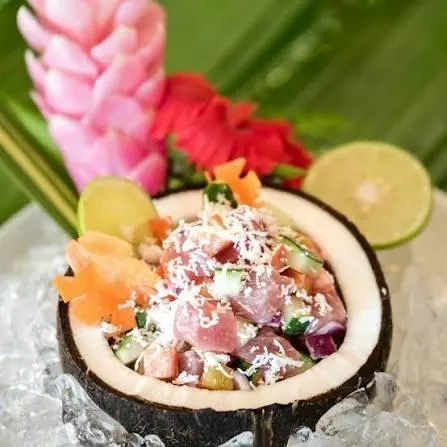
Poisson cru, the Tahitian raw fish salad, served in a coconut

Encounters with stingrays and reef sharks in the lagoon happen on their terms. We look, we never touch or feed them.

New or a little nervous?

Your first day, step by step

  1. Arrive and settle in
  2. Your guide explains the plan and the signals before anything starts in the water.
  3. You choose your pace. You can pause, rest or skip any activity, at any moment, with no pressure to continue.
  4. Nobody chases, touches or baits an animal. The animals decide whether they come close.

Questions beginners ask

What if I feel nervous in the water?
That is very normal, and you are welcome here. Activities are adapted to your level and comfort. Tell your guide or Rocío, and you can pause, rest or skip an activity at any moment.
What if I cannot clear my ears?
Equalising is taught in small steps by your instructor, and nobody is asked to push through. If your ears will not clear, you rest, come up or skip that dive or descent.
Will I hold the group back?
Groups are small (six guests at most, and some trips are four), so the pace follows the group and nobody is rushed. Tell Rocío your level before you book, and she will tell you honestly if a trip fits.
Do I need to be fit or experienced?
Each trip page shows its level and what it asks of you. If you are not sure, take our short Is it for me? questions or message Rocío.

Highlights

  • Two open-water whale days with a professional local operator: Sept 3 and 4, or Sept 11 and 12
  • A Tiahura lagoon day with a local provider, to see the reef and marine life
  • Calm water entries only. Guests never chase or touch the animals
  • Villa Royal Palms: five air-conditioned bedrooms around a pool, close to the lagoon
  • A small group of up to 6 guests, with Rocío there from the first questions to the last day

The rhythm of your days

  1. Arrive and settle in
  2. Lagoon time and rest before the open ocean
  3. Whale days with the local operator, depending on weather, regulations and animals
  4. A Tiahura lagoon day
  5. Departure day

Trip details

Departures
Sept 1–7 and Sept 9–15, 2027
Investment
From CHF 4,500 per person for 6 nights, September 2027, maximum 6 guests. The price depends on the room and on whether you share it with your own partner or friend. See Rooms and prices.
Deposit
CHF 800, non-refundable
Final balance
The balance is due 60 days before departure. Where possible, it can be paid in monthly instalments, with the last one paid by that date. Rocío confirms your schedule when you book. Cancellations within 60 days of departure are non-refundable.

Included

  • 6 nights at Villa Royal Palms and studio, Tiahura (room type chosen at booking)
  • Continental breakfast daily, plus unlimited water, coffee and tea
  • Welcome dinner and farewell dinner
  • Lunch on scheduled excursions
  • Two guided whale days with a professional local operator, with photography (Sept 3 and 4, or Sept 11 and 12)
  • Guided lagoon sessions: stingray sandbank at North Beach, reef sharks and coral gardens
  • Kayaks from the villa
  • 4×4 island day of about 4 hours, with Magic Mountain entry and local tastings, and a natural-light portrait session in the villa gardens
  • Flower crown workshop
  • Pick-up and drop-off at the Moʻorea ferry terminal and island transport by private van
  • WiFi at the villa
  • Local guides, plus Ocean Calling hosting and support before, during and after the retreat

Not included

  • International flights
  • The ferry crossing from Tahiti to Moʻorea (about 30 minutes)
  • Travel insurance (required)
  • Alcohol and soft drinks
  • Dinners other than the welcome and farewell dinners
  • Personal expenses and gratuities for guides
  • Villa or resort upgrades (extra cost)
Ocean Atlas

Animals you may meet in Moʻorea

Never guaranteed, never chased. Tap an animal to see how it lives, where it travels and a fun fact.

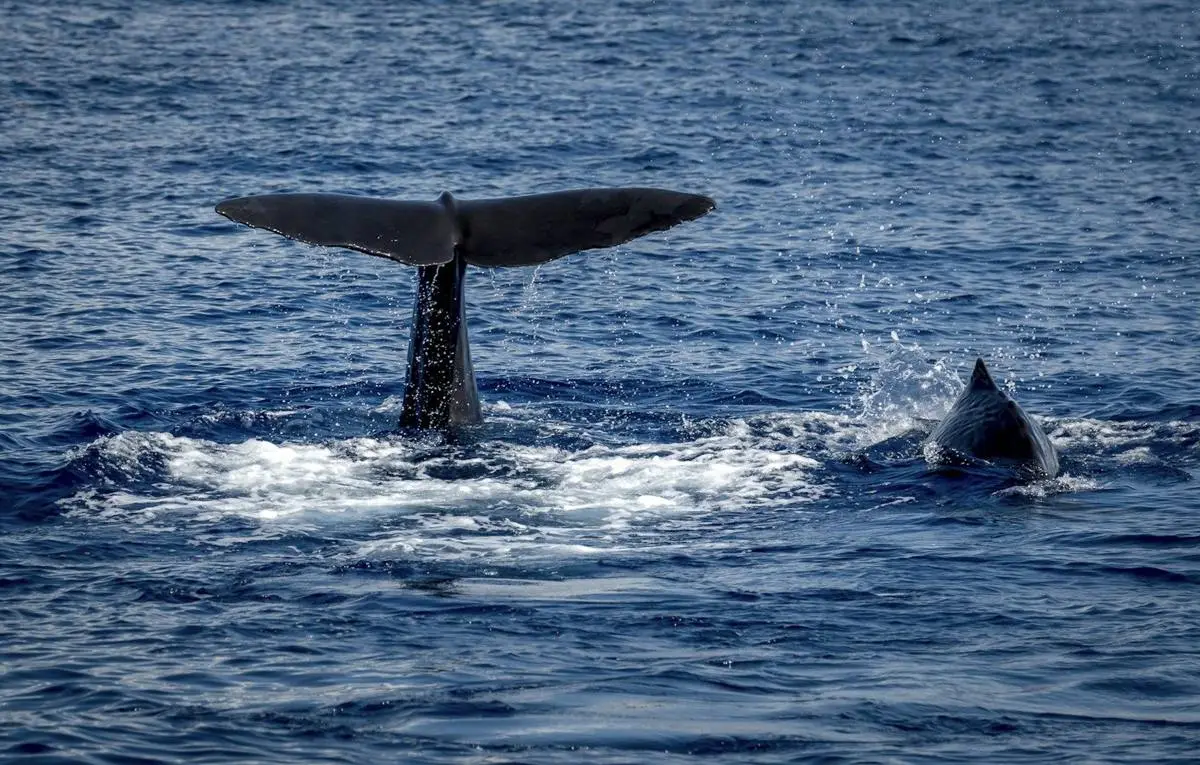
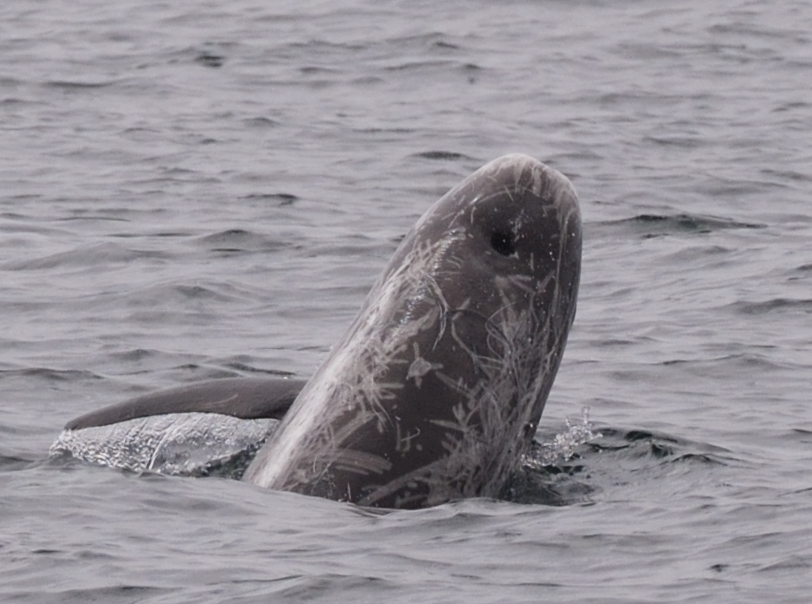
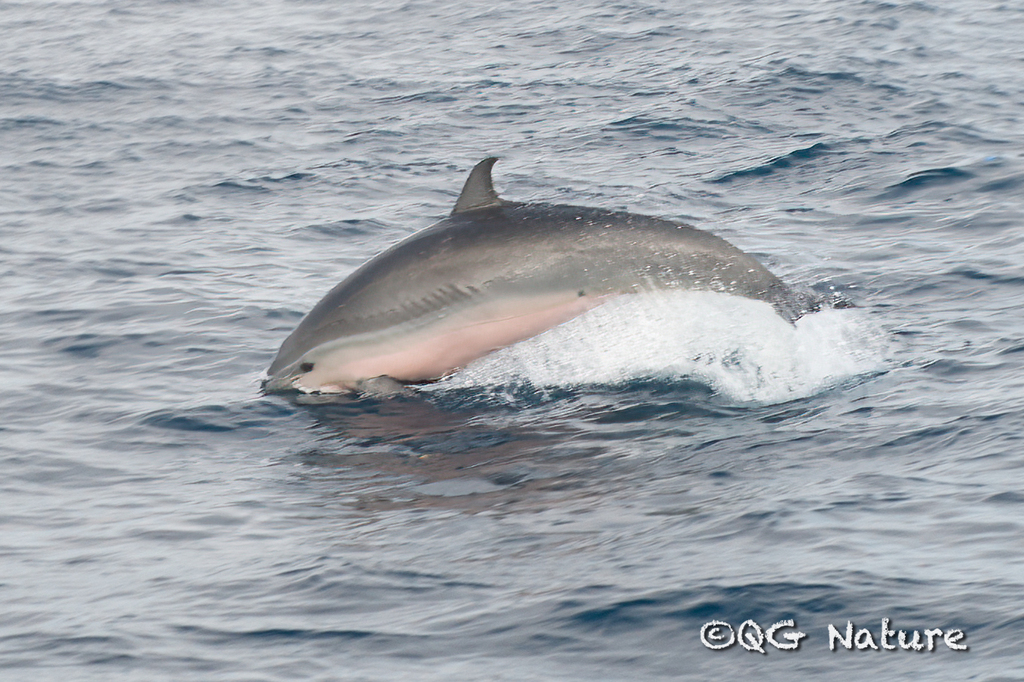
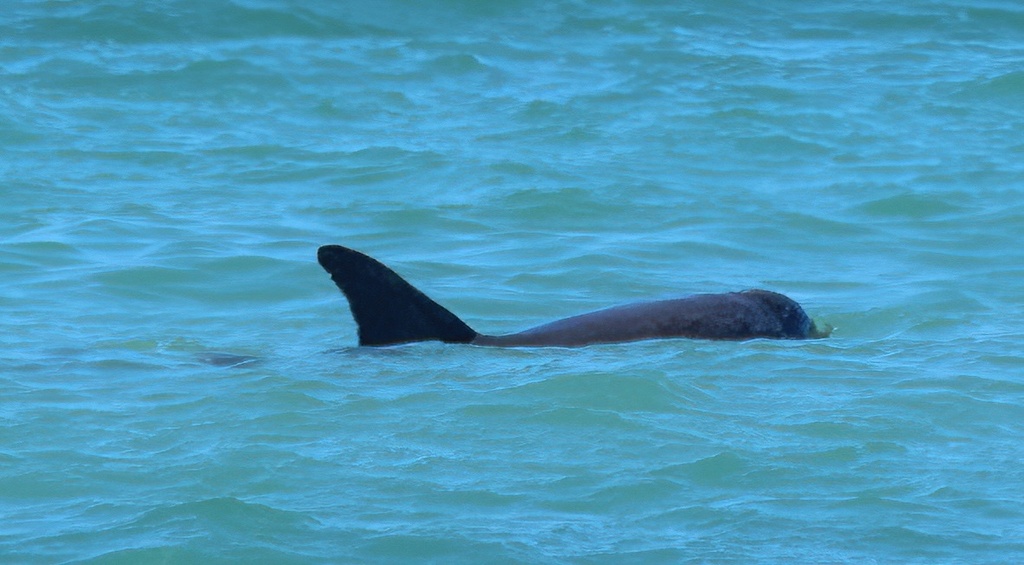
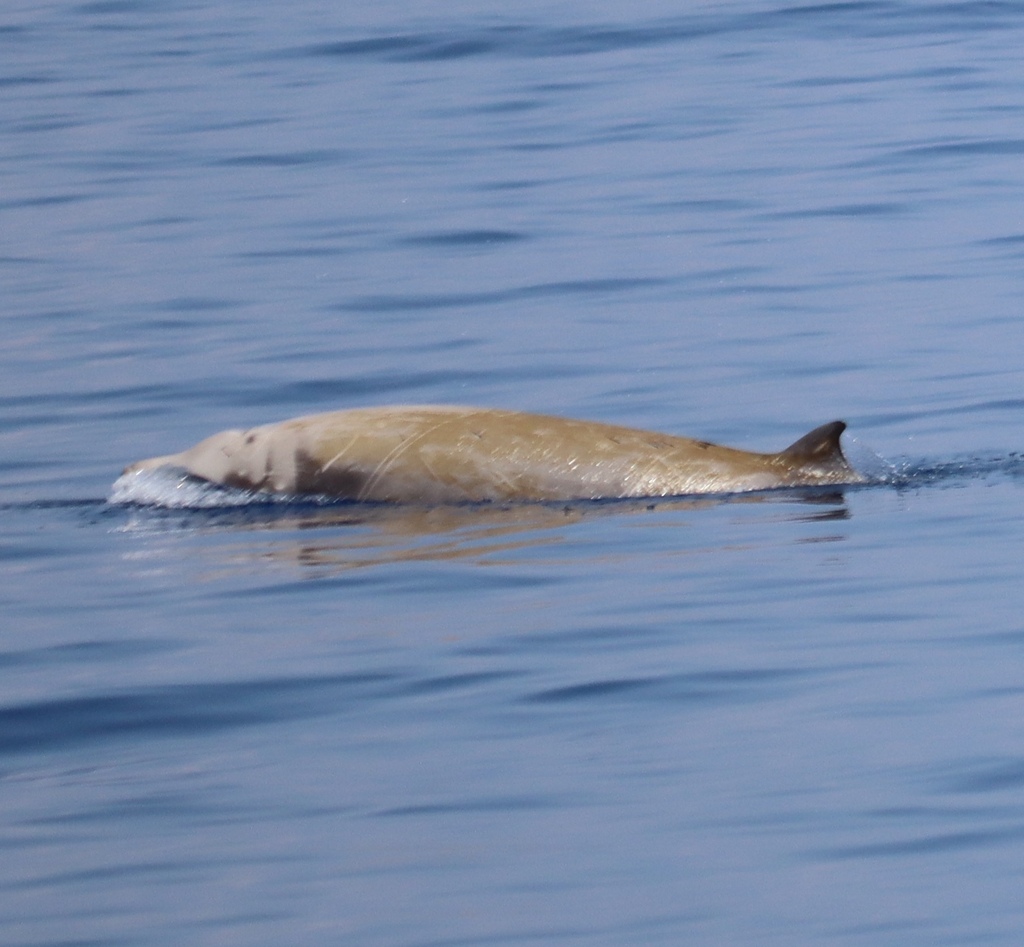
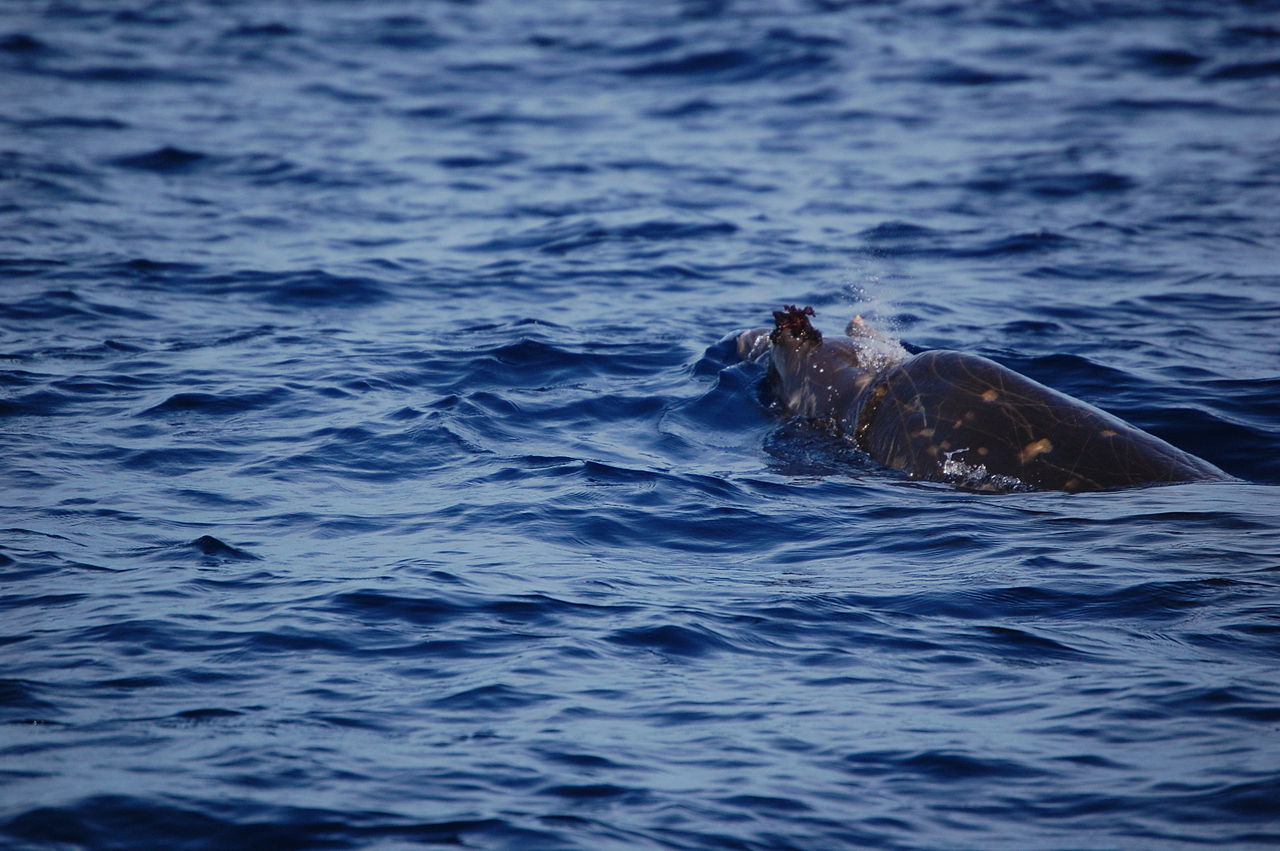
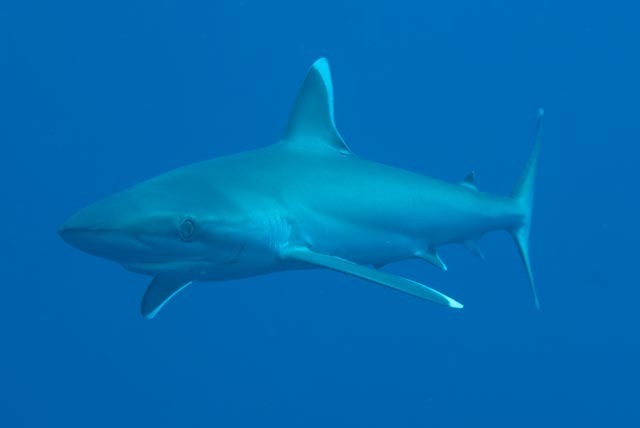
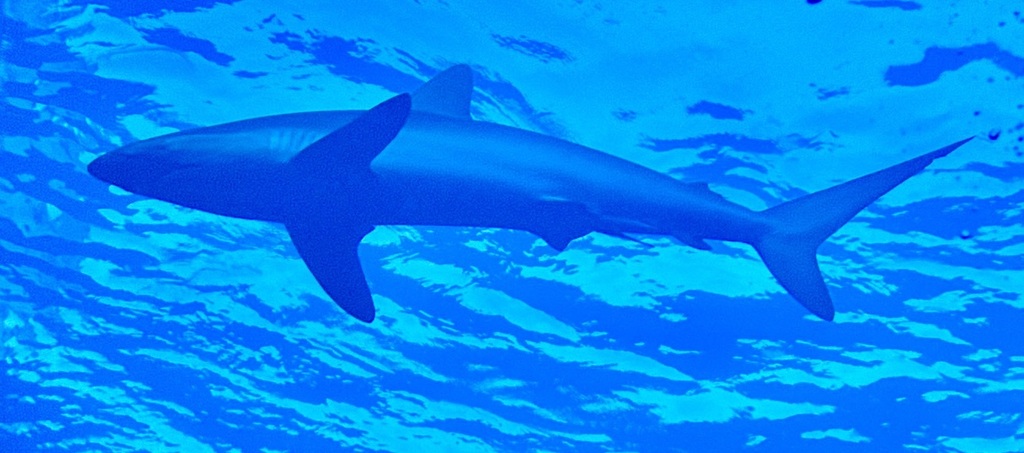
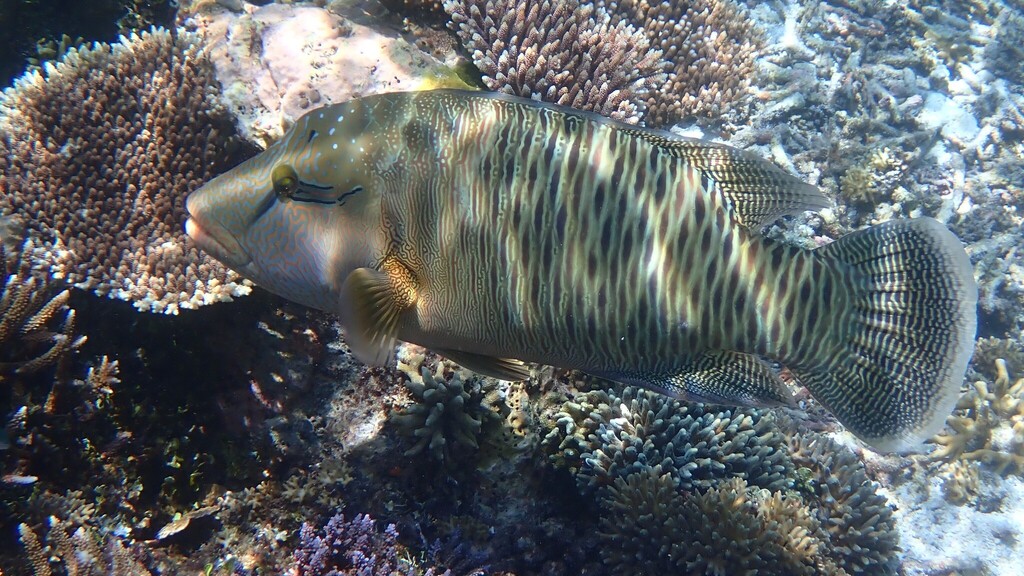
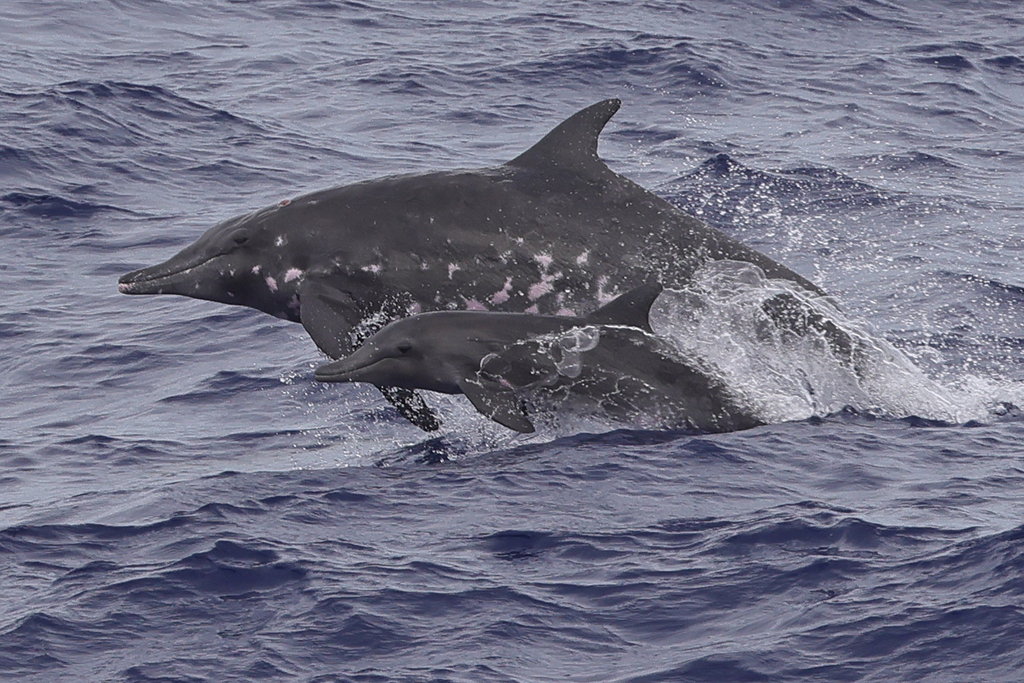
Humpback whale swimming close with long pectoral finHumpback whaleMegaptera novaeangliaeSeen in 40 countries in the AtlasLeast ConcernTwo spinner dolphins swimming over sand in clear waterSpinner dolphinStenella longirostrisSeen in 28 countries in the AtlasLeast ConcernTwo blacktip reef sharks swimming over sunlit sand in turquoise waterBlacktip reef sharkCarcharhinus melanopterusSeen in 15 countries in the AtlasVulnerableWall of grey reef sharks cruising in blue waterGrey reef sharkCarcharhinus amblyrhynchosSeen in 17 countries in the AtlasEndangeredPink whipray and a blacktip reef shark in Moʻorea's lagoon, mountains behindPink whiprayPateobatis faiSeen in 4 countries in the AtlasVulnerableGreat barracuda cruising in open blue water, showing jagged teethGreat barracudaSphyraena barracudaSeen in 12 countries in the AtlasLeast ConcernFree-swimming sharksucker remora heading toward the camera, Virgin IslandsRemoras (suckerfish)EcheneidaeSeen in 1 country in the AtlasVaries by speciesTwo rough-toothed dolphins leaping together, blotchy grey skin visibleRough-toothed dolphinSteno bredanensisSeen in 11 countries in the AtlasLeast ConcernWhitetip reef sharks resting stacked in a reef creviceWhitetip reef sharkTriaenodon obesusSeen in 18 countries in the AtlasVulnerableSicklefin lemon shark swimming over coral among butterflyfish in French PolynesiaSicklefin lemon sharkNegaprion acutidensSeen in 1 country in the AtlasEndangeredTawny nurse sharks swimming in sunlit Maldives waterTawny nurse sharkNebrius ferrugineusSeen in 9 countries in the AtlasVulnerableWhite-spotted eagle rays gliding over coral at Heron Island, Great Barrier ReefSpotted eagle ray (ocellated eagle ray)Aetobatus ocellatusSeen in 11 countries in the AtlasEndangeredGreen turtle resting on the reef, shell and head pattern in sharp detailGreen turtleChelonia mydasSeen in 43 countries in the AtlasLeast ConcernHawksbill turtle swimming, pointed beak in profileHawksbill turtleEretmochelys imbricataSeen in 40 countries in the AtlasCritically EndangeredShort-finned pilot whale surfacing off Tenerife with the island behindShort-finned pilot whaleGlobicephala macrorhynchusSeen in 9 countries in the AtlasLeast ConcernCommon bottlenose dolphin swimming over a seagrass bedCommon bottlenose dolphinTursiops truncatusSeen in 39 countries in the AtlasLeast ConcernOceanic whitetip shark with pilot fish in sunlit Red Sea waterOceanic whitetip sharkCarcharhinus longimanusSeen in 8 countries in the AtlasCritically EndangeredMelon-headed whales leaping together through a splash of white waterRareMelon-headed whalePeponocephala electraSeen in 2 countries in the AtlasLeast ConcernSperm whale mother raising her fluke beside her calf off DominicaRareSperm whalePhyseter macrocephalusSeen in 27 countries in the AtlasVulnerableScarred Risso's dolphin spyhopping out of the waterRareRisso’s dolphinGrampus griseusSeen in 19 countries in the AtlasLeast ConcernFraser's dolphin porpoising out of the waterRareFraser’s dolphinLagenodelphis hoseiSeen in 6 countries in the AtlasLeast ConcernPantropical spotted dolphin gliding at the calm ocean surfaceRarePantropical spotted dolphinStenella attenuataSeen in 21 countries in the AtlasLeast ConcernOrcas surfacing close together in calm Arctic Norwegian watersRareOrca (killer whale)Orcinus orcaSeen in 17 countries in the AtlasData DeficientFalse killer whale surging through blue water off Rota, Mariana IslandsRareFalse killer whalePseudorca crassidensSeen in 8 countries in the AtlasNear ThreatenedPygmy killer whale surfacing in turquoise waterRarePygmy killer whaleFeresa attenuataSeen in 2 countries in the AtlasLeast ConcernCuvier's beaked whale surfacing, pale scarred head and small dorsal finRareCuvier’s beaked whaleZiphius cavirostrisSeen in 3 countries in the AtlasLeast ConcernAdult male Blainville's beaked whale surfacing in the BahamasRareBlainville’s beaked whaleMesoplodon densirostrisSeen in 2 countries in the AtlasLeast ConcernDwarf sperm whale leaping clear of the open seaRareDwarf sperm whaleKogia simaSeen in 3 countries in the AtlasLeast ConcernTiger shark with clear stripes swimming over a reefRareTiger sharkGaleocerdo cuvierSeen in 24 countries in the AtlasNear ThreatenedSilvertip shark swimming in open blue waterRareSilvertip sharkCarcharhinus albimarginatusSeen in 4 countries in the AtlasVulnerableSilky shark swimming near the surface in blue waterRareSilky sharkCarcharhinus falciformisSeen in 1 country in the AtlasVulnerableScalloped hammerhead shark cruising in deep blue Red Sea waterRareScalloped hammerheadSphyrna lewiniSeen in 23 countries in the AtlasCritically EndangeredReef manta ray gliding over a sandy lagoonRareReef manta rayMobula alfrediSeen in 10 countries in the AtlasVulnerableGiant oceanic manta with T-shaped white shoulder patches and remorasRareOceanic manta ray (giant manta)Mobula birostrisSeen in 10 countries in the AtlasEndangeredHumphead wrasse swimming over a coral reef in Raja AmpatRareHumphead wrasse (Napoleon wrasse)Cheilinus undulatusSeen in 3 countries in the AtlasEndangeredHuge spotted whale shark gliding through open blue waterRareWhale sharkRhincodon typusSeen in 27 countries in the AtlasEndangered

Animals marked Rare are recorded here, but seen only now and then.

How they behave, how big they are and what they eat

🟢 Harmless🟡 Calm, give space🟠 Defensive if pressured🔴 Potentially dangerous, respect

Humpback whale

Behaviour
Calm — give space Humpbacks travel thousands of kilometres each year to breed and feed; if we’re lucky, we may hear a blow or glimpse a breach.
Size
15–17 m (up to 18.3 m) · ~30–34 t
Diet
Krill and small schooling fish, strained through baleen.

Sources: NOAA Fisheries · Australian Museum

Spinner dolphin

Behaviour
Calm — give space Spinner dolphins are known for their spinning leaps. They rest in quiet bays by day, so we watch them from a respectful distance.
Size
1.2–2.1 m · ~59–77 kg
Diet
Small fish, shrimp and squid from 200–300 m deep, caught at night.

Sources: NOAA Fisheries

Wildlife, wrecks and reef

Humpback whales

Part of the retreat

In season: Jul to Nov.

Humpback whales return to Moʻorea’s warm waters every year, from July to November. You slip into the ocean quietly, with a professional local guide, and let them decide how close to come. Sightings are never guaranteed.

Sharks and stingrays (lagoon)

Part of the retreat

Blacktip reef sharks and stingrays glide through the shallow lagoon, a joy to watch.

Coral reef

Part of the retreat

An incredible coral reef and a calm lagoon ring the whole island.

Spinner dolphins

In the area, not in the programme

All year.

Spinner dolphins are seen around the island all year.

Sea turtles

In the area, not in the programme

All year.

Sea turtles are seen around the island all year.

Wildlife is never guaranteed. Months can vary from year to year.

When to go and what you may see

Wildlife and weather by month. Nothing here is a promise.

Wildlife and weather by month for Moʻorea, September 2027
FeatureJanFebMarAprMayJunJulAugSepOctNovDec
Humpback whalesJanuary: not listedFebruary: not listedMarch: not listedApril: not listedMay: not listedJune: not listedJuly: in seasonAugust: in seasonSeptember: in seasonOctober: in seasonNovember: in seasonDecember: not listed
Spinner dolphinsJanuary: all yearFebruary: all yearMarch: all yearApril: all yearMay: all yearJune: all yearJuly: all yearAugust: all yearSeptember: all yearOctober: all yearNovember: all yearDecember: all year
Sea turtlesJanuary: all yearFebruary: all yearMarch: all yearApril: all yearMay: all yearJune: all yearJuly: all yearAugust: all yearSeptember: all yearOctober: all yearNovember: all yearDecember: all year
WeatherJanuary: wetter monthsFebruary: wetter monthsMarch: wetter monthsApril: wetter monthsMay: good weather windowJune: good weather windowJuly: good weather windowAugust: good weather windowSeptember: good weather windowOctober: good weather windowNovember: wetter monthsDecember: wetter months
Trip datesJanuary: no listed tripFebruary: no listed tripMarch: no listed tripApril: no listed tripMay: no listed tripJune: no listed tripJuly: no listed tripAugust: no listed tripSeptember: Sept 1–7, 2027, Sept 9–15, 2027October: no listed tripNovember: no listed tripDecember: no listed trip
Good weather window: May to Oct
Wetter months: Jan to Apr, Nov to Dec

Dry season from May to October. Brief showers in the greener months, November to April.

Is this place for you?

Before you choose Moʻorea, French Polynesia (Tiahura and Haapiti area)

An honest look at food, noise, smells, heat and local customs, so you can decide calmly. If something matters to you, tell Rocío and she will check it for you.

EasyPossible with planningAsk Rocío

Vegetarian and vegan

Possible with planning

Local food is mostly fish, like poisson cru (raw fish in coconut milk), plus French bread and supermarket food. Vegetarians can manage with a little planning. Tell Rocío early so the meals fit you.

Gluten free

Possible with planning

Gluten free options exist on the island, though not everywhere. Many meals are built around fish, meat and vegetables, which are naturally gluten free, while French-style bread and baked food are everywhere. Tell Rocío before you book and she will plan it with you.

Noise and crowds

Possible with planning

In whale season the lagoon and the whale area off the reef can be busy with boats, and many can gather when a whale is found. There is a ring road with cars and scooters. Night noise at the villa is not yet confirmed; ask Rocío.

Smells, smoke and air

Easy

We did not find any haze season or regular smoke problem recorded for Moʻorea. In the dry season (about May to October) a south-east trade wind usually blows.

Heat and humidity

Possible with planning

Daytime is about 27 to 31°C all year and humidity is often 70 to 80%. The sun is very strong (UV often 10 or more), so plan for shade, water and rest after boat days.

Predictable days and quiet breaks

Easy

A small group of no more than 6 guests, staying in a villa. You can skip any activity or rest. Whale boat days depend on wind and sea, so a day can change or be cancelled, and whales are never promised.

Getting around and mobility

Possible with planning

You reach Moʻorea by ferry from Tahiti (about 25 to 45 minutes) or a 15 minute flight. The island has cars, scooters and a ring road of about 60 km. Whale days mean getting in and out of the water from a boat. Steps at the villa are not yet confirmed; ask Rocío.

Breathing and health

Ask Rocío

It is hot, humid and very sunny, and dengue (spread by mosquitoes) is a risk in French Polynesia. Health care is good for simple problems; serious cases may need a bigger hospital. The only hyperbaric (dive) chamber in French Polynesia is at the Taaone hospital on Tahiti. Divers with asthma need a dive medical check first. Please check with a doctor or a dive medical before you book.

Local customs

  • Say ‘Ia ora na’ for hello and ‘Māuruuru’ for thank you. People are happy when you try a few Tahitian words.
  • Beachwear is fine at the villa and on the boat. Cover your shoulders at a marae (old sacred stone site) or if you are invited into a home. No topless swimming near villages.
  • Most people are Protestant or Catholic. Sundays can be quieter in some families. Alcohol is legal.
  • Tipping is not expected. Service has been included in hotel and restaurant bills since 2007, but a tip for good service is welcome.
  • Ask before you take photos of people. Please do not stand or walk on coral.
Sources for this section

Protected waters: Moʻorea, French Polynesia

Yes. Moʻorea’s waters are a marine mammal sanctuary, and the lagoon has its own management plan.

French Polynesia marine mammal sanctuary Since 2002

All of French Polynesia’s waters are a sanctuary for whales, dolphins and every other marine mammal that passes through. From July to November, humpback whales travel thousands of kilometres to these warm, sheltered waters to mate, give birth and nurse their calves, then leave again. Worth sitting with: as a species, humpbacks have recovered enough to be rated Least Concern by the IUCN Red List, but the smaller Oceania population that passes through French Polynesia is still Endangered. Time in the water with them, at a respectful distance, is never something anyone can promise. It is a small privilege inside a longer story of recovery, and the sanctuary protects that story: whale-watching operators need approval from the Environment Department, boats must slow to 3 knots within 300 m (about 985 ft) of a whale and may never encircle it, and the regulated season runs from 20 July to 20 November.

Moʻorea marine area management plan (PGEM) Since 2004

A local plan, created by the municipality in 2004 and revised from 2014, that sets out how Moʻorea’s lagoon and reef are shared and cared for — quiet governance behind the calm water you swim in.

French Polynesia’s waters are special for a simple reason: they sit in the path of a whale migration and a marine sanctuary large enough to hold it. Few places let you be a quiet guest in a recovery story this size.

A protected area still has rules. Your guide explains them before every session.

See all five protected zones and endangered-status basics →

Things to do around Moʻorea

Solid circles are part of the trip. Dashed circles are ideas for your free time.

  • 4×4 safari, about 4 hours, part of the retreat
  • Flower crown workshop, part of the retreat
  • Whale days with a local operator, part of the retreat
  • Tiahura lagoon day, part of the retreat
  • Villa Royal Palms, with a pool, part of the retreat
  • Pineapple fields and juice tasting, part of the retreat
  • Belvédère d’Opunohu, in the area
  • Three Coconut Trees trail, in the area
  • Opunohu Valley marae, in the area
  • Kayak or paddleboard in Opunohu Bay, in the area
  • Temae Beach, in the area
See all the details and free-time ideas

On the retreat

4×4 safari, about 4 hours

Cook’s Bay, Opunohu Bay, the Belvédère, pineapple fields and Magic Mountain, with local tastings. Morning or afternoon. Included.

Flower crown workshop

Included.

Whale days with a local operator

Two open-water whale days: Sept 3 and 4, or Sept 11 and 12.

Tiahura lagoon day

Reef and marine life, with a local provider.

Villa Royal Palms, with a pool

Five air-conditioned bedrooms around a pool, close to the lagoon.

Pineapple fields and juice tasting

Part of the 4×4 safari.

Around Moʻorea: ideas for your free time (not included)

Belvédère d’Opunohu

Viewpoint at 240 m over Cook’s and Opunohu bays, with marked trails.

Three Coconut Trees trail

About 2.5 hours, with 360-degree views.

Opunohu Valley marae

Ancient open-air temple sites. A visit takes 30 to 45 minutes.

Kayak or paddleboard in Opunohu Bay

A quieter bay with calm water.

Temae Beach

A public beach with a shallow turquoise lagoon, on the north-east coast.

Opening hours and fees can change. Rocío will help you plan your free time.

Ethics and safety

  • Encounters happen on the whales’ terms. Weather, sea conditions, local rules and the animals decide what is possible.
  • No chasing, no touching, no forcing an interaction. Sightings and in-water encounters can never be guaranteed.
  • Where local rules restrict in-water contact with marine mammals, encounters are from the surface only.
  • Mothers and calves are especially sensitive to boats. The local operator decides if an in-water approach is right.

Practical details

  • Fly to Tahiti (PPT), then ferry to Moʻorea.
  • Reef-safe sunscreen only.
  • If you get seasick, take medication before boat days.
  • Travel insurance is required, and dive schools may also ask to see it. See the insurance box below.

Preparation guide. We send you a full guide, gear, fitness, transfers and ocean conditions, once you book. Meanwhile, see Ro’s packing picks ↗.
Flying in from…

You fly into Papeete, Tahiti (PPT), then the ferry to Moʻorea. Routes and prices change often, so this opens a live search instead of a guess.

Type in any language: Geneva, Genève, Ginebra or Genf all work. Not on the list? Just type your city and press a button.

Visa and entry requirements

Entry rules depend on your passport, your itinerary and current regulations, so please always check for yourself rather than relying on this page. IATA Travel Centre ↗ is a free tool used by airlines worldwide to check passport, visa and health requirements for any nationality and destination. CIBT Visas ↗ is another good place to check. And it is always worth a quick check with your own embassy or consulate too, just in case.

Why we choose slower boats

Speed is one of the simplest things a boat captain controls, and it matters a lot to animals. Studies from many oceans show the same pattern: a slower boat is less likely to hit a whale, turtle or manatee, gives animals time to move away, and makes less noise underwater.

Slower ships kill fewer whales

A study of 47 recorded ship strikes on large whales found the chance of a deadly injury was 21 per cent at 8.6 knots but 79 per cent at 15 knots. Below 11.8 knots, a strike is more likely to be survived than not.

Vanderlaan & Taggart, 2007, Vessel collisions with whales: the probability of lethal injury based on vessel speed (Marine Mammal Science)

A 10 knot limit works for right whales

Since 2008, the United States has required vessels 65 feet (about 20 metres) or longer to travel at 10 knots or less in set areas and seasons along the East Coast, to protect North Atlantic right whales. A later study estimated these limits cut the risk of deadly ship strikes by 80 to 90 per cent.

Conn & Silber, 2013, Vessel speed restrictions reduce risk of collision-related mortality for North Atlantic right whales (Ecosphere); NOAA Fisheries, Reducing vessel strikes to North Atlantic right whales

Turtles cannot escape fast boats

In Moreton Bay, Queensland, Australia, researchers watched 1,890 green turtle encounters. 60 per cent of turtles moved away from a boat going 4 km/h, but only 22 per cent at 11 km/h and 4 per cent at 19 km/h.

Hazel, Lawler, Marsh & Robson, 2007, Vessel speed increases collision risk for the green turtle Chelonia mydas (Endangered Species Research)

Slow zones save manatees

In Sykes Creek and the Barge Canal on Merritt Island, Florida, eight manatees were killed by boats in the 42 months before year-round slow speed was enforced. In the 42 months after, only one was killed.

Laist & Shaw, 2006, Preliminary evidence that boat speed restrictions reduce deaths of Florida manatees (Marine Mammal Science)

Faster boats are louder

Recordings of 1,582 ships in Haro Strait, between Washington State and British Columbia, showed that most ships get about 1 decibel louder for every extra knot of speed. This noise reaches the high sounds that killer whales use to find food.

Veirs, Veirs & Wood, 2016, Ship noise extends to frequencies used for echolocation by endangered killer whales (PeerJ)

Going slow gives whales quiet time to feed

When ships in Haro Strait were asked to slow to 11 knots, underwater noise fell by 2.5 decibels, about 44 per cent less sound energy. Scientists estimated this cut the feeding time killer whales lose to noise by 22 per cent.

Joy et al., 2019, Potential benefits of vessel slowdowns on endangered southern resident killer whales (Frontiers in Marine Science)

🎒 Packing tips

Do you have everything you need for your next trip?

Check Rocío’s recommendations: reef-safe sunscreen, recycled swimwear, comfortable hair accessories for the mask, and the camera she actually dives with.

See Ro’s picks ↗

As an Amazon Associate I earn from qualifying purchases.

Meet your local team in Moʻorea, French Polynesia

Ocean Calling plans and hosts your retreat. All in-water teaching, certification and safety supervision are led by independent, licensed local professionals, who keep full responsibility for training standards and operational safety.

Nicolas Buray

Marine Wildlife Guide & Founder, Tahiti Shark Expeditions

Founder of Tahiti Shark Expeditions and one of the most experienced marine wildlife guides in French Polynesia. Based in Moorea, he has spent years leading private expeditions between Tahiti and its sister island, with real educational depth on sharks, rays, dolphins, turtles and seasonal humpback whale encounters between July and November. Small groups, private boats, a wildlife-first philosophy: the animal always leads.

“Moorea is a magic place. We are waiting for you to meet the megafauna that inhabits these waters.”

Tahiti Shark Expeditions / Nemo’z Diving Center, Tiahura, Moorea · tahitisharkexpeditions@gmail.com · nemozdiving.com

Nemo’z Diving Center

Tiahura, Moorea

One of the most established dive operations in French Polynesia, founded in 1989 at Tiahura on Moorea’s north-west coast. PADI and SSI certified, with a maximum of 4 students per course. In 2024, Nemo’z launched a dedicated freediving centre in partnership with Bluenery Academy, founded by world champion freediver Guillaume Néry, the first of its kind on the island.

nemozdiving.com · nemozdiving@gmail.com

See every Ocean Calling local partner ↗

Ready to join us?

Personally hosted by RocíoModerate difficulty, 3 of 4

Swim with Humpback Whales in Moʻorea 2027

Sept 1–7 and Sept 9–15, 2027

Why Moderate: Open-ocean boat days with calm in-water entries. You need to feel comfortable in the water. You do not need freediving experience.

To book, message Rocío by WhatsApp or email with your dates and the room you would like. She confirms your place herself and sends the next steps.

Book with RocíoEmail Rocío

Book with RocíoEmail Rocío

Questions about Moʻorea

Do I need freediving experience?
No. You need to feel comfortable in the water and follow the guide.
Will I definitely see a whale?
No. Wildlife can never be guaranteed. Ocean Calling gives respectful opportunities, and the whales decide.
Can I swim with the whales?
Only where local rules and the operator allow it, from calm water entries. If not, encounters are from the boat or the surface.
Is this trip open to book?
Yes. The September 9 to 15, 2027 departure is open to book. For September 1 to 7, message Rocío and she will reserve your place.
Who looks after me in the water?
Your whale days are led by a professional local whale operator. Rocío coordinates the trip and is your point of contact.
Do I need travel insurance?
Yes, please. Every guest needs their own travel insurance, and dive schools ask for it. Choose cover for emergency evacuation and water sports (from your own policy or the dive centre’s insurance). Ocean Calling does not check your policy, so please have it in place before you travel.

More answers in Planning & FAQ · About Rocío · Protected waters we visit · Ethical ocean travel journal

Close your eyes for a moment: warm water, a low hum somewhere below, and then two shadows drifting past together, a mother and her calf, close enough to take your breath away. That is Moʻorea in whale season, and it is waiting for you. See how to join.

Moʻorea, September 2027Dates available
Book with RocíoEmail Rocío
The shop

Shop with Ocean Calling

Visit the Ocean Calling storefront on Amazon.

As an Amazon Associate I earn from qualifying purchases. You are not only choosing products that respect the ocean, you are also helping us keep going: paying our local partners fairly and keeping our retreats ethical, sustainable and honestly priced for you. 💗