
Pantropical spotted dolphin
Stenella attenuata
Warm-water spotted dolphins that often travel in large mixed schools. Their spots build with age, and they dive deeper at night to chase deep-water prey.
Least Concern (IUCN, 2018) means it is not at high risk of extinction worldwide today.

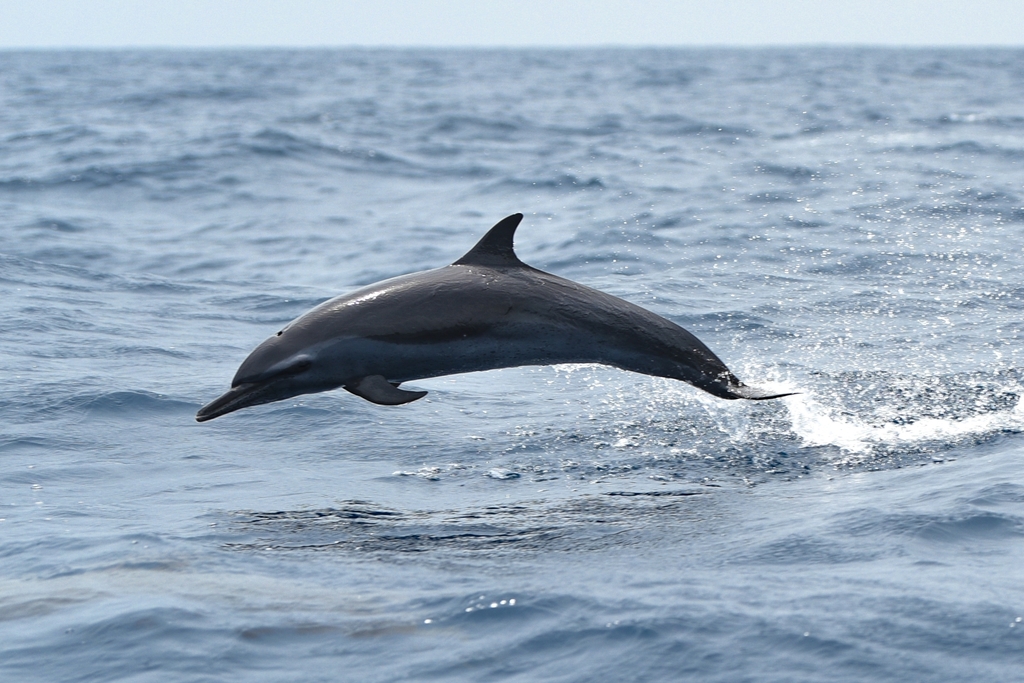
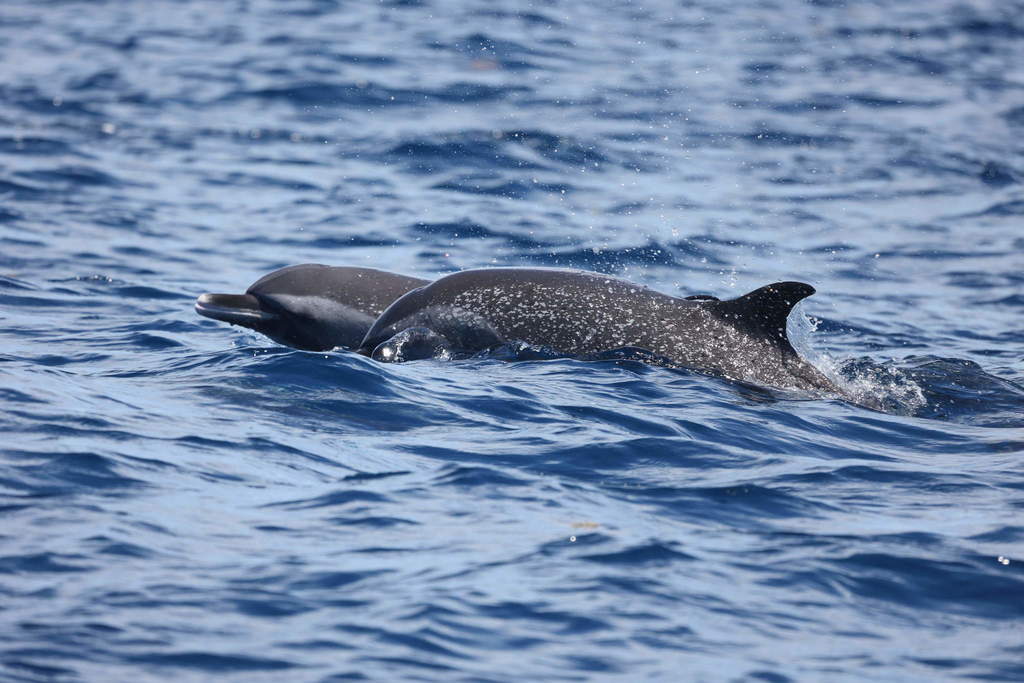
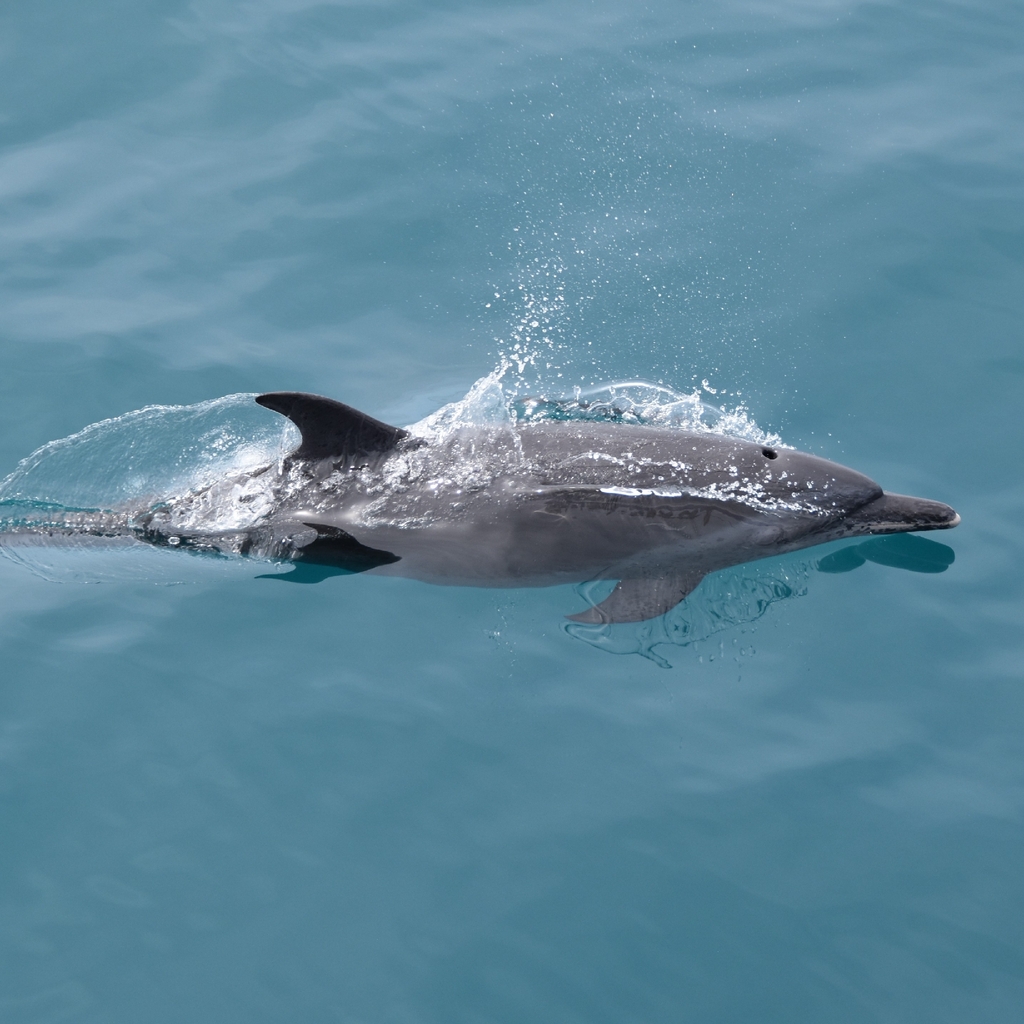
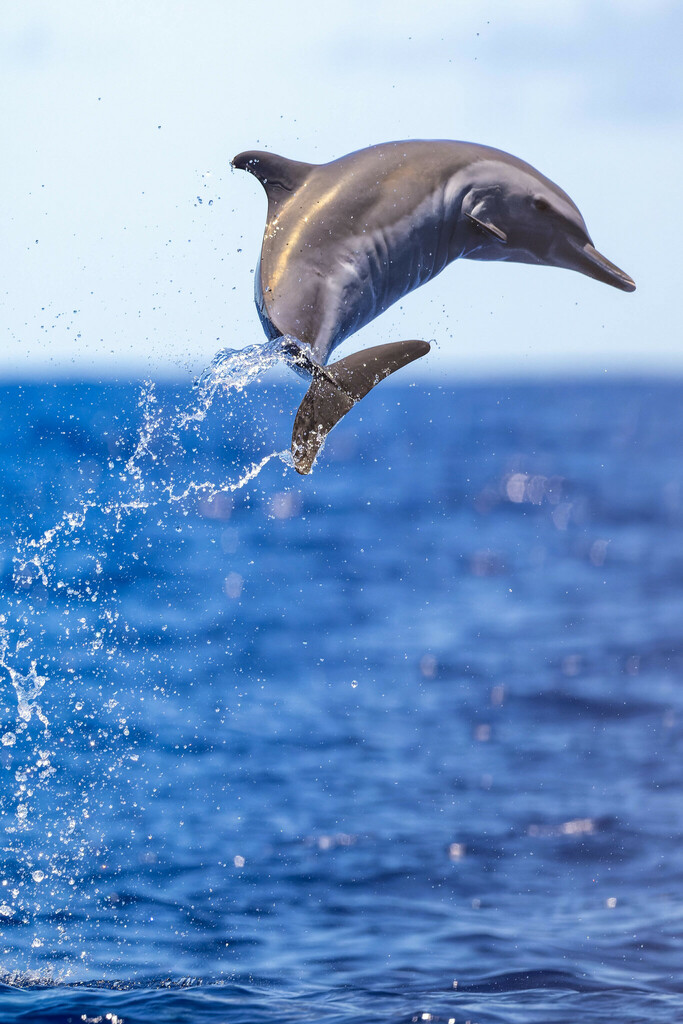
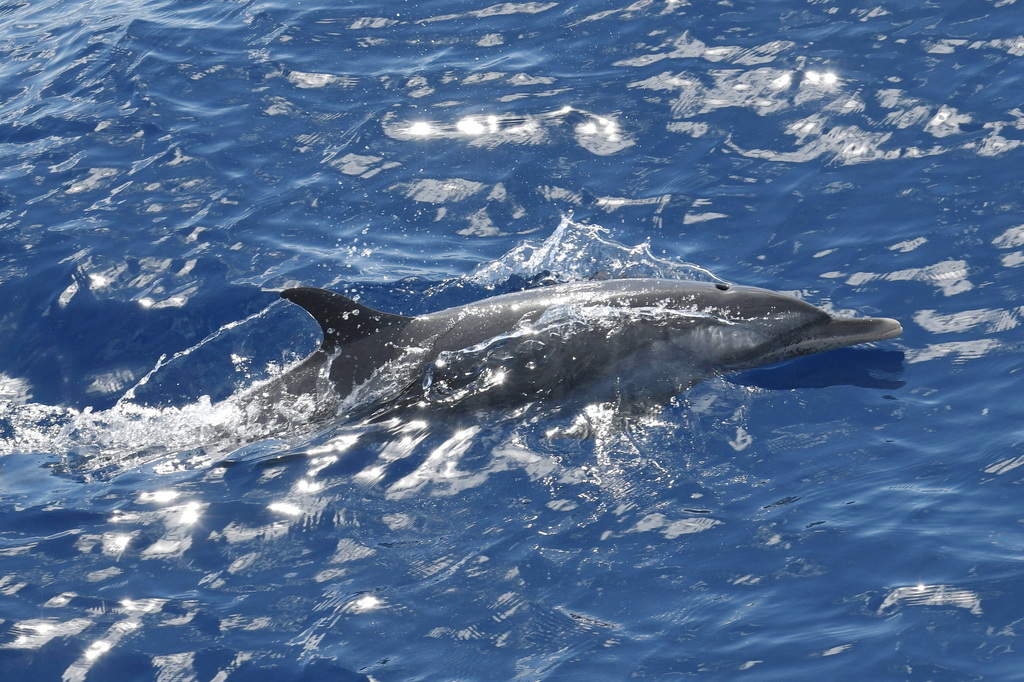
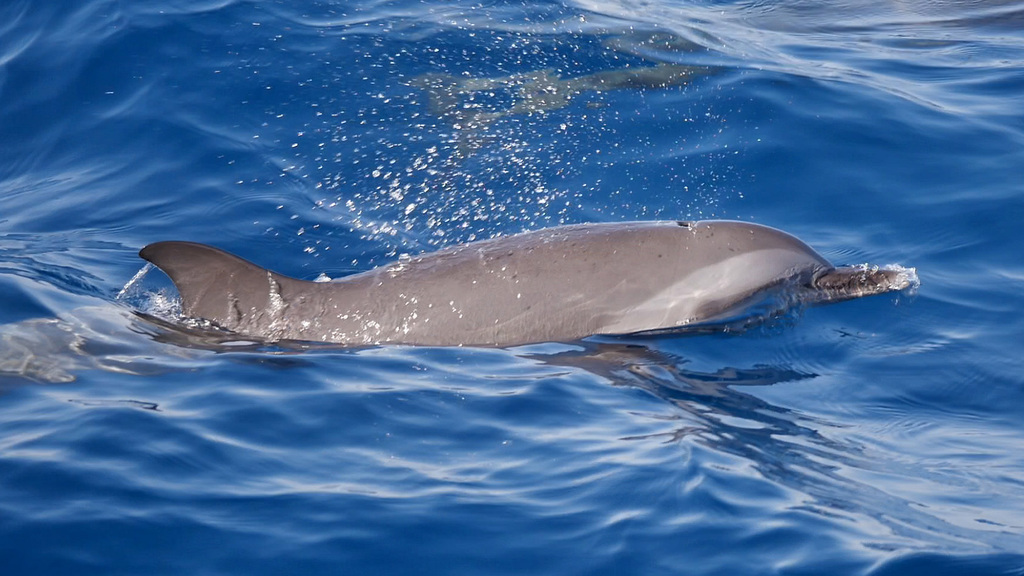
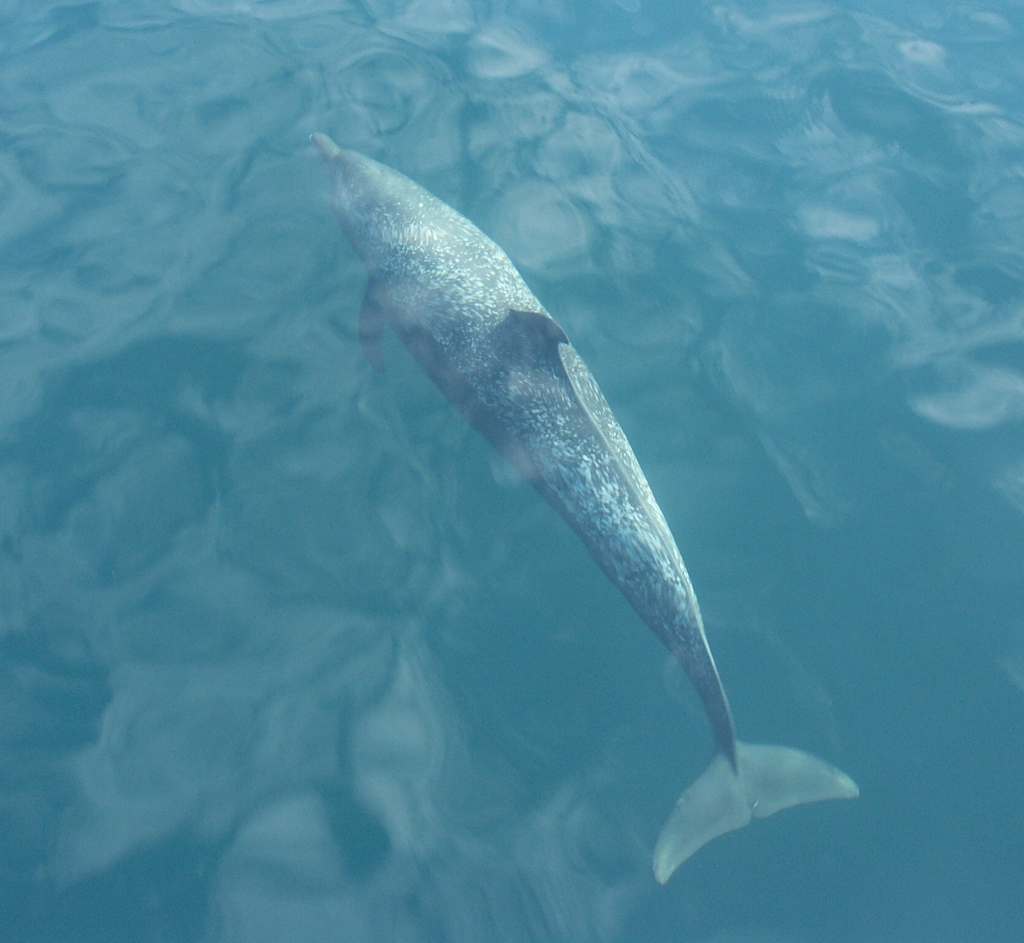
Photos show the species, not always the places on this page.
Length
Usually about 1.8 to 2.1 m (6 to 7 ft); males can reach about 2.6 m (8.5 ft)
Weight
Adults about 113 kg (250 lb); offshore animals up to at least about 120 kg (265 lb), and the coastal form is larger
Next to a person
About as long as an adult and about one-and-a-half times their weight
What it eats
Squid and fish from the middle depths, and flying fish in some areas.
Around people
Calm, give space
How it lives
Pantropical spotted dolphins spend the day in water about 90 to 300 m deep and dive deeper at night to feed on squid and fish. They often travel with other species, such as spinner dolphins, rough-toothed dolphins and short-finned pilot whales. Pregnancy lasts about 11 months, calves usually nurse for about 2 years, and a female has a calf every 2.5 to 4 years.
Where it goes
Exact migration routes are not known. In some areas they seem to move closer to shore in autumn and winter and farther offshore in spring. Around Hawai'i, some groups stay near particular islands.
We only draw a journey on the map when scientists have tracked it or clearly documented it. For this animal we have not found one yet.
Populations
There are two subspecies: an offshore form found in warm seas worldwide, often lightly spotted, and a larger, heavily spotted coastal form along the tropical eastern Pacific shore. In the eastern tropical Pacific, one offshore stock is still listed as depleted in the US after decades of deaths in tuna nets, though the species is Least Concern worldwide. Hawai'i has its own island-associated groups.
Meet it respectfully
In the US, NOAA guidance asks you to stay at least 50 yards (about 45 m) away, limit viewing to 30 minutes or less, and not swim with wild dolphins; feeding them is illegal there. Other countries set their own rules; in Costa Rica, for example, swimming with dolphins is not allowed. Never feed, touch, chase or surround them, and let them choose how close to come.
Fun fact
Tap the bulb to light it up.
A dark cape on the back and a white-tipped beak are good field marks.
Offshore schools can number several hundred to about 1,000 dolphins.
They can live up to about 46 years.
Pantropical spotted dolphins are born with no spots at all. They gain more with age, until adults are almost covered in overlapping spots.
Pantropical spotted dolphin in the Ocean Atlas
Places we have researched where this animal is recorded. It is never guaranteed, and some places are for watching from the boat only.
Travel with usComing soonTrusted referralExploringOn pause, story onlyEthics pass
Country colour: pink where we travel, blue where we are exploring or refer, grey for story only.
 Aruba
Aruba Australia
 The Bahamas
 Bangladesh
 Brazil
 Cabo Verde
 Colombia
 Comoros
 Costa Rica
 Cuba
Cuba Curaçao
 Dominica
 Ecuador
 Egypt
Egypt El Salvador
 France
 French Guiana
 French Polynesia
 Grenada
 Guadeloupe
 Guam
Guam India
India Indonesia
 Japan
Japan Madagascar
 Martinique
 Mayotte
 Mexico
 Micronesia (FSM)
 Myanmar
 New Caledonia
 Nicaragua
 Northern Mariana Islands
 Oman
Oman Palau
Palau Panama
 Papua New Guinea
 Philippines
 Réunion
 Saint Helena
 Saint Lucia
 Saint Martin
 Saudi Arabia
 Seychelles
 Solomon Islands
 Spain
Spain Sudan
Sudan Suriname
 Taiwan
 Togo
Togo Tonga
Tonga United Kingdom
 United States
 Vietnam
 Wallis and Futuna
 Yemen
YemenSources for this page
- NOAA Fisheries, 2026
- NOAA Fisheries, Protect wild dolphins
- IUCN Red List, 2018
- OBIS-SEAMAP, Stenella attenuata
- Perrin, 2001
- NOAA SAR 2023, Hawaiian Islands stocks
Facts checked 26 September 2026. Photos: Unsplash licence, or Creative Commons as shown on each photo.
Work in ocean travel?
We are always happy to hear from exceptional local operators, accommodation, conservation organisations and destination experts. If your work fits responsible, small-group ocean travel, we would love to learn more.
Partner with Ocean Calling