
Loggerhead turtle
Caretta caretta
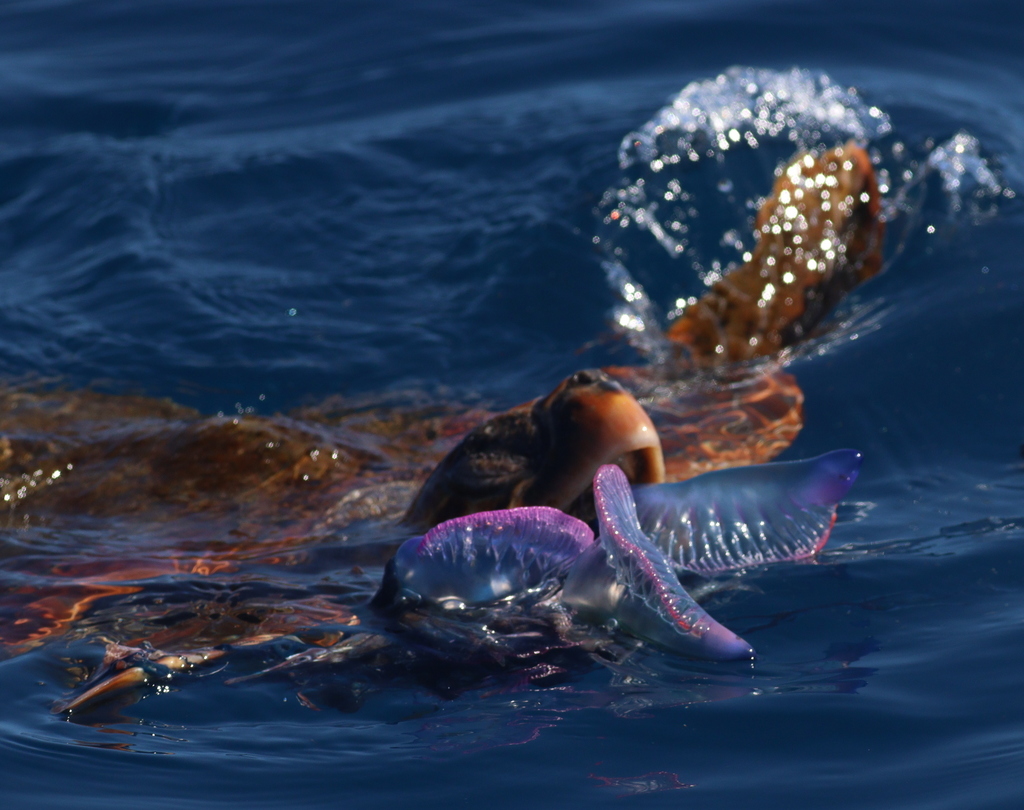
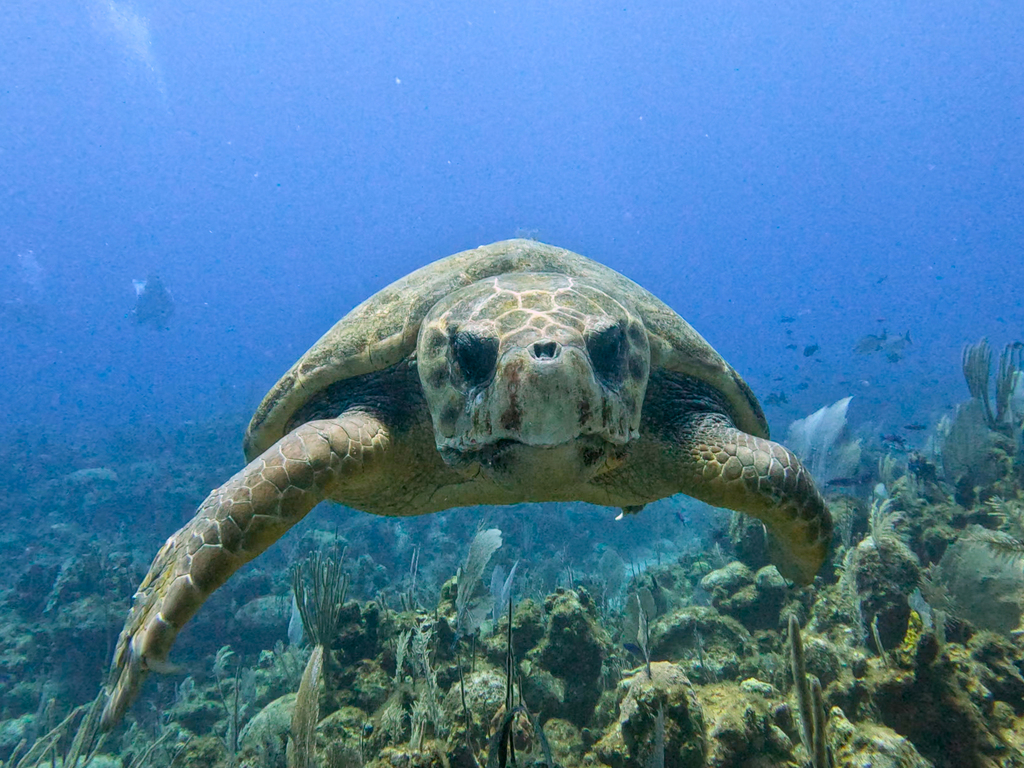
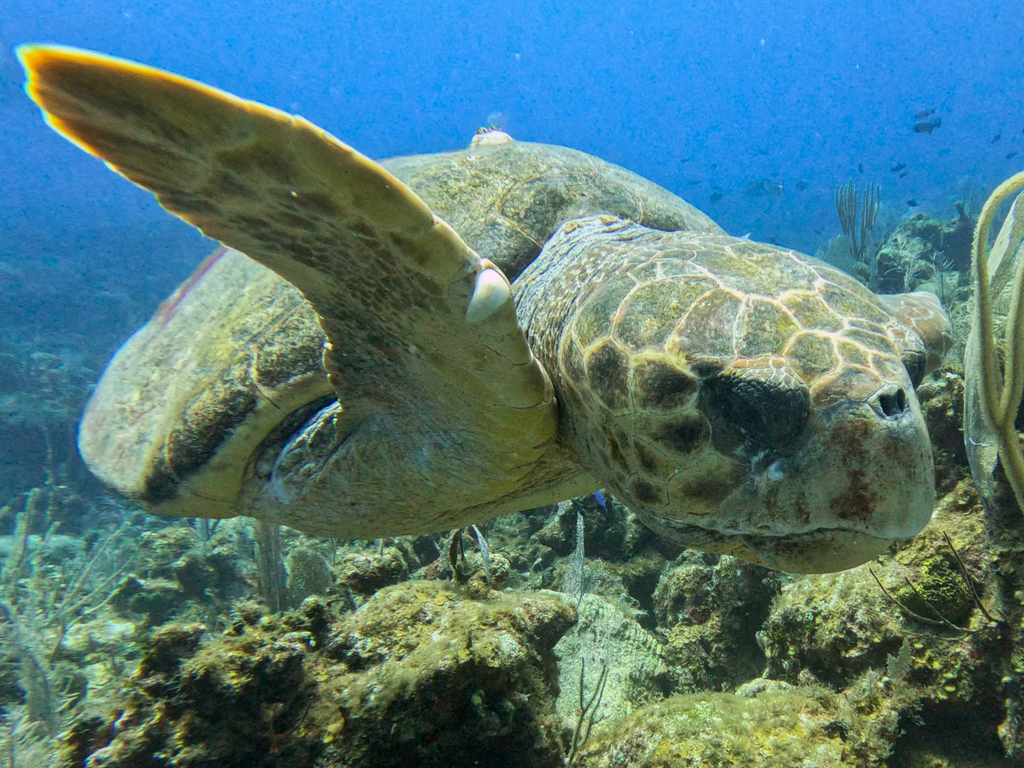
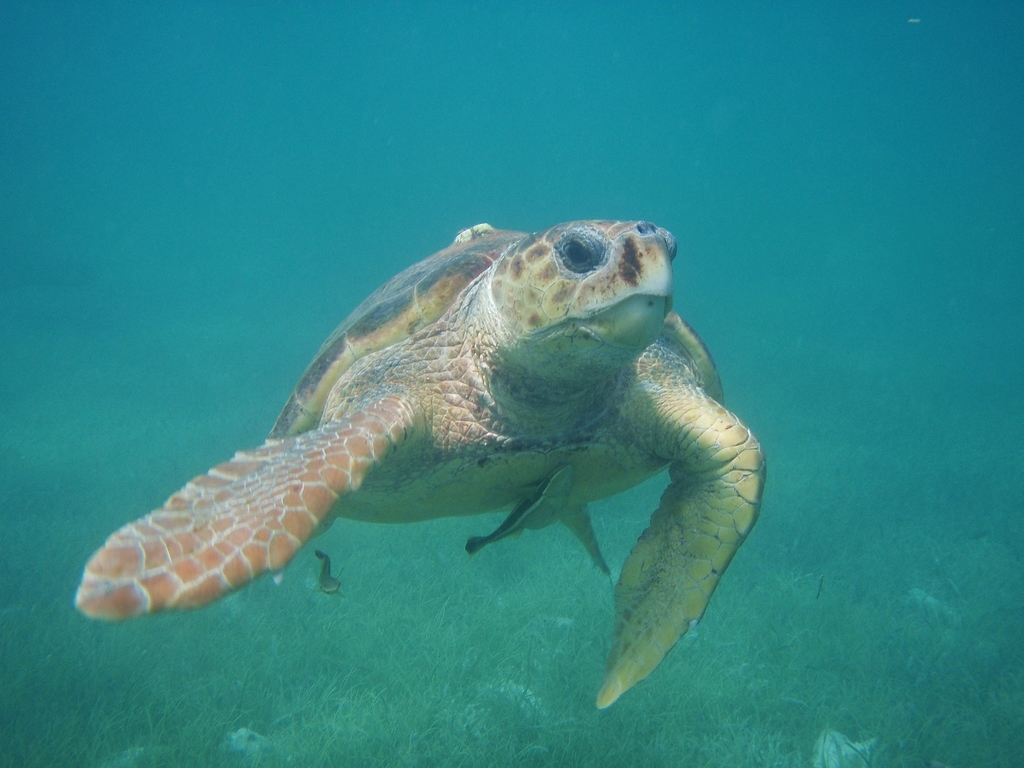
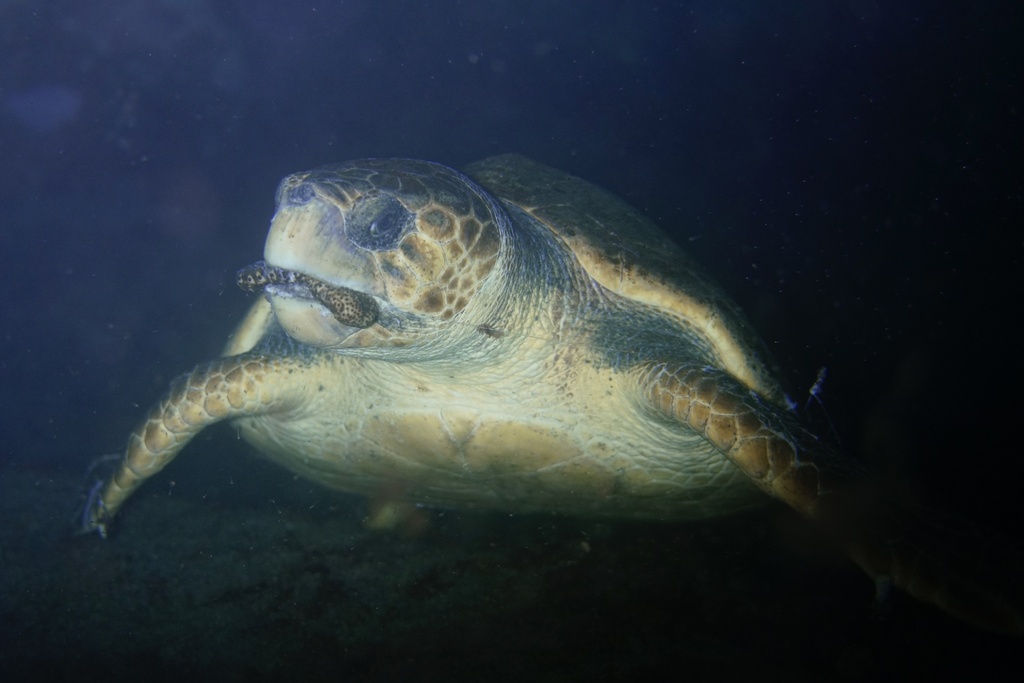
A loggerhead has a heavy head built for crushing shellfish, not for cropping seagrass.
Vulnerable (IUCN, 2015) means it is at high risk of extinction in the wild. Ten regional populations are assessed on their own, from Critically Endangered to Least Concern.
Photos show the species, not always the places on this page.
Length
Shell usually about 0.76 to 1.07 m (2.5 to 3.5 ft)
Weight
Usually about 91 to 159 kg (200 to 350 lb)
Next to a person
The shell is about half to two-thirds as long as an adult is tall; it weighs about as much as one or two adults
What it eats
Crabs, conch and other hard-shelled prey, crushed with powerful jaws.
Around people
Calm, give space
How it lives
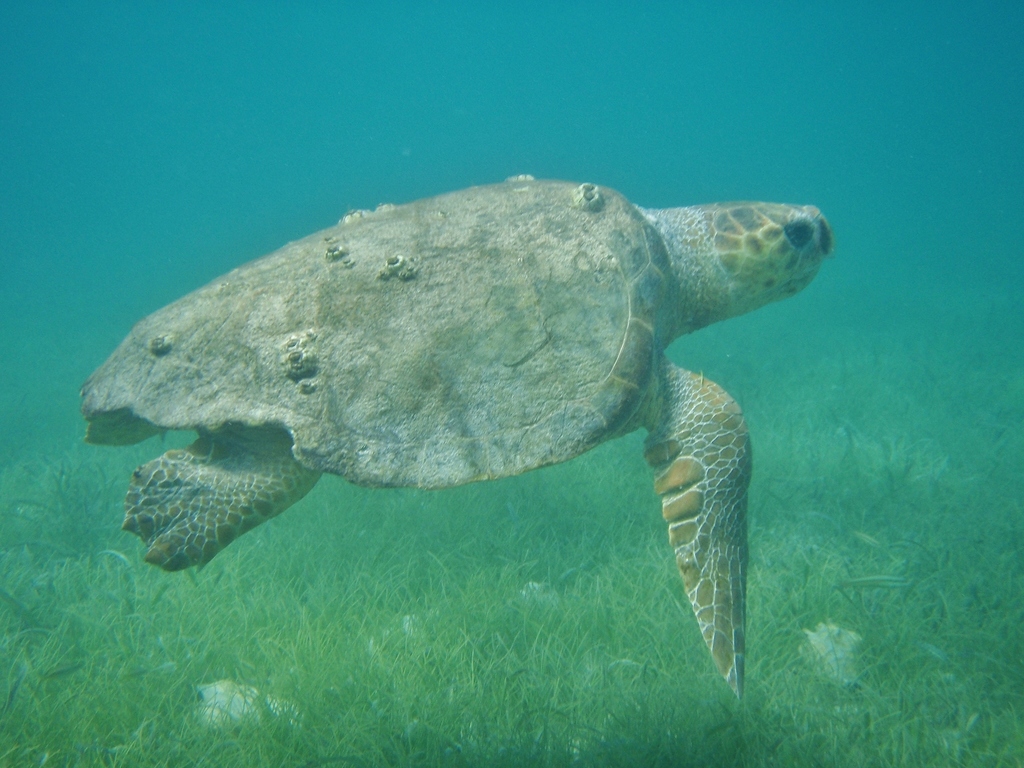
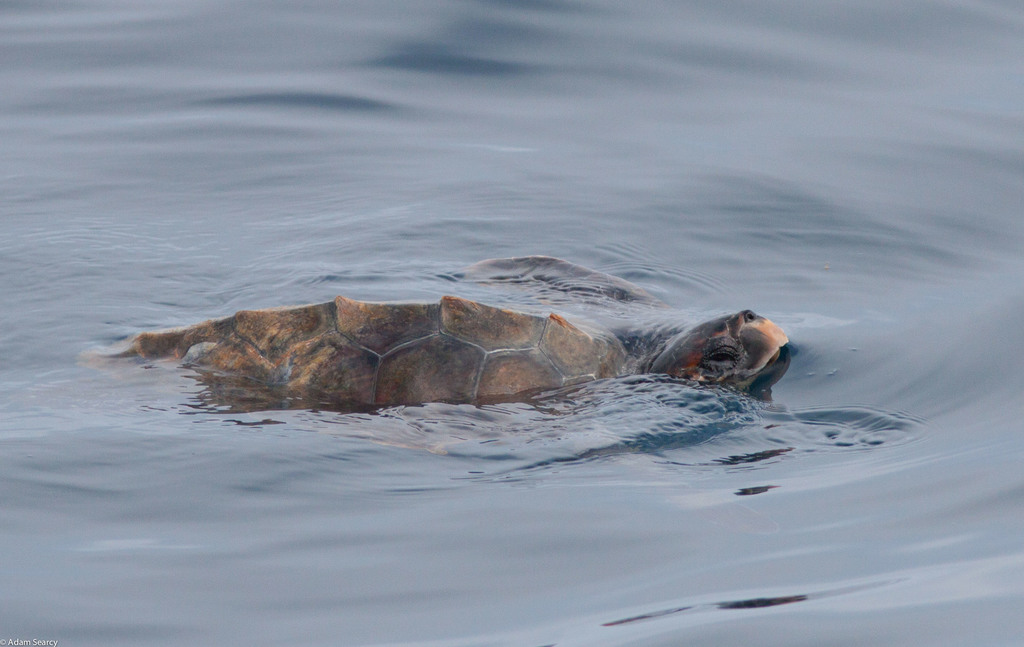
The loggerhead is a hard-shelled sea turtle of coasts and the open ocean. It has a large head and powerful jaws for crushing hard-shelled prey, such as crabs and conch, which it finds on the bottom. Its shell is reddish-brown on top and pale yellow underneath. It nests on temperate to subtropical beaches, and adult males have a long tail that reaches past the shell.
Where it goes
Young loggerheads from Japan cross the North Pacific to feed off Baja California, Mexico, and one tagged turtle swam the other way, from Baja to Japan, in 368 days. In the Mediterranean, 18 females tracked from Zakynthos, Greece, in 2004 to 2007 split: 10 went north to the Adriatic and western Greece, and 8 went south to North Africa, many to the Gulf of Gabès in Tunisia.
Populations
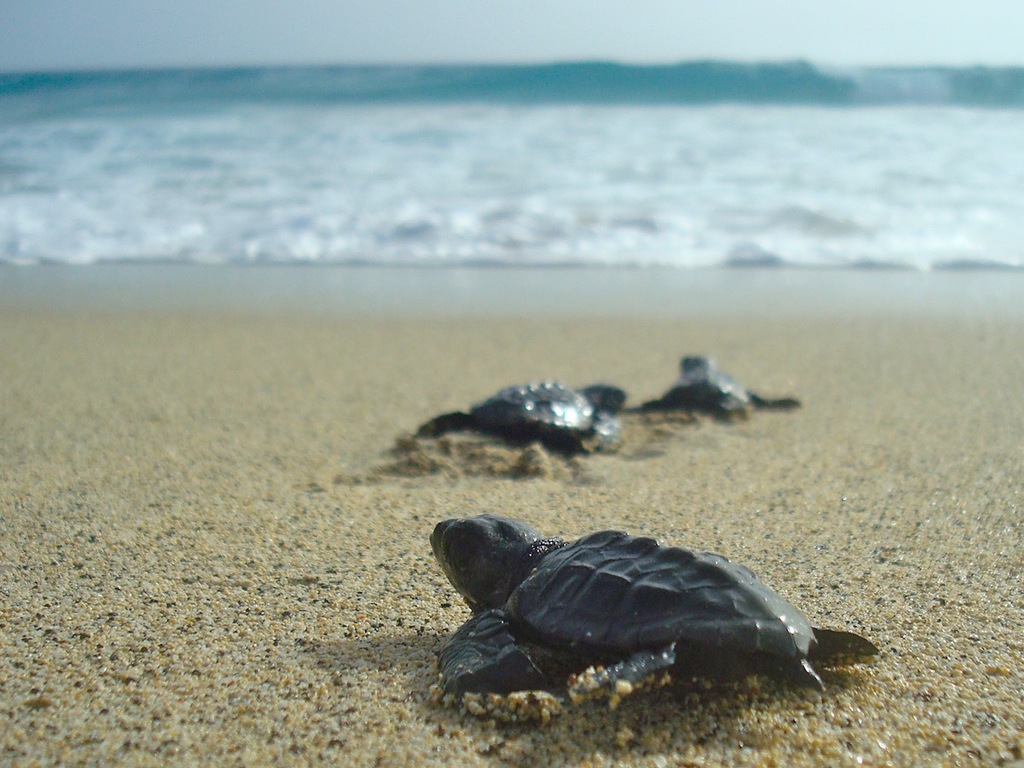
Oman has the second largest loggerhead nesting group in the world. In the United States they nest mainly in Florida, Georgia, South Carolina and North Carolina. The North Pacific population nests only in Japan, and the South Pacific population mainly in Australia, with some in New Caledonia. Loggerheads also nest in Cabo Verde and in the eastern Mediterranean.
Meet it respectfully
Look only, and never touch, chase, feed or block a turtle. In the Zakynthos marine park, keep at least 15 m away, watch for no more than 15 minutes underwater or 10 minutes at the surface, never come from the front, and leave nesting beaches at sunset. At Mon Repos, Australia, turtle watching is only on ranger-led tours.
Fun fact
Tap the bulb to light it up.
Its big head holds powerful jaws that can crush crabs and conch.
Its shell is reddish-brown on top and pale yellow underneath.
Adult males have a long tail that reaches past the shell, which helps tell males from females.
Young loggerheads from beaches in Japan and Australia have been tracked crossing the whole Pacific, nearly 12,900 km (8,000 miles), to feed off Mexico, Peru and Chile.
Of 18 loggerheads tracked after nesting on Zakynthos, Greece, 10 swam north to the Adriatic and western Greece and 8 swam south to North Africa.
At Mon Repos in Queensland, the whole beach closes from 6 pm to 6 am between 15 October and 31 May, so nesting turtles and hatchlings are left in peace.
Source: Queensland Parks, Mon Repos Conservation Park, Visiting safely
Follow its journey
Choose a journey and watch it travel. Every line comes from satellite tracking or documented research, and the source is named.
StartEndJourney (the line joins documented areas; real paths vary)
Loggerhead turtle in the Ocean Atlas
Places we have researched where this animal is recorded. It is never guaranteed, and some places are for watching from the boat only.
Travel with usComing soonTrusted referralExploringOn pause, story onlyEthics pass
Country colour: pink where we travel, blue where we are exploring or refer, grey for story only.
 Albania
 Argentina
 Aruba
Aruba Australia
 The Bahamas
 Bahrain
 Belgium
 Belize
 Bermuda
 Brazil
 British Virgin Islands
 Cabo Verde
 Canada
 Cayman Islands
 Chile
Chile China
China Cocos (Keeling) Islands
 Colombia
 Costa Rica
 Croatia
 Curaçao
 Cyprus
 Denmark
 Dominican Republic
 Egypt
Egypt Eritrea
 France
 Germany
 Gibraltar
 Greece
 Guadeloupe
 Haiti
Haiti Honduras
 India
India Indonesia
 Iran
Iran Ireland
 Israel
 Jamaica
 Japan
Japan Kenya
Kenya Madagascar
 Malaysia
 Martinique
 Mauritania
 Mauritius
 Mayotte
 Mexico
 Montenegro
 Montserrat
 Mozambique
 Namibia
 Netherlands
 New Caledonia
 New Zealand
 Nicaragua
 North Korea
 Oman
Oman Pakistan
 Papua New Guinea
 Peru
Peru Portugal
 Puerto Rico
 Réunion
 Russia
 Saint Helena
 Saudi Arabia
 Senegal
 Seychelles
 Somalia
 South Africa
 South Korea
 Spain
Spain Sri Lanka
 Suriname
 Taiwan
 Tanzania
 Tokelau
 Tunisia
 Türkiye
 Turks and Caicos Islands
 United Arab Emirates
 United Kingdom
 United States
 Uruguay
 Venezuela
 Vietnam
 Western Sahara
 Yemen
YemenSources for this page
- NOAA Fisheries
- USFWS
- Zbinden et al., 2011, Marine Ecology Progress Series, Migratory dichotomy in loggerheads from Zakynthos
- National Marine Park of Zakynthos, Turtle observation guidance
- Queensland Parks, Mon Repos Conservation Park, Visiting safely
- Nichols et al., 2000, Transpacific migration of a loggerhead turtle
Facts checked 25 September 2026. Photos: Unsplash licence, or Creative Commons as shown on each photo.
Work in ocean travel?
We are always happy to hear from exceptional local operators, accommodation, conservation organisations and destination experts. If your work fits responsible, small-group ocean travel, we would love to learn more.
Partner with Ocean CallingGili Trawangan in 5 days
from CHF 790